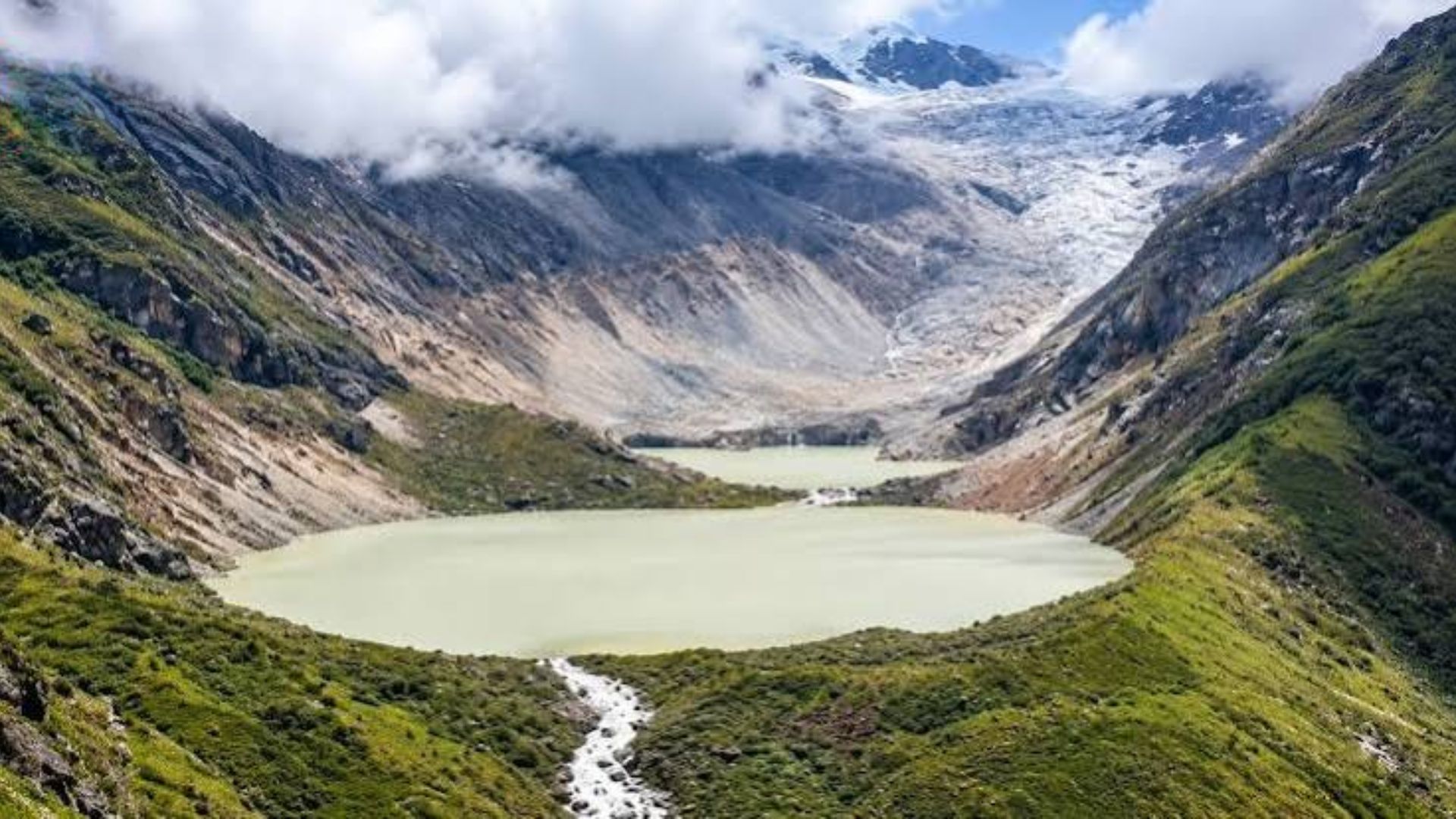
Thimphu: An outburst from Shintaphu glacial lake triggered a flash flood in northern Bhutan, damaging infrastructure at the Gasa Tshachu natural hot springs, reported on Friday.
The area had been evacuated before the floodwaters arrived, and no deaths or injuries were reported.
Bhutan’s state broadcaster BBS said darkness and strong currents initially prevented a full assessment of the damage. Two portable Bailey bridges were feared washed away, while the national newspaper Kuensel reported damage to the road towards Laya, forcing its closure.
The outburst occurred on Thursday evening in Gasa district. Authorities continued assessing the lake and downstream conditions, with the precise trigger and volume of water released still unconfirmed.
Flood alerts were also issued in neighbouring India’s Assam and West Bengal over possible downstream effects.
What is a glacial lake outburst flood?
A glacial lake forms when meltwater collects near a glacier. If the ice or natural barrier holding that water gives way, or water overtops it, a large volume can escape suddenly.
Known as a glacial lake outburst flood, or GLOF, the resulting surge can carry rocks, mud and debris through mountain valleys, threatening settlements, roads and bridges.
Why it matters for Pakistan
Pakistan’s northern mountain communities face similar hazards. UNDP identifies rising temperatures and accelerated glacier melt as factors increasing glacial flood risks in Gilgit Baltistan and Khyber Pakhtunkhwa.
Pakistan’s GLOF II programme has focused on early warning systems, protective infrastructure and community preparedness in vulnerable valleys.
While warming can increase these risks, the immediate cause of the Bhutan outburst has not yet been established.