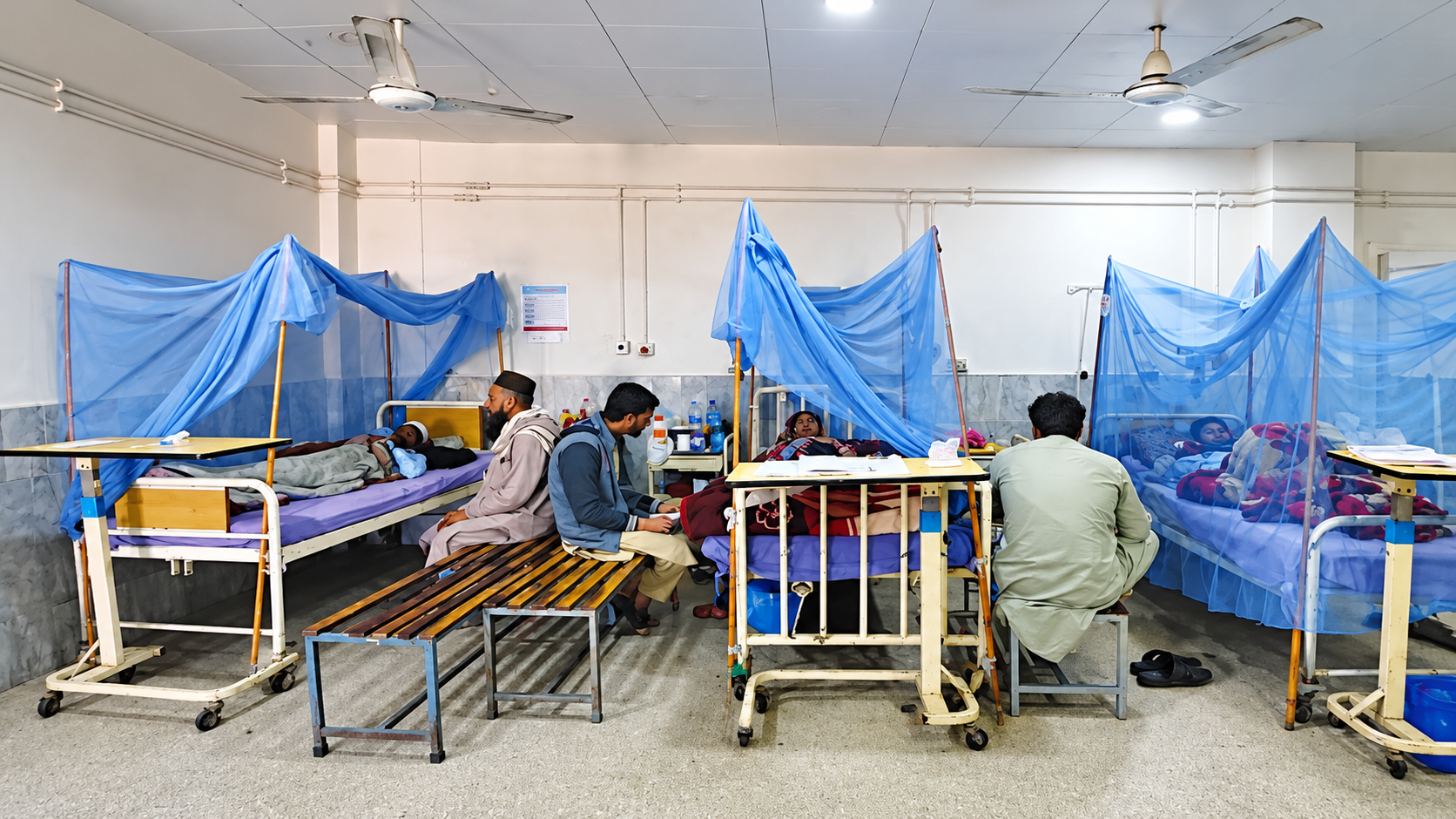
Peshawar: Khyber Pakhtunkhwa recorded 120 new dengue infections in the past 24 hours, bringing the province's cumulative case count to 4219, according to the latest figures released by the provincial health department.
The department reported 163 active cases across the province, while 4055 patients have recovered. No deaths were recorded during the latest reporting period, with the confirmed death toll remaining at one.
The figures indicate that about 96 percent of patients diagnosed with dengue have recovered, although several districts continue to report infections.
Kohat remains the district with the most reported dengue infections, with 2659 cases since the start of the reporting period. The district currently has 92 active cases, representing more than half of all active infections in KP.
Peshawar has recorded 573 cases, including 216 reported during October. The figures indicate that the provincial capital continues to register infections this month. Elsewhere, Bannu has 33 active dengue patients, while Hangu has reported 10.
Together, Kohat, Bannu and Hangu account for 135 of the province's 163 active cases, indicating that a substantial proportion of patients are concentrated in these three districts.
The district level figures also show that Kohat accounts for approximately 63 percent of all confirmed cases recorded across the province.
The health department has excluded two deaths previously reported at Ayub Teaching Hospital in Abbottabad from the provincial dengue mortality record. According to the department, the deaths were removed because laboratory tests had not confirmed dengue infection in the patients.
The revision leaves the province's officially confirmed dengue death toll at one. The distinction between suspected and laboratory confirmed cases matters for disease surveillance, as dengue symptoms can overlap with those of other infections.
Laboratory confirmation helps health authorities establish whether dengue was present, although determining whether it caused a patient's death may require additional clinical assessment.
Seasonal conditions and dengue transmission
Dengue is a mosquito borne viral infection transmitted primarily through the bite of infected Aedes aegypti mosquitoes. Mosquitoes commonly breed in containers and other places where water accumulates, including household water storage vessels, discarded tyres, and uncovered tanks.
In Pakistan, dengue transmission frequently increases during and after the monsoon season, when rainfall, standing water and suitable temperatures create conditions for mosquito breeding. Transmission can continue into October and November in areas where temperatures remain favourable.
The concentration of cases in Kohat and continued infections in Peshawar illustrate the geographical differences in the province's reported dengue burden. However, the available figures do not establish whether transmission is increasing or decreasing compared with previous weeks, as no comparable weekly trend data was provided.
Surveillance and public health response
Dengue surveillance relies on hospitals, diagnostic laboratories and district health authorities reporting suspected and confirmed infections. Health departments use these records to monitor transmission, identify affected areas and determine where mosquito control activities and public health measures may be required.
Preventive measures generally include removing standing water, covering water storage containers and reducing exposure to mosquito bites. According to the World Health Organisation, most dengue infections cause mild illness or no symptoms, but some patients can develop complications requiring hospital treatment.
Warning signs may include severe abdominal pain, persistent vomiting, bleeding or unusual weakness, particularly after a fever begins to subside. The latest Khyber Pakhtunkhwa report does not provide details about hospital admissions, the severity of active cases or district level mosquito control operations.
With infections continuing across multiple districts, the provincial figures provide a basis for monitoring case distribution and changes in transmission during the remaining dengue season.
The next health department updates will indicate whether new infections are declining and how the active caseload changes across the affected districts.