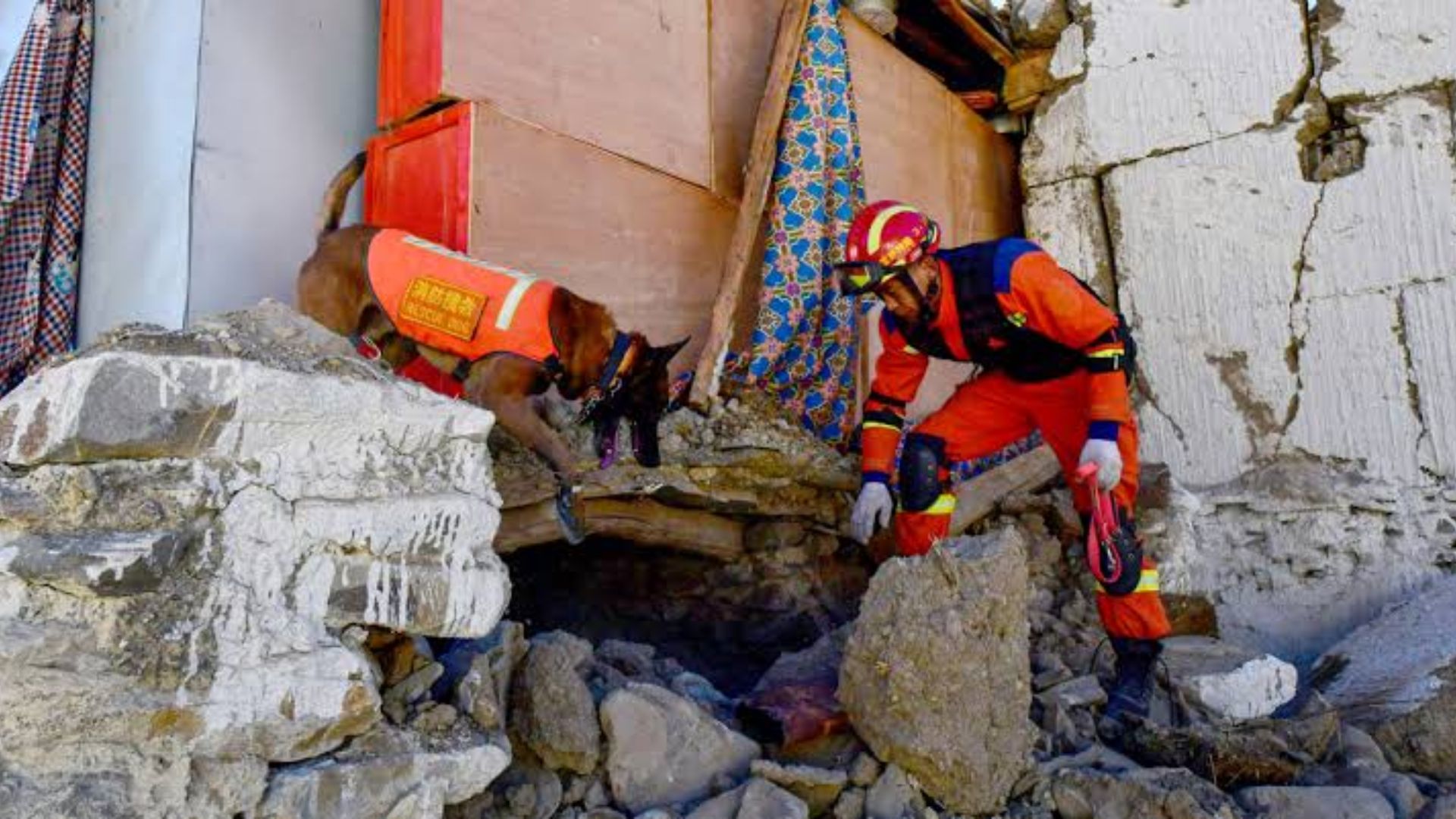
Beijing: Rescue teams searched remote communities in China’s Tibet Autonomous Region on Friday after a magnitude 7.0 earthquake killed at least 16 people and forced thousands from their homes.
The number of injured rose to 76, Reuters reported on Friday, citing local authorities. More than 12000 people had been relocated, according to state news agency Xinhua.
The earthquake struck Baqen County in Nagqu, in the region officially called Xizang, at 10:33pm local time on Thursday, October 22.
China Earthquake Networks Center measured its depth at 10 kilometres. The affected area sits at an average elevation of approximately 4800 metres, making access and emergency shelter particularly important.
An early assessment cited by the Nagqu earthquake relief headquarters said houses belonging to 339 households had collapsed or sustained damage. Twenty livestock pens were also damaged. Authorities said the assessment was still being verified.
Damaged roads and cold complicate relief
Communications were disrupted in some affected areas, while railway services were suspended and rockfalls obstructed a section of National Highway 317. Emergency supplies included tents, prefabricated accommodation, beds and winter clothing.
Intermittent snowfall was forecast, adding urgency to efforts to shelter displaced residents and reach isolated communities.
China raised its national earthquake emergency response from Level IV to Level III. The Ministry of Emergency Management also deployed an unmanned aircraft to assess damage, according to China News Service. Such aerial assessments can help rescuers examine areas where ground access is difficult.
The danger did not end with the initial tremor. Authorities reported hundreds of aftershocks, which can further weaken damaged buildings and make returning indoors hazardous.
For residents, the immediate challenge extends beyond surviving the earthquake: damaged housing and disrupted transport can leave families exposed while relief teams work to restore access and essential services.