

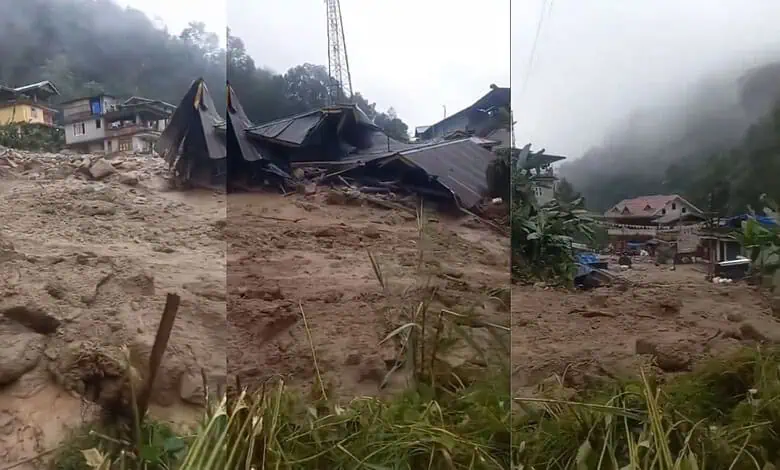
Gangtok: A major landslide struck Rimbi village in the Gyalshing district of India’s Sikkim state on Thursday night, damaging more than 30 houses and government quarters after sustained rainfall sent mud, rocks and debris down the mountain slope.
No deaths or injuries had been reported by Friday, while disaster management teams began assessing damaged homes, roads and public infrastructure. Sikkim Chief Minister Prem Singh Tamang described the situation as serious and directed officials to remain on alert as more rainfall was forecast.
Reports indicated that some houses had collapsed, while others were partially damaged or left tilted by the movement of the ground. Nearby properties remain at risk because the slope is still unstable and debris continues to collect above residential areas.
The latest landslide is part of a continuing emergency rather than an isolated event. Ground movement has been reported around Rimbi and neighbouring Singlitam since September 12. Earlier rainfall forced authorities to evacuate 128 people from 28 houses and move them to a relief centre as a precaution.
Sikkim’s disaster management authority said debris had accumulated in the Nik Kholsa stream, obstructing the natural flow of water. Heavy rain can push this mixture of water, mud and rocks towards the village, while a sudden release of accumulated water could produce another destructive surge.
The same unstable conditions previously washed away a concrete bridge at Rimbi and altered the course of the Rimbi River. Authorities have been working on temporary crossings, restoring roads and monitoring cracks and movement across the affected slope.
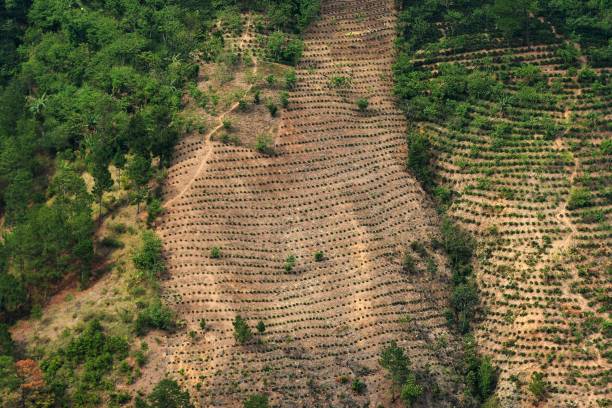
Sikkim lies in the eastern Himalayas, where steep terrain, fragile rock formations and intense rainfall make settlements and mountain roads particularly exposed to landslides. When rainwater saturates the soil, the slope becomes heavier and loses the strength needed to remain stable.
Residents have been advised to avoid unnecessary travel, stay away from streams and active landslide zones and immediately report fresh cracks, unusual sounds or sudden changes in water flow.