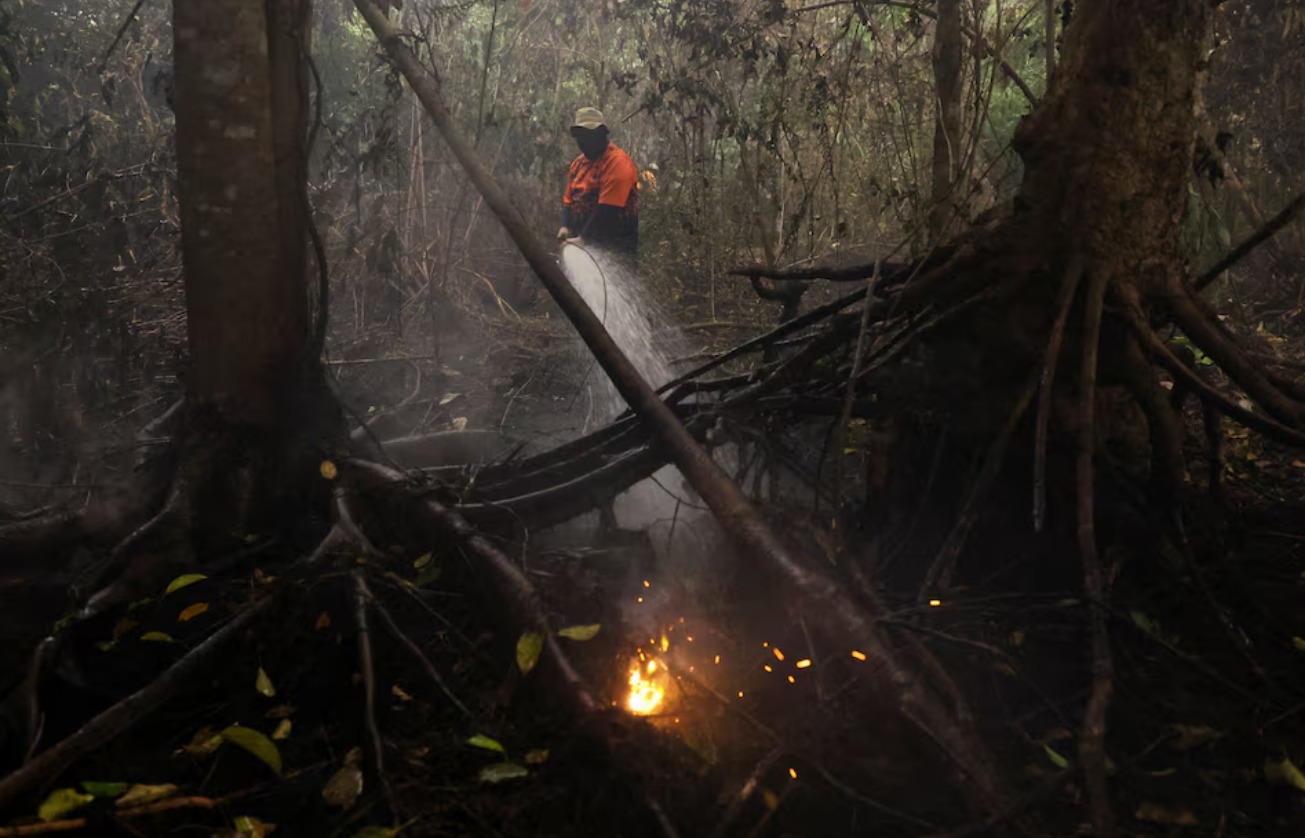


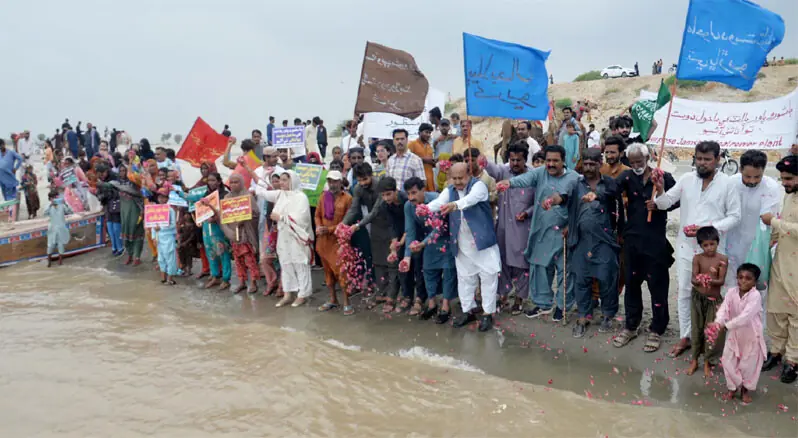
Hyderabad: A protest near Kotri Barrage has brought renewed attention to concerns over pollution, water resources and livelihoods linked by civil society groups to the Jamshoro coal fired power project.
University teachers, farmers, fisherfolk representatives, environmentalists and civil society activists from Hyderabad, Jamshoro, Thatta and Badin gathered near the barrage on Friday, demanding action over what they described as environmental and social damage associated with the plant.
The protesters said air pollution, land degradation and possible water contamination were affecting communities that depend heavily on agriculture, livestock grazing and fishing. They also claimed that declining agricultural productivity and fish populations were putting additional pressure on local livelihoods.
A major concern raised at the demonstration was the handling of fly ash, a residue produced when coal is burned. Activists questioned the use of water based slurry and ash ponds, saying they could pose risks to water resources, ecosystems and the Indus Delta.
The concerns relate to an issue already recognised in the project's environmental planning. The Asian Development Bank classified the Jamshoro project as a Category A environmental project and its documentation notes that the coal fired unit would generate large quantities of ash and soot requiring specific handling. The project includes measures for effluent management, ash disposal, emissions control and environmental monitoring.
The ADB financed the Jamshoro Power Generation Project with the stated objective of increasing electricity supply and diversifying Pakistan's energy mix away from more expensive furnace oil. The original project financing included USD 658 million from an ADB ordinary capital resources loan, alongside additional ADB financing, while the broader project cost was listed at about USD 1.04 billion.
The protesters are now calling for the plant's outstanding financing to be redirected towards renewable energy and for an early and just retirement of the coal facility. They also questioned the proposed coal supply chain, including potential railway connectivity for transporting Thar lignite.