

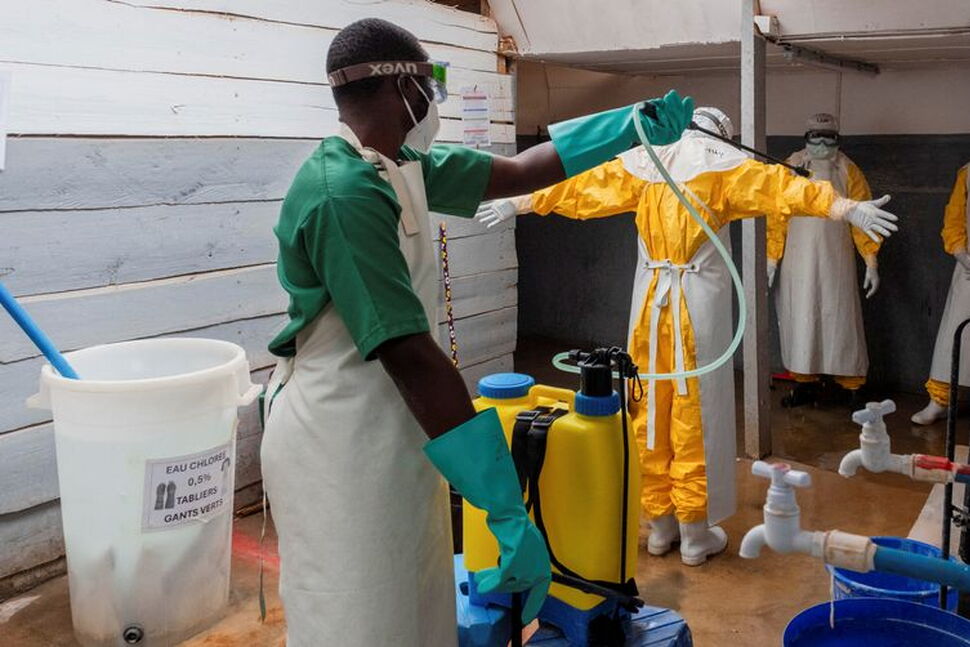
Butembo: Congolese authorities announced two additional Ebola treatment centres in Butembo, North Kivu, this week after a sharp rise in infections filled all 29 beds at the Kitatumba facility, leaving some patients without immediate care as the outbreak shifts across eastern Congo.
Government figures recorded 7820 confirmed infections and 3779 deaths by Tuesday. Ituri remains the most affected province, but North Kivu now accounts for around one third of newly confirmed cases and deaths.
More than 60 percent of diagnosed patients in North Kivu have died, compared with a national average of 48 percent. Health workers say many patients are reaching hospitals at an advanced stage because they fear isolation centres, question their diagnoses or avoid medical teams.
The outbreak is caused by the Bundibugyo species of the Ebola virus. It is less familiar than the Zaire species responsible for Congo’s devastating outbreak between 2018 and 2020. Early Bundibugyo symptoms can be milder and may resemble malaria or typhoid, making detection more difficult. There is currently no specifically approved vaccine or treatment for this species, although vaccine trials are under way.
Ebola is transmitted through direct contact with the blood or body fluids of an infected person, contaminated objects or the body of someone who has died from the disease. Identifying patients quickly, tracing people they contacted and conducting safe burials are therefore central to stopping transmission.
Public distrust has complicated each of these measures. Residents have attacked burial and decontamination teams, while a health post in Butembo was burned earlier this month. Only two of the city’s nine health checkpoints are operating because of staffing shortages.
Some mistrust dates back to the 2018 to 2020 outbreak, when cases of sexual exploitation involving response personnel damaged confidence in health institutions. The absence of the vaccines and treatments used against the earlier Zaire species has also led some residents to question whether the present outbreak is real. The World Health Organization (WHO) says safeguards against abuse have since been strengthened.
Authorities are expanding household visits and working with neighbourhood, traditional and religious leaders to explain the disease and encourage earlier treatment. The response remains constrained by armed conflict, funding shortages and insufficient medical personnel.
The WHO has described the changing pattern as a geographic redistribution of transmission. Cases may be declining in some earlier centres, but the emergence of North Kivu and South Ubangi as new pressure points shows that the national outbreak has not ended.