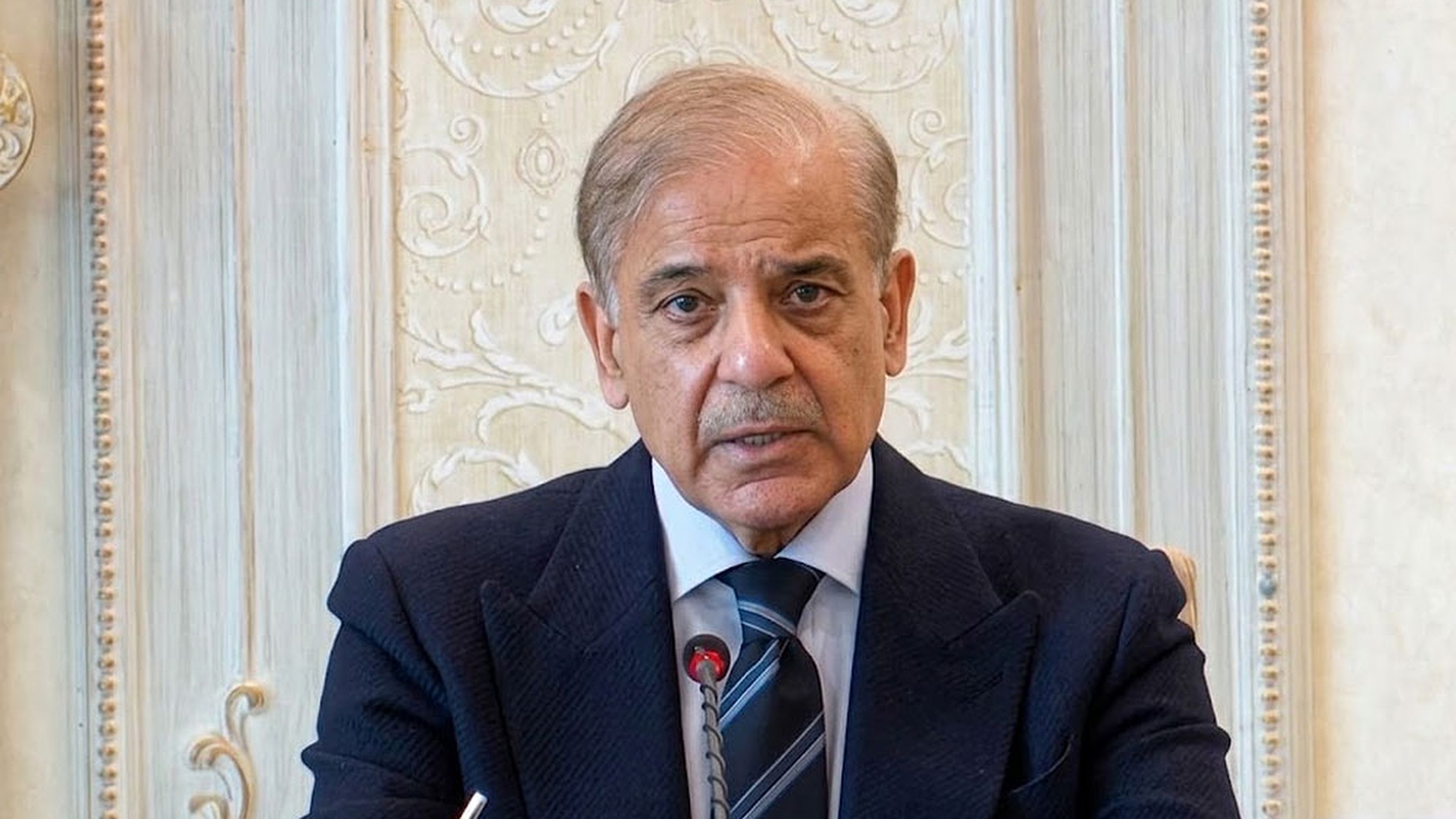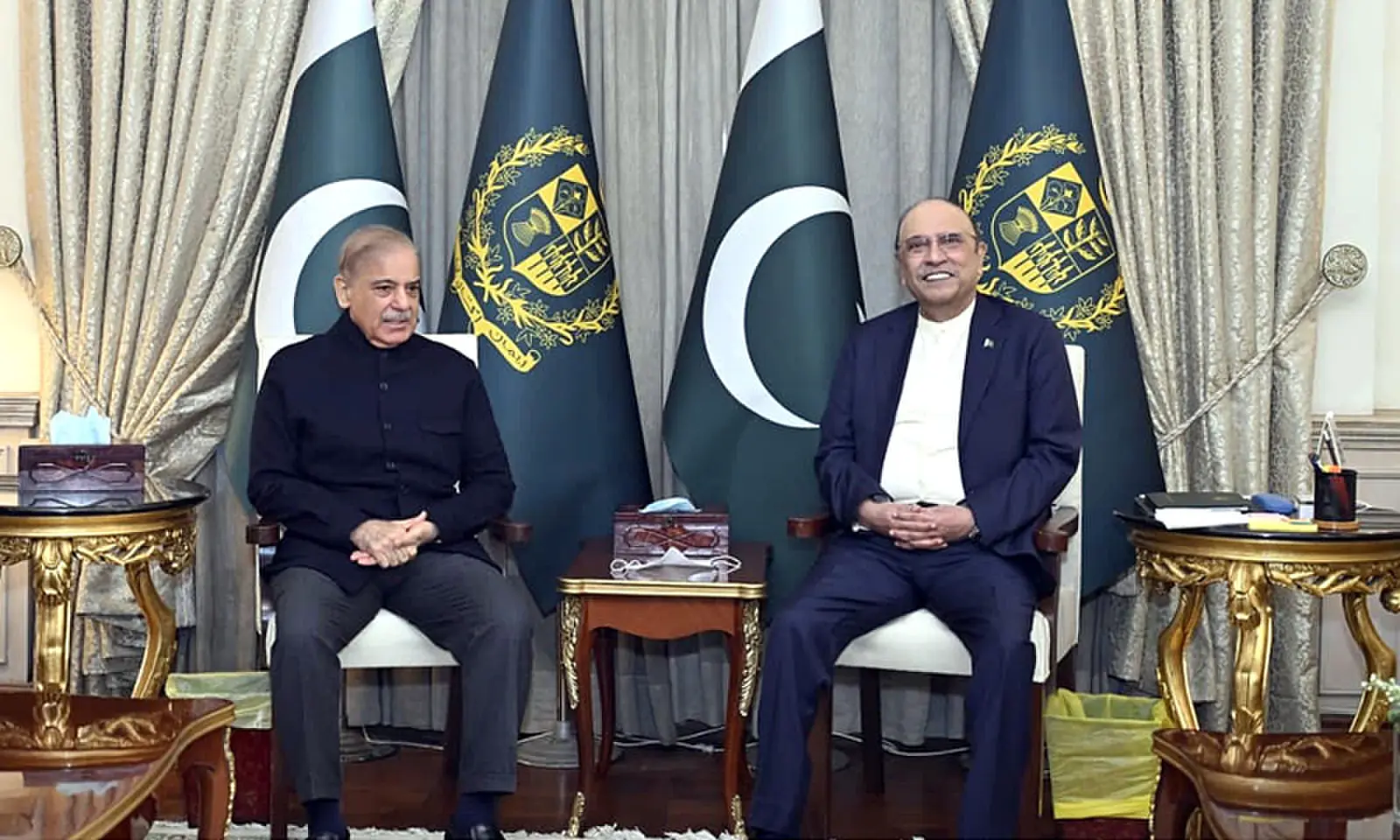
Islamabad: President Asif Ali Zardari and Prime Minister Shehbaz Sharif agreed on Saturday that any proposal to create new provinces or administrative units in Pakistan must follow constitutional procedures, including parliamentary approval for a referendum.
The understanding was reached during a meeting at the prime minister's Model Town residence in Lahore. The discussions followed Interior Minister Mohsin Naqvi's proposal to hold a referendum to determine public support for creating additional provinces, an issue that has exposed differences among parties in the ruling coalition. President Zardari reiterated the Pakistan Peoples Party's (PPP) opposition to dividing Sindh, citing a resolution passed unanimously by the provincial assembly.
Prime Minister Shehbaz endorsed the position that any change to provincial boundaries must comply with the Constitution, the sources said.
Parliament's role in proposed referendum
The two leaders agreed that Parliament could not be bypassed in deciding whether a referendum should take place or what questions should be presented to voters. According to the sources, the decision would require parliamentary approval and political consensus before proceeding. Under Article 48(6) of the Constitution, a referendum on a matter of national importance requires approval by a joint sitting of Parliament.
However, a referendum alone cannot establish a new province. Article 239(4) requires a constitutional amendment affecting a province's boundaries to secure the support of at least two-thirds of the total membership of the provincial assembly concerned, alongside the parliamentary amendment process.
Naqvi had proposed consulting the public on the issue, arguing that voters should have a role in determining the country's administrative structure. He also said coalition partners would be consulted before any decision.
Coalition divided over provincial boundaries
The proposal has drawn opposition from the PPP, particularly over the possibility of dividing Sindh. PPP Chairman Bilawal Bhutto Zardari and Sindh Chief Minister Murad Ali Shah have maintained that the party will not support any alteration to the province's boundaries. The Sindh Assembly has already passed a resolution opposing such a division.
Defence Minister Khawaja Asif, meanwhile, has suggested that Pakistan could have as many as 12 provinces if administrative requirements were used as the basis for restructuring.
He argued that population growth and the demand for public services justified examining the existing administrative system. The Pakistan Muslim League Nawaz (PML N) has not announced a formal position on creating additional provinces, saying its stance would be presented when the matter reached Parliament.
The disagreement reflects a broader debate over whether governance problems should be addressed by establishing provinces or transferring more administrative and financial powers to local governments.
Official sources said Zardari and Shehbaz also held a separate meeting during which they discussed a message reportedly conveyed by Interior Minister Naqvi during his visit to Nawabshah. The situation surrounding imprisoned Pakistan Tehreek e Insaf (PTI) founder Imran Khan was also discussed.
According to the sources, participants were informed that Khan's recent meeting with his lawyers and the release of his two sisters from jail were not connected to any particular behind the scenes political development. No further details were disclosed about Naqvi's reported message.
Government emphasises coalition coordination
A statement issued by the Prime Minister's Office said the president and prime minister reviewed Pakistan's political, economic and security situation, focusing on coordination between coalition partners.
The statement did not specifically mention the proposed referendum or the creation of new provinces. Shehbaz also briefed Zardari on his visit to Türkiye, where he attended the 31st Conference of the Parties (COP31) and discussed Pakistan's climate priorities.
The leaders agreed to continue consultations on governance, economic stability and public welfare initiatives. The proposed creation of additional provinces remains at the discussion stage, with no referendum date or constitutional amendment announced.
Any attempt to change provincial boundaries would require the government to secure the parliamentary support and provincial consent prescribed by the Constitution, making agreement among political parties central to the proposal's future.