Lahore: Punjab's Crime Control Department (CCD) has begun searching students' bags outside educational institutions for cigarettes, vapes and drugs, prompting a debate over whether police should be involved in monitoring students' behaviour.
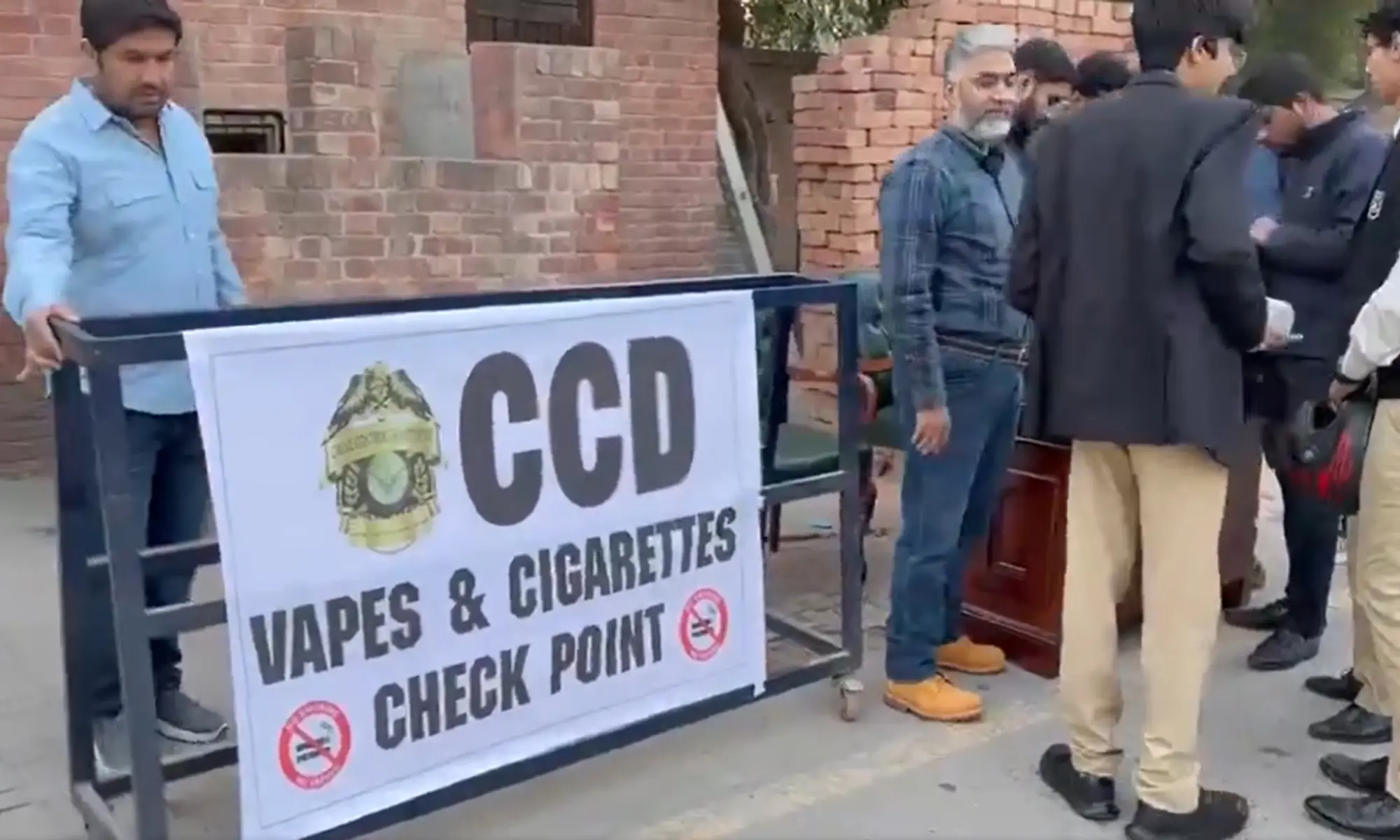
The department established a checkpoint outside a college in Lahore on Friday, November 20. A video showing personnel inspecting students' bags subsequently circulated on social media.
On Saturday, the CCD announced that the inspections formed part of a campaign covering educational institutions across Punjab. The department said the initiative was intended to prevent students from bringing tobacco products and intoxicating substances onto campuses.
According to a CCD spokesperson, checking desks have been established outside institutions where officers examine students' belongings to identify prohibited substances.
The department said personnel were also informing students about the health consequences of smoking, vaping and drug use.
The spokesperson urged parents and teachers to monitor children's activities and asked the public to report shopkeepers selling cigarettes and vapes to minors.
The CCD warned that sellers found violating the law could face criminal proceedings and arrest.
However, the department did not disclose how many institutions had been covered, whether any substances had been recovered or how many students had been searched.
It also did not clarify whether educational institutions and parents had been consulted before the inspections began, or what procedures officers were required to follow when searching students' belongings. <Cite ref="turn894225search2"/>
The campaign has divided opinion on social media, with supporters arguing that intervention is needed to address substance use among students and critics questioning the legality and proportionality of police searches.
Human rights lawyer Asad Jamal criticised the initiative on X, arguing that the Punjab government was increasingly relying on law enforcement to address social problems.
Jamal warned that searching school bags could lead to further intrusion into students' privacy, including physical searches.
Former Punjab minister Arslan Khalid also questioned why police personnel were being assigned responsibilities traditionally handled by parents and teachers.
He argued that officers accustomed to dealing with criminal suspects might not have the training needed to interact with schoolchildren. Khalid said he would not want his children subjected to police searches while attending school.
Television presenter Iqrarul Hassan defended the campaign, citing concerns about the use of crystal methamphetamine and other drugs in educational institutions.
He said measures of this kind were not desirable under ordinary circumstances but could help protect children from substance abuse.
Television anchor Iqra Haris also supported the initiative, while writer Ammara Ahmed criticised the provincial government's approach. The controversy comes amid questions about the CCD's role and methods since its establishment in 2025.
The Human Rights Commission of Pakistan (HRCP) has previously raised allegations of extrajudicial killings involving the department, which the CCD denies.
Those allegations concern the department's broader operations and are separate from the school bag inspection campaign. The debate also raises questions about how educational institutions should address tobacco and drug use.
In June 2026, Karachi's South Zone police developed an anti drug policy in consultation with representatives of 22 schools and universities. That approach included plans for committees involving institutional heads, teachers, parents and law enforcement personnel to address substance use on campuses.
The comparison highlights differences between school-based prevention programmes involving education authorities and inspections carried out directly by police.
While the CCD says the inspections are intended to prevent drug use, critics argue that prevention efforts must also consider students' privacy and the responsibilities of teachers and parents.
The department has not announced how long the campaign will continue or whether guidelines governing searches and parental consent will be published.
It remains unclear whether the inspections will become a routine practice across Punjab's educational institutions or how their effectiveness will be assessed.