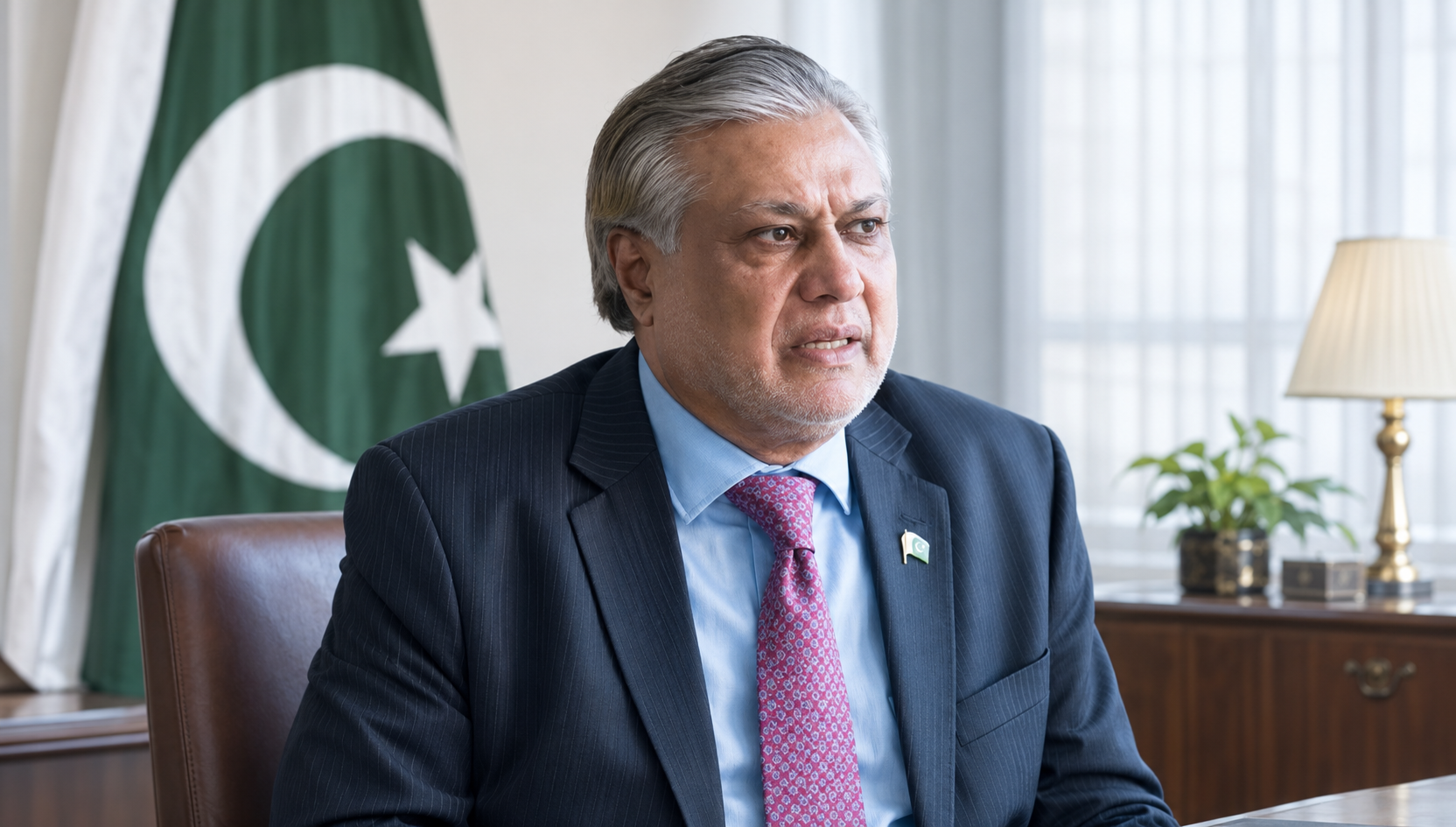
Islamabad: Deputy Prime Minister and Foreign Minister Ishaq Dar has said the resumption of dialogue between Pakistan and India depends on New Delhi's conduct, citing disagreements over Kashmir and the Indus Waters Treaty.
In an interview with Euronews aired on Saturday, November 21, Dar said India could not unilaterally suspend the water sharing agreement and urged both countries to resolve their differences through dialogue and international law.
The foreign minister referred to India's decision in April 2025 to place the 1960 Indus Waters Treaty in abeyance following an attack in Pahalgam in Indian-administered Kashmir.
New Delhi blamed Pakistan for the attack, an allegation Islamabad rejected. The incident was followed by military confrontation between the two countries in May 2025.
Dar said Pakistan had offered an investigation into the Pahalgam attack but India had declined the proposal. He also criticised India's constitutional changes in Jammu and Kashmir on August 5, 2019, arguing that the decision disregarded United Nations Security Council resolutions concerning the territory.
The Indus Waters Treaty, brokered by the World Bank in 1960, governs the distribution of waters from six rivers between Pakistan and India. Under the agreement, Pakistan has rights over the western rivers the Indus, Jhelum and Chenab while India has rights over the eastern rivers the Ravi, Beas and Sutlej subject to provisions governing their use.
Dar argued that suspending the treaty threatened Pakistan's agriculture, livelihoods and food security.
Pakistan maintains that the treaty does not permit either country to suspend its obligations unilaterally. India has defended its decision to hold the agreement in abeyance following the deterioration in bilateral relations.
The foreign minister also addressed the conflict between the United States and Iran, saying Pakistan remained involved in efforts to bring both countries back to negotiations.
Dar said dialogue was the only way to resolve the conflict and that Pakistan continued to urge Washington and Tehran to honour the Islamabad Memorandum of Understanding signed on June 18, 2026. The agreement followed mediation efforts aimed at reducing hostilities and restoring shipping through the Strait of Hormuz.
However, fighting and attacks on commercial vessels have continued, affecting trade routes and energy supplies. Dar said Pakistan had not abandoned its mediation efforts despite violations of the agreement.
He argued that regional disputes could not be resolved through unilateral actions or competing political blocs, and called for countries to cooperate through diplomatic institutions.
Turning to Afghanistan, Dar said Pakistan wanted peace and economic stability in its neighbouring country but required assurances that Afghan territory would not be used to launch attacks against Pakistan or other states.
He called for verifiable action against militant organisations, including the banned Tehreek e Taliban Pakistan (TTP), the Balochistan Liberation Army (BLA), the Majeed Brigade and the Islamic State group.
The foreign minister said Pakistan had shared evidence with international organisations concerning militant attacks that Islamabad believed had originated from Afghan territory.
He also expressed dissatisfaction with what he described as the absence of verifiable action by the Afghan authorities against the groups.
Pakistan has repeatedly accused militants based in Afghanistan of carrying out attacks across the border. The Afghan Taliban administration has denied allowing its territory to be used for attacks against neighbouring countries.
Dar said Islamabad remained committed to engagement with Kabul but expected action against organisations threatening Pakistan's security.
His remarks come as Pakistan faces disputes with India over water and Kashmir, security concerns along its border with Afghanistan and the consequences of the US-Iran conflict.
The interview outlined Pakistan's preference for dialogue while making clear that Islamabad considers action by neighbouring governments necessary before relations can improve.
No timetable for the resumption of formal Pakistan India talks was announced, and Dar did not identify a new mechanism for resolving the dispute over the Indus Waters Treaty.