The story of Gaza is often said to begin on October 7, 2023.
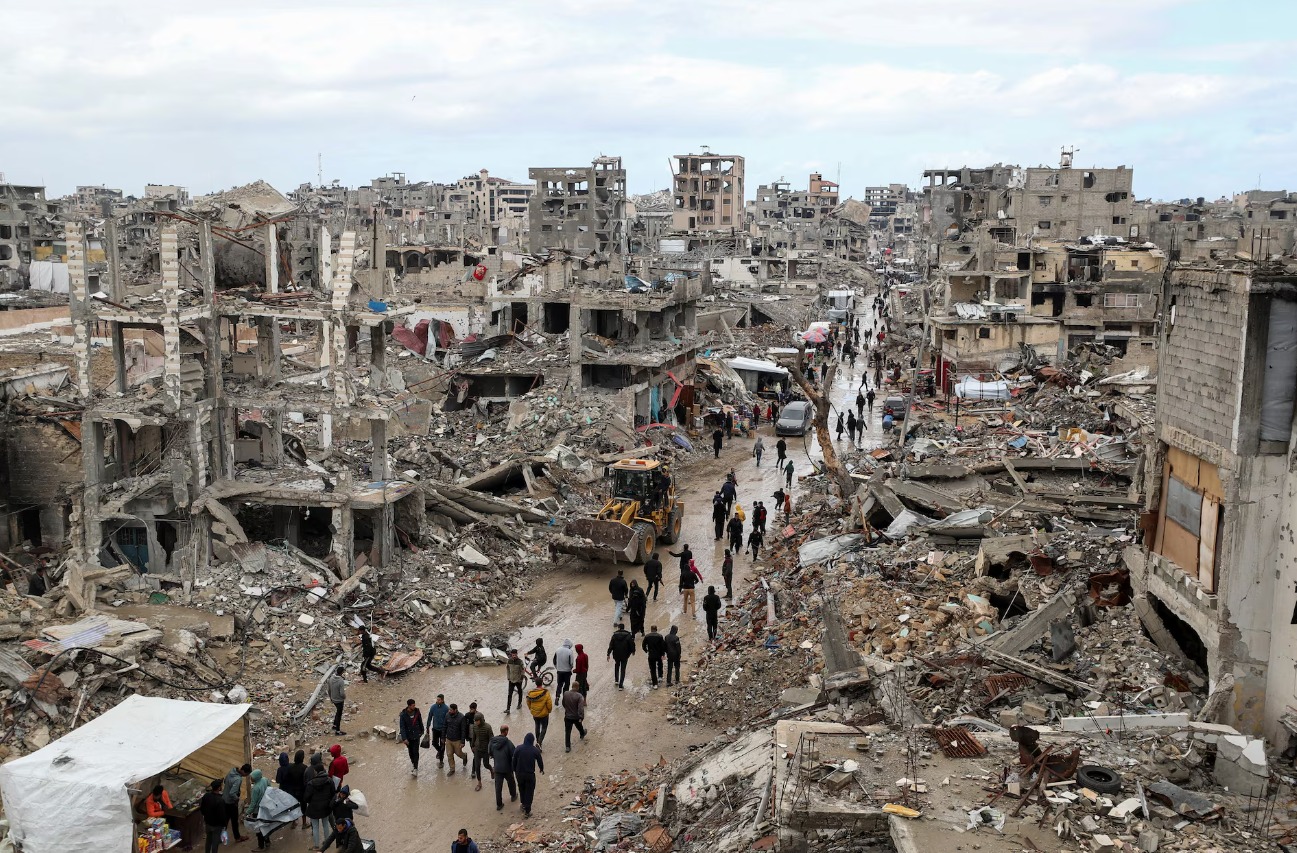
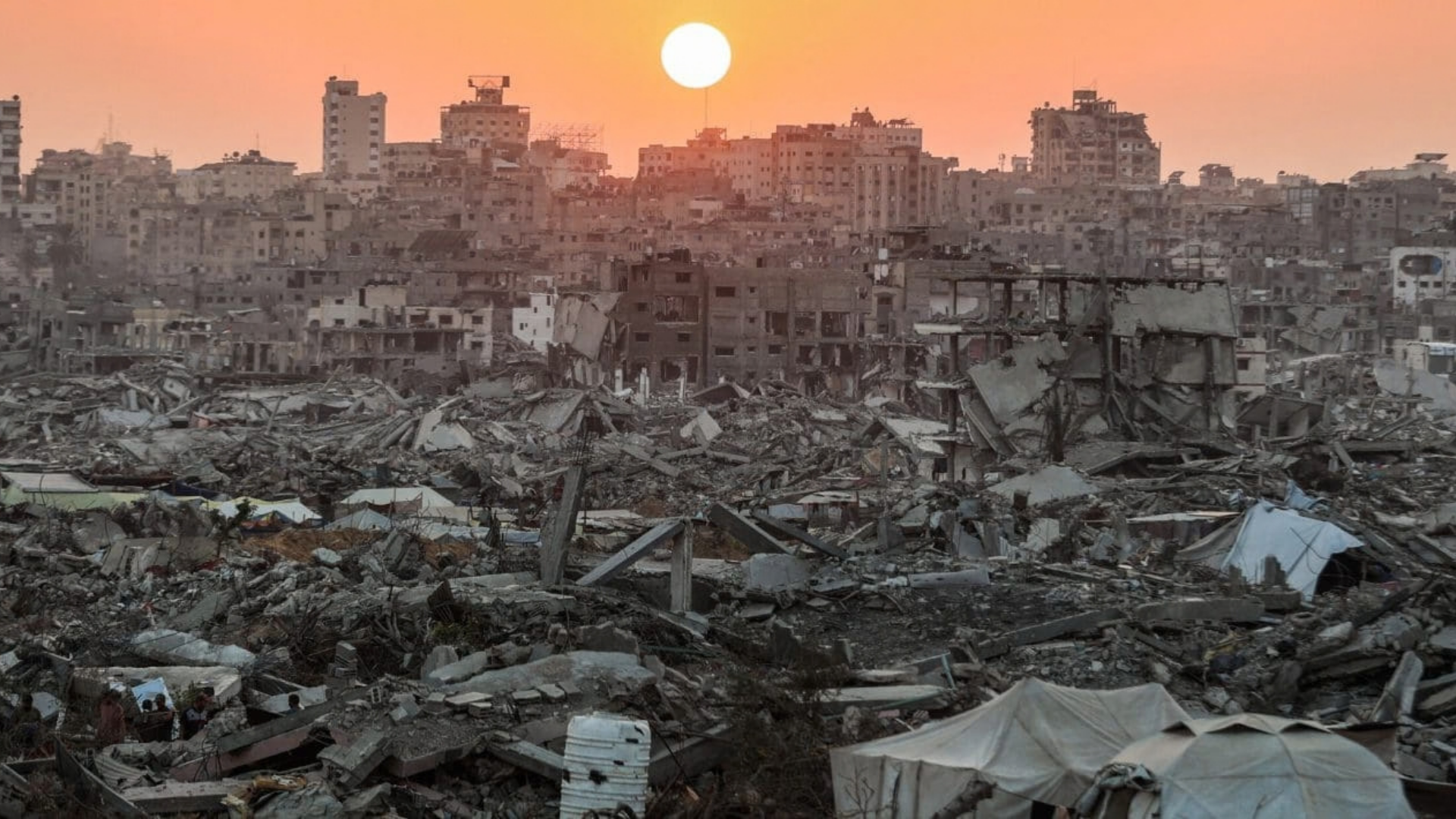
That day, Hamas gunmen attacked Israel, killing about 1200 people and taking 253 hostages. Israel’s subsequent assault on Gaza killed more than 73000 Palestinians, according to Gaza’s health ministry.
October 7 matters. The killing of civilians and the taking of hostages cannot be justified by political grievance.
But beginning the history there removes the conditions that preceded it.
For Palestinians, Gaza is part of a much longer story: displacement, occupation, blockade, failed diplomacy, and a political system in which decisions on Palestinian movement, territory, and security are often made without Palestinian control.
This is why describing Gaza primarily as a religious war is misleading. Religion is present, but the conflict is fundamentally about land and power.
The history before October 7
Israel captured Gaza and the West Bank in the 1967 Arab Israeli war.
It withdrew its settlers and permanent military presence from Gaza in 2005. Hamas took control of the territory in 2007 after fighting its Palestinian rival, Fatah.
Alongside restrictions imposed by Egypt at its border, Israel maintained a tight system of controls around Gaza. It controlled Gaza’s airspace and maritime access and heavily restricted the movement of people and goods.
In the West Bank, Israeli settlements continued to expand.
In July 2024, the International Court of Justice issued an advisory opinion concluding that Israel’s continued presence in the occupied Palestinian territory was unlawful and that its settlement policy violated international law.
That legal context matters.
Gaza was not a sovereign state capable of controlling its borders, airspace or coastline. Its roughly two million inhabitants lived in an increasingly isolated territory, while the prospect of an independent Palestinian state appeared to recede.
Palestinian political violence did not arise in a historical vacuum. Occupation and blockade do not justify attacks on civilians. But neither can attack on civilians be used to erase the political conditions under which Palestinians lived.
Both truths can exist at once.
When security becomes territorial politics
Israel says its war in Gaza is about security, defeating Hamas, bringing the hostages home, and preventing another October 7.
But statements from senior members of Israel’s government raise another question.
Finance Minister Bezalel Smotrich, leader of the Religious Zionism party, said that Israel “can and must conquer” Gaza and advocated what he calls the “voluntary emigration” of Palestinians. National Security Minister Itamar Ben Gvir similarly supported encouraging Palestinians to leave Gaza.
When US President Donald Trump suggested in early 2025 that Gaza’s Palestinian population could be relocated, Smotrich welcomed the idea and said that work was underway on a plan to facilitate departures.
Israelis themselves remain deeply divided over Gaza, the hostages, settlements and the conduct of the war. Prime Minister Benjamin Netanyahu rejected the reestablishment of Jewish settlements inside Gaza.
But Smotrich and Ben Gvir are not outsiders commenting from the political fringe. They are senior government members.
That distinction matters.
When ministers with direct political power speak openly about reducing Gaza’s Palestinian population, the debate can no longer be framed solely by security. It becomes a debate about territory, demography and who gets to remain on the land.
Two ideologies, profoundly unequal power
Hamas also represents a maximalist political project. Its ideology combines Palestinian nationalism, political Islam and armed resistance. It historically rejected Israel’s legitimacy, and its October 7 attack demonstrated the devastating consequences of targeting civilians in pursuit of a political cause.
But presenting Hamas and Israel as two equivalent sides obscures a fundamental imbalance. Hamas is an armed non state movement.
Israel is a state with one of the region’s most powerful militaries, control over crucial aspects of Palestinian movement and territory, and extensive military and diplomatic support from the United States.
One side can launch rockets. The other can control borders, conduct sustained aerial campaigns, restrict access to territory, and exercise a state's institutional power. Recognising that imbalance does not absolve Hamas of responsibility for its actions.
It explains why the conflict's consequences was so unequal.
The power behind Israel
The United States is central to the imbalance. Washington repeatedly used its veto at the UN Security Council against ceasefire resolutions on Gaza that it considered unacceptable.
In June 2025, 14 Security Council members supported a ceasefire resolution. The United States was the only member to vote against it, saying the text did not sufficiently condemn Hamas or require it to disarm. The US remains Israel’s most important military and diplomatic partner.
That support came with consequences.
A Security Council veto does not prove an intention to displace Palestinians. American support for Israel is shaped by a much broader strategic relationship. However, diplomatic protection reduces the international costs that might otherwise constrain a government.
This is where ideology meets power.
Calls to remove Palestinians from Gaza are alarming in themselves. They become even more consequential when made by ministers within a government that knows its most powerful ally is prepared to shield it from certain forms of international pressure.
Gaza and the genocide question
The legal debate moved significantly.
In September 2025, an independent UN Commission of Inquiry found that Israel committed genocide against Palestinians in Gaza.
The commission considered both conduct during the war and statements by senior Israeli leaders.
Israel categorically rejected the finding, saying its military campaign was directed against Hamas and accusing the commission of bias.
A crucial legal distinction remains. The International Court of Justice did not issue a final judgment in South Africa’s genocide case against Israel. Whether Israel committed genocide therefore remains the subject of ongoing international legal proceedings.
But the allegation can no longer be dismissed as merely political rhetoric. International law is now examining it.
Why the religious framing matters
Calling Gaza a religious conflict does more than simplify history. It can depoliticise the conflict.
If Israelis and Palestinians are portrayed simply as Jews and Muslims locked in an ancient struggle, today's power structures begin to disappear.
Occupation becomes background. Settlements become background. The blockade becomes background. Borders become background. Displacement becomes background. And the question of who actually holds the power to change those conditions becomes harder to see.
The conflict is not ancient in its present political form. Its borders, settlements, military occupation, refugee populations and governing institutions are products of modern political decisions.
The Palestinian question is therefore not simply about whether two religions can coexist. It is about whether Palestinians can exercise their political rights and self determination on the land where they live.
Israel’s security argument
October 7 was not an abstraction. Israeli civilians were killed, and hostages were taken. Israel argues that Hamas remains an armed threat and that its military campaign is necessary to prevent another attack.
Israeli officials also accuse Hamas of operating in civilian areas, making warfare in Gaza’s densely populated areas more dangerous. Many Israelis consequently understand the war primarily in terms of survival and security, rather than territorial expansion.
Those fears cannot simply be dismissed, but security alone cannot answer every question raised by what followed.
It does not explain why senior ministers advocated Palestinian emigration. It does not settle the legality of the occupation. And it does not determine what political rights Palestinians should have once the fighting stops.
A state can have legitimate security concerns even as its government pursues policies that require separate legal and political scrutiny.
The two questions should not be conflated.
A ceasefire cannot solve the underlying conflict
A ceasefire has been formally in place since October 11, 2025, and Gaza’s health ministry reports 1369 Palestinians were killed since it began.
The ministry operates under Hamas controlled authorities and does not distinguish between civilians and fighters in its overall figures.
Whatever the precise breakdown, Gaza’s political future remains unresolved. Who governs it? Who controls its borders? Can those displaced return? Will Palestinians be able to rebuild? Will Israeli settlements continue to expand in the West Bank? Will Palestinians ever receive a viable path to statehood and self determination?
These questions predated October 7 and persist despite the devastation that followed. That is why Gaza cannot be adequately explained as a war between religions.
Faith shapes identity on both sides, but religion does not determine who controls a checkpoint, issues a permit, expands a settlement, closes a border, or possesses the military power to enforce those decisions.
Politics does.
The Palestinian story is ultimately a struggle over whether a people living under decades of displacement, occupation and external control can determine their political future.
Until that question is addressed, a ceasefire may halt a war. It cannot end the conflict.