
Pakistan's debate over new provinces has returned. But perhaps the question is being asked the wrong way.
The obvious question is how many provinces Pakistan should have.
The harder one is whether changing provincial boundaries would actually change the way Pakistan is governed.
Planning Minister Ahsan Iqbal has called for a national debate on restructuring Pakistan's administrative system, floating the possibility of 12 to 15 provinces.
Significantly, he has also presented another option: around 160 empowered district governments. Interior Minister Mohsin Naqvi has separately spoken of a governance "reset", while stressing that any new administrative units would require political consensus and public support.
There is, at present, no settled plan to turn Pakistan into a federation of 12 or 15 provinces. What exists is a political and policy debate — and an increasingly important one.
The distinction matters because Pakistan is not merely discussing lines on a map. It is discussing where power should sit.
The argument for change
There is a credible case for asking whether Pakistan's present administrative structure is adequate for the population it now governs.
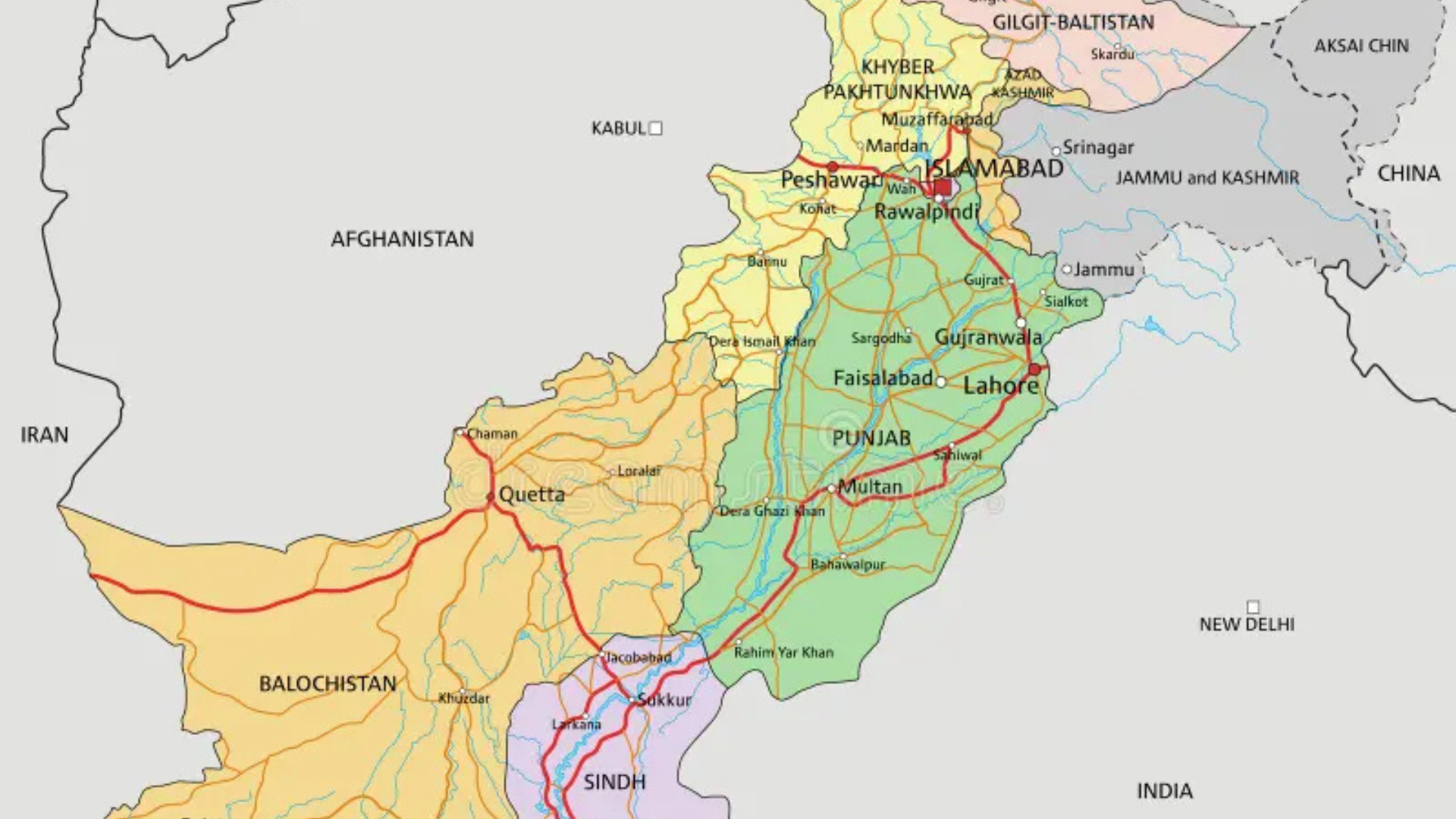
According to the 2023 census, Pakistan's population was 241.49 million. Punjab alone had 127.68 million people, Sindh 55.69 million, Khyber Pakhtunkhwa 40.85 million and Balochistan 14.89 million.
That creates an obvious governance question.
Can a provincial capital effectively respond to vastly different local needs across territories containing tens of millions of people?
Supporters of smaller provinces argue that bringing provincial capitals closer to citizens could shorten administrative distances, create more centres of political representation and allow governments to respond more closely to regional priorities.
There is an intuitive logic to that argument. A citizen's experience of the state is rarely Parliament House in Islamabad. It is the school, hospital, road, police station, land office, water supply and municipal service where they live.
If restructuring makes those institutions more responsive, the number of provinces becomes more than a cartographic exercise.
But that "if" is crucial.
Smaller government units do not automatically mean better government
Creating a province does not merely mean drawing another boundary.
A new province would require institutions of provincial government and would alter existing arrangements concerning political representation, administration and public finances. Questions would arise over assets, liabilities, personnel, revenues, development priorities and the distribution of resources.
There would also be implications for Pakistan's system of fiscal federalism.
The 18th Constitutional Amendment and Seventh National Finance Commission Award significantly increased provincial responsibilities and resources.
Yet a 2026 World Bank review found continuing structural problems in the way responsibilities and money are divided across Pakistan's federal, provincial and local tiers.
That finding complicates the new-provinces argument.
If governance problems result partly from how authority and money are distributed, creating additional provinces without fixing that distribution could reproduce existing weaknesses inside smaller boundaries.
Pakistan could end up decentralising geography without decentralising power.
The missing third tier
This may be the most important part of the debate.
Pakistan already has a constitutional route for taking government closer to citizens: local government.
Article 140A requires each province to establish a local-government system and devolve political, administrative and financial responsibility and authority to elected local representatives.
Yet the distance between provincial capitals and local government remains one of Pakistan's persistent governance problems.
The World Bank's 2026 review found that local governments' share of total government expenditure had fallen from around 10 per cent in 2005 to under 5 per cent in 2024. It recommended more predictable transfers to local governments as part of broader fiscal reform.
That raises an uncomfortable question.
If power moves from Islamabad to provincial capitals but stops there, has devolution really reached the citizen?
And if new provinces are created but power once again stops at their capitals, would Pakistan have solved the problem — or simply created more centres from which power remains centralised?
But local government is not necessarily a substitute for new provinces
The argument should not be oversimplified in the other direction either.
Strong district governments cannot necessarily answer every demand associated with provincial status.
A province is not merely an administrative office. Provincial status affects political representation, legislative authority, fiscal arrangements and a region's place within the federation.
Demands for new provinces can therefore involve questions of representation, regional identity, perceived inequalities and access to political power — issues that municipal or district administration alone may not resolve.
This is precisely why the debate becomes sensitive.
Sindh's response demonstrates that clearly.
On September 3, the Sindh Assembly unanimously passed a resolution opposing proposals that could alter the province's existing territorial limits. The resolution framed Sindh as a historic and indivisible entity and argued that altering its boundaries without the consent of its people would be unacceptable.
Whatever one's position on that argument, it demonstrates something important: provincial boundaries in Pakistan are not merely administrative lines.
They carry history, identity and political meaning.
Any serious restructuring would therefore have to deal with more than administrative efficiency.
Then comes the constitutional hurdle
Pakistan's Constitution deliberately makes alteration of provincial boundaries difficult.
Under Article 239, a constitutional amendment affecting the limits of a province cannot be presented to the president for assent unless it has also been passed by that province's assembly with the votes of not less than two-thirds of its total membership.
In practical terms, therefore, redrawing provincial boundaries cannot simply be imposed as an administrative decision from Islamabad.
It requires constitutional amendment and substantial political agreement.
That safeguard matters in a federation where changes in territory can affect representation, resources and relations between the centre and provinces.
What about the cost?
Opponents of additional provinces frequently raise another legitimate concern: more provinces mean more provincial institutions.
That could entail additional administrative expenditure.
But the fiscal question is more complicated than simply saying "more provinces equal more cost."
The real test would be whether additional administrative costs were outweighed by improvements in service delivery, revenue collection, accountability and allocation of resources. Without a detailed restructuring proposal, those costs and savings cannot responsibly be quantified.
And Pakistan's existing fiscal system is already under strain.
The World Bank's 2026 assessment found that the 2010 devolution reforms significantly increased provincial revenues and responsibilities, but structural weaknesses remain.
More than 80 per cent of provincial expenditure in FY2023 went to recurrent costs, while spending across districts continued to reflect historical patterns more than poverty or service-delivery gaps.
This suggests that the debate cannot stop at the number of provinces.
It must ask what new or existing provinces would actually do differently with their money.
Representation versus another layer of bureaucracy
The strongest argument for smaller provinces is proximity.
The strongest warning against them is duplication.
A smaller province could potentially make government more accessible and allow regional priorities greater political visibility.
But if its creation merely produces another governor, assembly, secretariat, ministries and bureaucracy while decisions remain concentrated at the top, citizens may gain another administrative layer without gaining meaningful control over government.
That is the central test.
Not how many provinces does Pakistan have?
But how far does power travel before it reaches the citizen?
Perhaps the choice is not binary
Pakistan's debate is often framed as two competing choices: keep the four-province structure or divide the country into smaller provinces.
There may be a third way of thinking about it.
Different problems may require different levels of government.
Some demands may genuinely concern provincial representation and require a debate over provincial boundaries.
Others, like sanitation, local roads, municipal planning, water, community services and many everyday interactions between citizens and the state, may be better addressed through empowered local governments.
The challenge, therefore, is not necessarily choosing between new provinces and strong local governments.
It is determining which powers belong at which level and then ensuring that authority, money and accountability travel together.
Redrawing the map is the easy part
Pakistan certainly has a governance problem. Its growing population, uneven development and persistent weaknesses in public-service delivery make a serious discussion about administrative reform legitimate.
New provinces could form part of that discussion.
So could empowered districts.
So could stronger fiscal devolution.
But none is a magic solution.
A province can be smaller and still be badly governed. A district can be closer to citizens and still lack money or authority. And constitutional devolution can exist on paper without changing what happens in a school, hospital or municipal office.
That is why Pakistan's current debate should not begin with a number — four provinces, twelve, fifteen or 160 districts.
It should begin with a much simpler question:
Where should power sit so that the citizen can actually reach it?
Because if the structure changes but power does not, Pakistan may succeed in redrawing its map without changing the state that operates inside it.