
There is a peculiar exhaustion that comes from watching the world today. Not simply because there is too much suffering, but because so much of it appears avoidable.
Wars continue to consume lives. Floods, fires and other climate related disasters erase homes and livelihoods. Economic inequality determines who can afford food, education, healthcare or increasingly even a roof over their head. These are already enormous burdens for societies to carry.
And then there are the streets.
From France to Spain, India to Pakistan, people are coming out demanding things that, stripped of political slogans, often sound remarkably ordinary: decent schools, affordable homes, representation, economic relief, political rights, dignity. The contexts are different and should not be artificially equated. Yet something familiar runs through them: citizens saying that existing arrangements are failing them and institutions struggling, sometimes forcefully, to contain their anger.
France offers perhaps the most poignant current example.
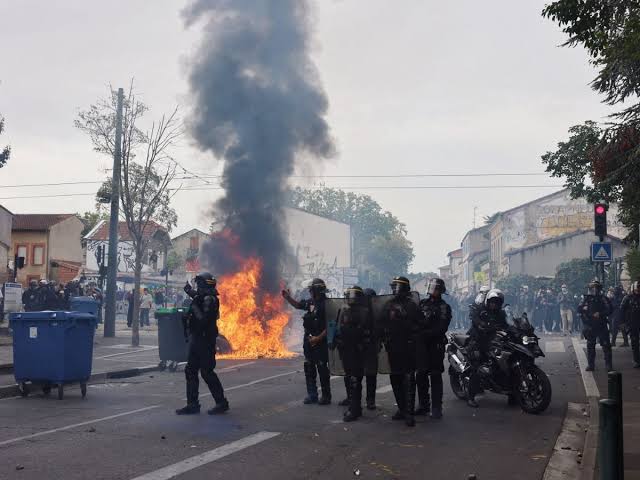
What began among students in disadvantaged Paris suburbs has spread across the country. Their grievances are hardly revolutionary: overcrowded classrooms, deteriorating schools and shortages of teachers and support staff. Some protests have turned violent, with property damaged and attacks reported against police and education personnel. The state has a responsibility to respond to that violence.
But more than 5000 people, many teenagers, have been arrested. Tear gas and rubber bullets have been used, protesters have suffered serious injuries, and investigations have been opened into allegations of police violence. Behind those confrontations remains the image of children asking why the quality of their education should depend upon the neighbourhood in which they were born.
In Spain, the trigger is different but the desperation is recognisable.
An 87 year old woman being evicted from the Madrid home in which she had lived for decades became a symbol of a housing crisis that has pushed tens of thousands onto the streets. Average rents have almost doubled over a decade. Parliament has rejected emergency measures intended to protect vulnerable tenants and curb speculation. Most demonstrations across some 50 cities have been peaceful, although clashes in Valencia led police to use tear gas and rubber bullets.
In India, protests over revisions to electoral rolls have resulted in repeated detentions. Demonstrators allege that eligible voters have been removed; the Election Commission says the exercise is intended to eliminate duplicate, deceased and ineligible entries and has instructed officials to restore eligible voters omitted in error. Some protesters have breached barricades, while police have restricted assemblies and detained demonstrators. Rights organisations have raised concerns about the response.
Pakistan cannot look at these images as though they belong to somebody else’s story.
Here too, political protests, movements over rights and demonstrations in peripheral regions have repeatedly collided with barricades, detentions, communication restrictions and allegations of excessive force. Human rights organisations have documented concerns over restrictions on assembly and expression, while the state confronts genuine security threats and episodes of protest related violence. Both realities exist simultaneously. Acknowledging one does not require pretending the other does not.
Perhaps this is precisely where our conversations about protest go wrong.
We reduce them too quickly to binaries. Protester or police. Order or chaos. Government or opposition. Patriot or dissident.
But democracy was never supposed to require citizens to agree with the state. Its harder test is whether institutions can tolerate disagreement without automatically treating it as a threat.
None of this means that every protest is peaceful, every demand reasonable or every government response illegitimate. States have an obligation to protect people from violence. Police officers are citizens too, and they should not be expected to absorb stones, fire or physical attacks in the name of democratic tolerance.
But force is supposed to be a last instrument of public order, not a substitute for political listening.
That distinction becomes particularly important in a world already under extraordinary pressure.
People are living through wars they did not choose, economic decisions they did not make and climate disasters they did little to cause. Younger generations are inheriting housing markets they cannot afford, institutions they increasingly distrust and an environmental crisis they will spend their lives managing.
If their response is to enter the public square and say, this is not working, the first institutional instinct cannot always be to empty the square.
There is something profoundly dangerous about societies becoming accustomed to images of teenagers running from tear gas, elderly people losing homes, demonstrators dragged into police vehicles and streets transformed into battlegrounds between citizens and those tasked with protecting them.
Not because every protester is right.
But because the ability to ask for change without fear is one of the mechanisms through which societies correct themselves.
Perhaps that is what feels so disheartening about looking at the world right now. Humanity is confronting enough suffering that we genuinely cannot prevent.
We should be far more careful about creating the suffering that we can.