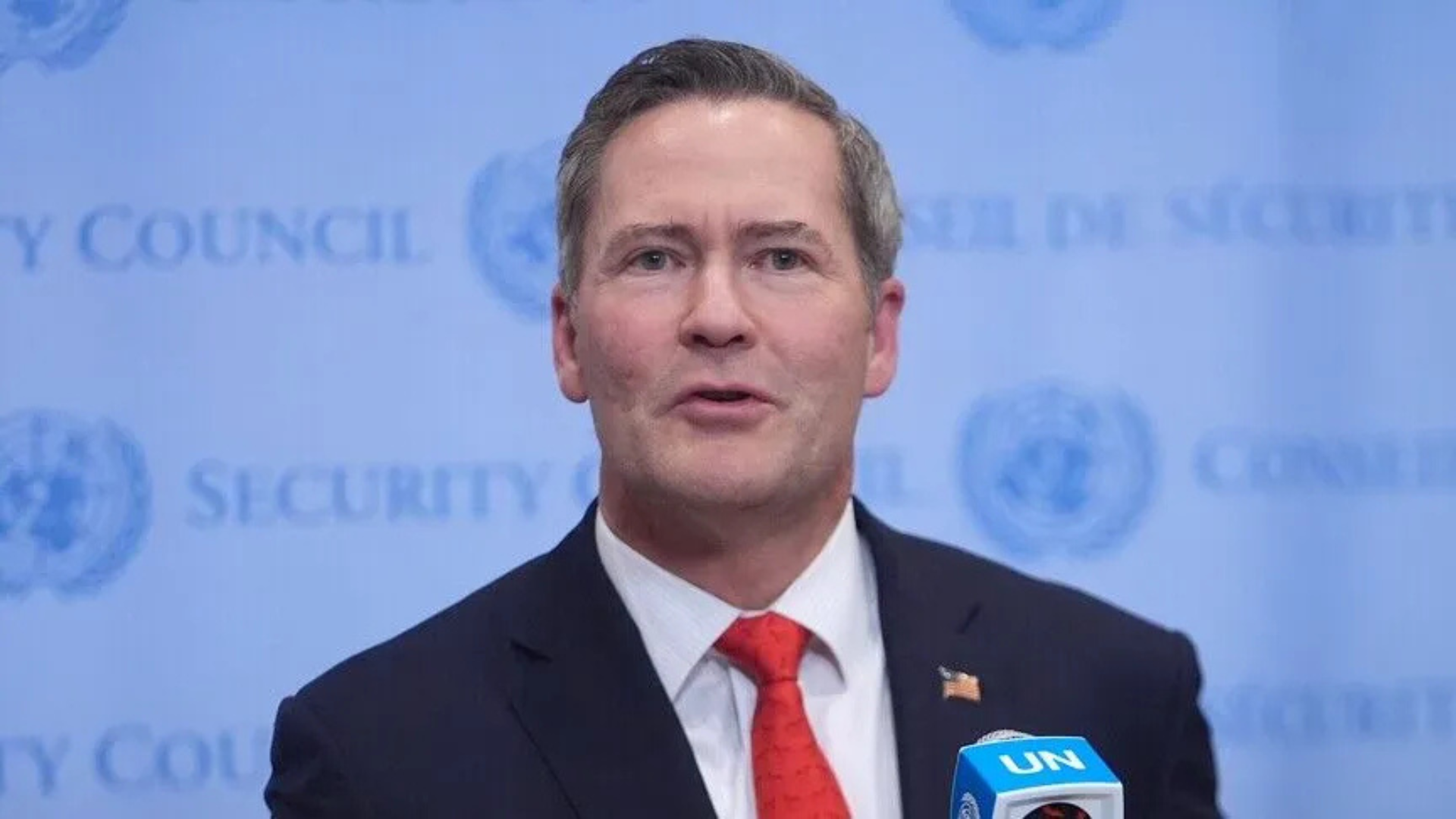
Istanbul: US Ambassador to the United Nations Mike Waltz said on Sunday that the door remained open for Iran to return to negotiations aimed at ending the conflict in the Middle East, while saying the Trump administration believed time was on its side.
Speaking at an Al-Monitor Live event in New York on the sidelines of the UN General Assembly, Waltz said Washington expected Iran to eventually return to the negotiating table, preferably through diplomatic and peaceful means.
“I do believe that to be the case,” Waltz said when asked whether the United States believed time was on its side in the conflict with Iran, which began on Feb. 28.
Waltz dismissed reports that Tehran had demanded an end to US sanctions and reparations as conditions for resuming talks, describing such reports as “fantastical”.
He said Iran’s economic position had weakened, citing pressure on its economy and the decline of its currency. Waltz said the Iranian government was at its weakest point since 1979 and was continuing to weaken. “They’re going to come back [to talks], I hope peacefully and diplomatically,” he said.
On Gaza, Waltz described the administration’s approach as a “new type of multilateralism” and said discussions with Israel on implementing President Donald Trump’s 20-point Gaza plan could move forward after Israel’s Oct. 27 parliamentary election.
The plan includes the establishment of a Palestinian technocratic administration, reconstruction efforts and the deployment of an International Stabilization Force.
However, negotiations over Hamas’ disarmament and an Israeli withdrawal have stalled.
Waltz also said there were “prospective members” interested in joining the Abraham Accords, which seek to normalise relations between Israel and other countries, but did not identify them. He welcomed Israel and Morocco’s decision earlier this month to exchange ambassadors.
On Iraq, Waltz praised Prime Minister Ali al-Zaidi’s efforts to bring Iran-backed militias under state control. He said Iran’s weakened position could create an opportunity to reduce the influence of such groups in Iraq.
The remarks came as the US administration continued to link diplomatic engagement with Iran to broader regional issues, including Gaza and the role of Iran-backed armed groups.