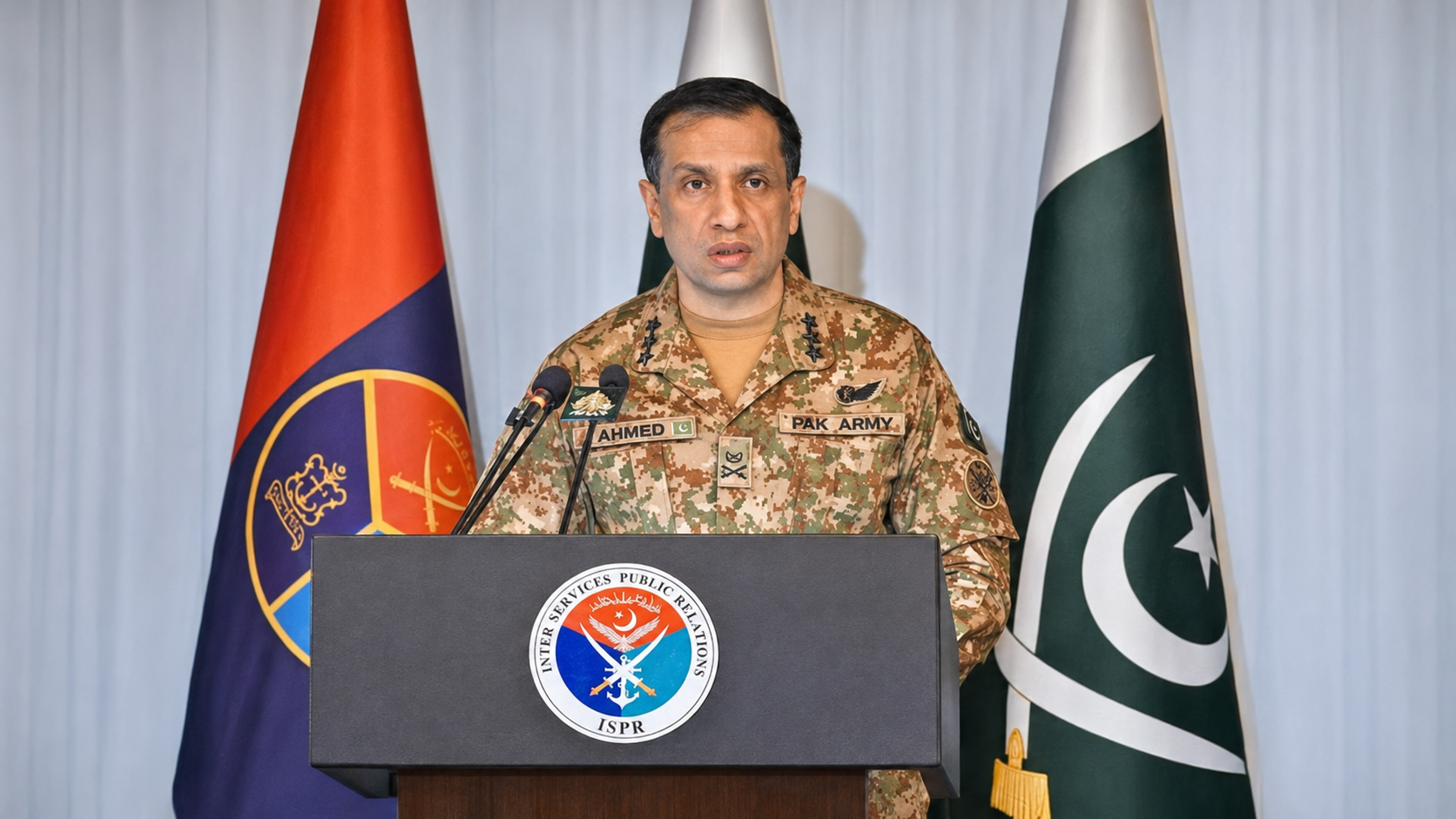
Islamabad: Pakistan is prepared to take all necessary defensive measures to protect Saudi Arabia under existing defence agreements, military spokesperson Lieutenant General Ahmed Sharif Chaudhry said, as missile and drone attacks on the kingdom raise concerns over security across the Middle East.
In an interview with Saudi newspaper Asharq Al Awsat, reported on Thursday, the Director General of Inter Services Public Relations (ISPR) said Pakistan's commitment to Saudi Arabia's sovereignty, territorial integrity and security was non negotiable.
He said Islamabad would continue providing military personnel, defence capabilities, training and logistical assistance under its agreements with Riyadh and the Makkah Joint Defence Agreement (MJDA) involving Pakistan, Saudi Arabia and Türkiye.
The statement follows a series of attacks by Yemen's Houthi movement on Saudi territory, including airports, oil facilities and other infrastructure. The Saudi led coalition has reported deaths and injuries from the attacks, while disruptions to aviation and energy facilities have increased concerns over the conflict's economic and security consequences.
Chaudhry condemned attacks on civilian infrastructure and said protecting Saudi Arabia and the two holy mosques in Makkah and Madinah remained a priority for Pakistan.
The military spokesperson said the three countries were moving towards implementing their collective defence commitments under the Makkah agreement, signed in August. The arrangement provides that an armed attack against one signatory will be regarded as an attack against all three.
Chaudhry said implementation would involve strengthening coordination between their armed forces, sharing intelligence and maintaining readiness to respond to threats. He confirmed that Pakistani military personnel were already stationed in Saudi Arabia, where they undertake defence related assignments, training and military exercises.
Pakistan would continue providing assistance according to Saudi Arabia's defensive requirements, he said, without disclosing details of troop numbers or deployment arrangements. The military spokesperson maintained that the agreements were defensive in nature and did not authorise offensive action against another country.
Pakistan and Saudi Arabia signed a bilateral Strategic Mutual Defence Agreement in September 2025, establishing a framework for military cooperation and mutual support in the event of aggression.
The agreement was followed by the MJDA on August 7, 2026, when Pakistan, Saudi Arabia and Türkiye formalised a trilateral arrangement for collective deterrence and defence cooperation.
The pact also provides for coordination in military training, intelligence sharing and defence industries. Türkiye's parliament approved the agreement in November, following ratification by Pakistan and Saudi Arabia.
Pakistan pursues talks with Iran
Alongside its defence commitments, Islamabad has maintained diplomatic engagement with Tehran as regional governments seek to prevent further escalation. Chaudhry referred to an October 26 meeting in Tehran involving representatives of the Makkah defence pact and Iranian officials.
He said the discussions were intended to establish a framework for reducing tensions and improving regional cooperation.
Chief of Defence Forces and Chief of Army Staff Field Marshal Asim Munir participated in the diplomatic engagement following an earlier visit to Iran. According to Chaudhry, the participants agreed to continue consultations aimed at promoting peace and addressing security concerns.
The talks took place against the backdrop of the regional conflict that escalated following American and Israeli strikes on Iran in February. Since then, retaliatory attacks, Houthi operations against Saudi Arabia and disruptions to shipping through the Strait of Hormuz have increased pressure on regional economies.
The October discussions also covered proposals for preventing further hostilities, restoring diplomatic engagement and addressing maritime security concerns. No agreement ending the conflict has been announced.
Balancing defence commitments and diplomacy
Pakistan's position reflects its attempt to maintain security cooperation with Saudi Arabia while preserving diplomatic channels with Iran. Islamabad has longstanding military and economic relations with Riyadh, including defence training, personnel exchanges and cooperation between their armed forces.
At the same time, Pakistan shares a border with Iran and has sought to avoid becoming directly involved in the regional conflict. The Makkah agreement introduces a collective defence framework that could increase coordination between Pakistan, Saudi Arabia and Türkiye during regional security crises.
However, questions remain over how the pact would be implemented if attacks on a member state required a coordinated response. Turkish lawmakers raised concerns during the ratification process about the possibility of being drawn into regional conflicts, while government representatives maintained that military deployments would remain subject to national approval procedures.
The agreement also has implications for relations with Iran, which is seeking guarantees against further attacks on its territory. Pakistan has maintained that the pact is not directed against Tehran or any other country and is intended to deter aggression rather than expand military confrontation.
The renewed attacks on Saudi territory have placed attention on the practical obligations established under the defence agreements. On Thursday, Saudi authorities reported that debris from intercepted ballistic missiles had fallen in the Makkah region, adding to concerns over the proximity of attacks to population centres.
The Houthis have denied targeting the holy cities, maintaining that their operations are directed at military and strategic facilities. While Pakistan has reiterated its readiness to assist Saudi Arabia, Chaudhry's statements did not announce a new deployment or confirm direct Pakistani involvement in combat operations.
The distinction remains central to Islamabad's position as it seeks to fulfil its defence commitments while supporting negotiations intended to contain the conflict.