Islamabad: Supreme Court Justice Jamal Khan Mandokhail on Wednesday warned that interference by parliament or the executive in judicial affairs could weaken constitutional protections and erode public confidence in the justice system, urging state institutions to respect the limits of their authority.
Addressing a full court reference held at the Supreme Court to mark his retirement, Justice Mandokhail said judicial independence was necessary to protect citizens' fundamental rights and ensure accountability across all branches of government.
He cautioned that courts operating under political or executive pressure risked applying laws selectively, allowing those in positions of authority to escape scrutiny while denying citizens equal protection.
The outgoing judge said undermining judicial independence could have consequences for the state, lawmakers and society, particularly when people no longer regarded courts as institutions capable of resolving disputes fairly.
He warned that the loss of public confidence could encourage individuals to seek justice outside the legal system, increasing the risk of disorder. Justice Mandokhail emphasised that responsibility for protecting judicial independence rested with parliament, the judiciary and the executive, rather than the courts alone.
He said the Constitution defined the powers and limitations of each institution, requiring them to exercise authority within their respective constitutional boundaries. According to the judge, the judiciary's responsibility was to interpret and enforce the Constitution while ensuring that government institutions remained accountable under the law.
He also warned that political opponents, government critics and ordinary citizens could face discrimination if courts were unable to operate without external influence. His remarks highlighted the relationship between judicial independence and the protection of civil liberties, including the right to challenge government decisions and seek remedies against unlawful actions.
The warning comes amid continuing debate in Pakistan over the balance of authority between parliament and the judiciary, particularly concerning constitutional amendments, judicial appointments and the courts' role in reviewing government decisions. These issues have raised questions about how the judiciary can exercise its constitutional responsibilities while remaining independent of political and executive pressure.
Justice Mandokhail maintained that judicial authority derived from the Constitution and that judges were required to decide cases according to the law and evidence, regardless of the parties involved. He also stressed that constitutional rights belonged equally to all citizens and could not be treated as privileges granted by those in power.
Chief Justice of Pakistan Yahya Afridi, addressing the reference, acknowledged Justice Mandokhail's contributions to constitutional law and judicial administration. He recalled the retiring judge's career, from his legal practice in Balochistan to his appointment to the Supreme Court, highlighting his work to strengthen district courts and judicial infrastructure during his tenure as chief justice of the Balochistan High Court.
Afridi also emphasised the importance of cooperation between judges and lawyers in maintaining the administration of justice. He said the Supreme Court had introduced standard operating procedures (SOPs) intended to improve consistency, transparency and accountability in court administration.
The chief justice further highlighted legal aid initiatives aimed at ensuring that people unable to afford legal representation could still access the justice system. Representatives of the legal profession also discussed the need to improve case management, reduce delays and expand the use of technology in judicial proceedings.
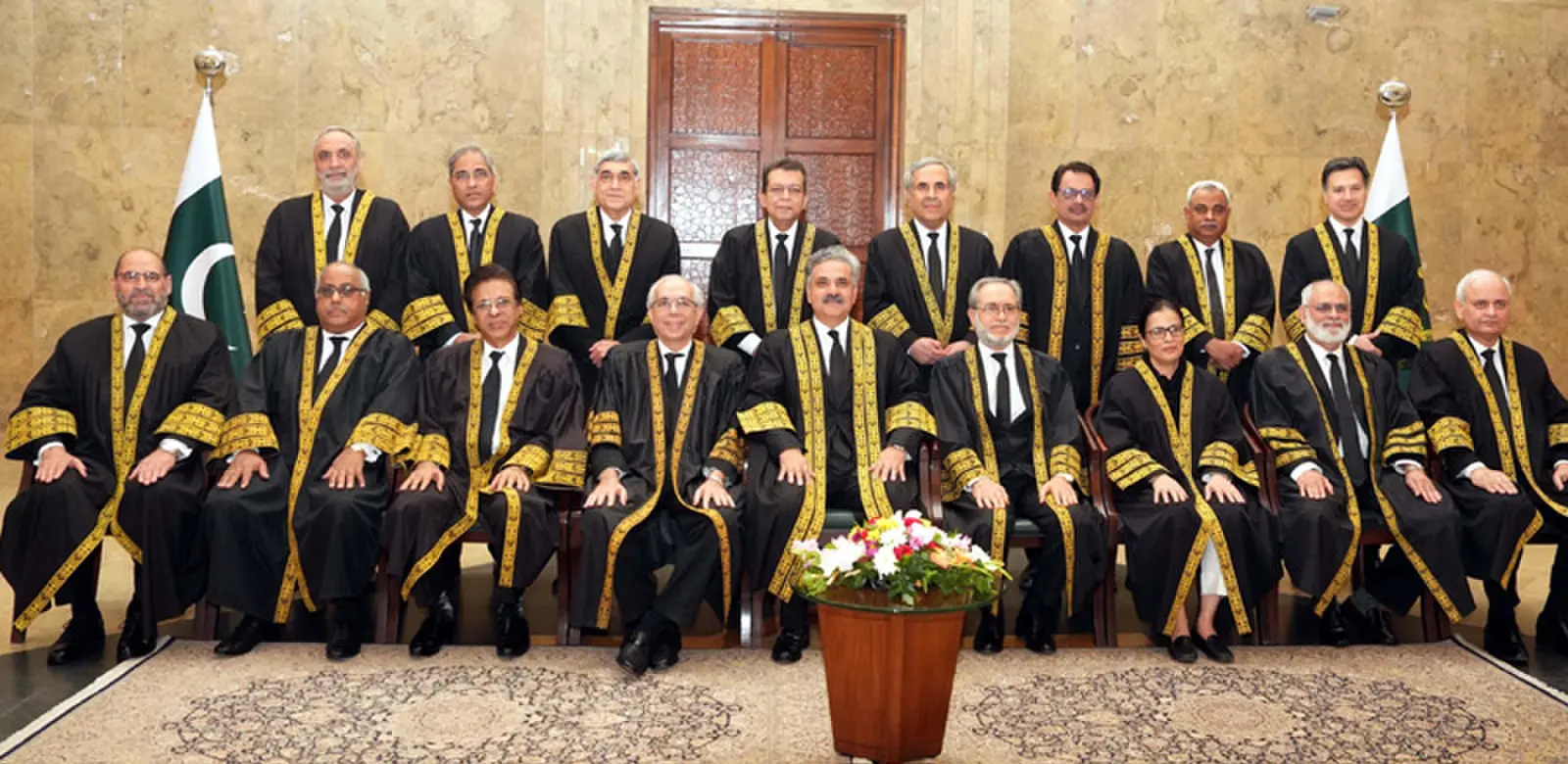
The reference was attended by Attorney General Mansoor Usman Awan, Pakistan Bar Council Vice Chairman Pir Muhammad Masood Chishti, Supreme Court Bar Association President Syed Amjad Shah, Supreme Court judges and members of the legal fraternity.
Justice Mandokhail's retirement brings to a close his tenure at the Supreme Court, where he served after holding judicial office in Balochistan. His farewell remarks place renewed attention on the constitutional separation of powers and the need for courts to remain accessible to citizens seeking protection against unlawful state action.
The broader issue extends beyond relations between state institutions, as judicial independence also affects the enforcement of fundamental rights, accountability of public officials and public confidence in legal proceedings.
While the judiciary is responsible for interpreting the law, the effectiveness of constitutional protections depends on state institutions respecting court decisions and operating within the powers assigned to them.