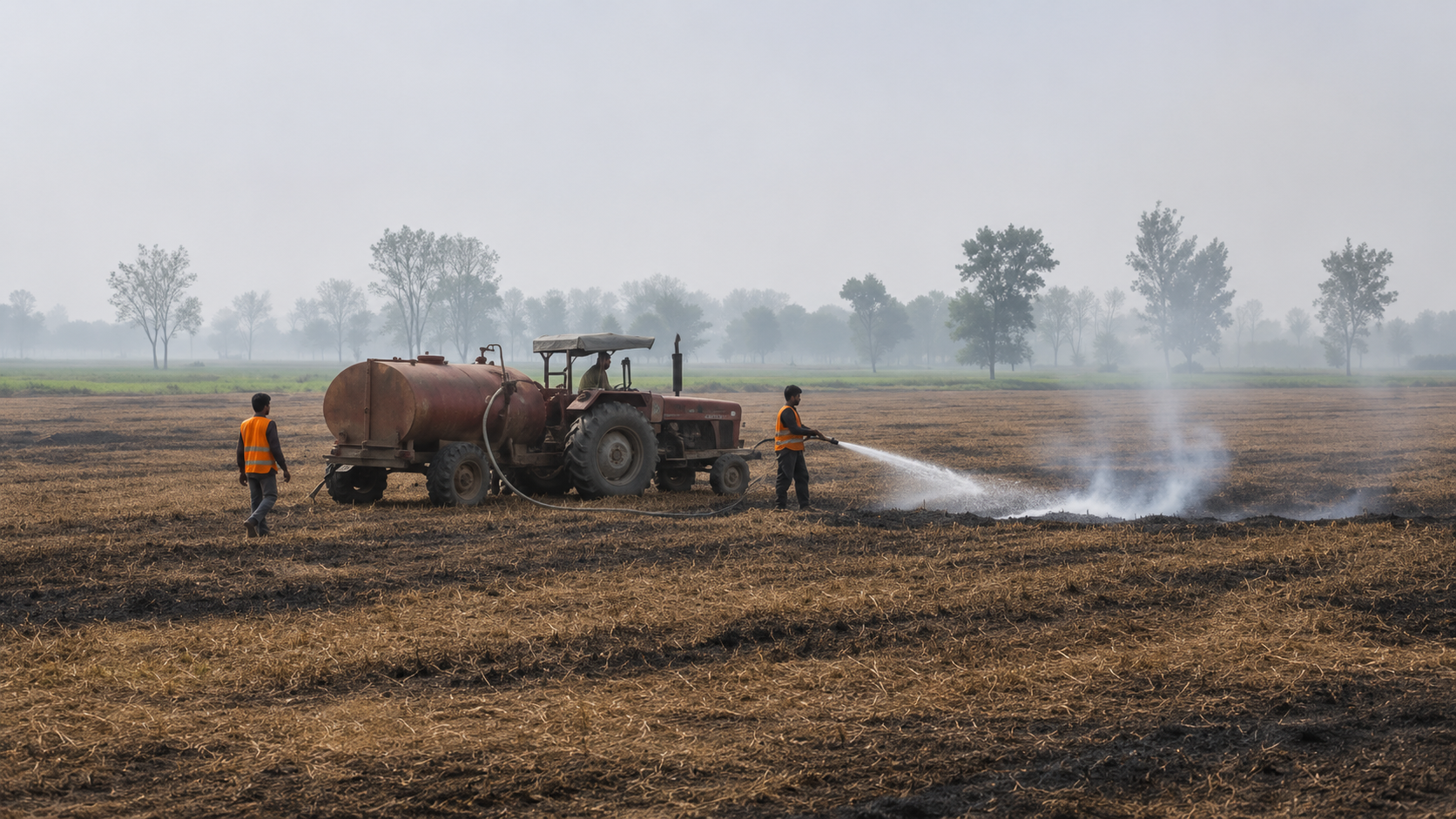
Lahore: The Punjab Environment Protection Agency (EPA) identified 593 agricultural fire incidents across eight districts, claiming that 581 were extinguished as part of an intensified campaign against crop residue burning and worsening air pollution.
According to the agency, the incidents were detected in Hafizabad, Sheikhupura, Nankana Sahib, Faisalabad, Kasur, Sialkot, Sargodha and Gujranwala through satellite surveillance, field inspections and specialised night patrols.
The EPA said its response teams extinguished 581 fires, while the status of the remaining 12 incidents was not specified.
The operations form part of Punjab's ongoing anti smog campaign, which focuses on agricultural burning during the crop harvesting season.
Satellite monitoring expanded across Punjab
The agency strengthened surveillance through the Punjab Climate Watch Hub, a monitoring system that analyses satellite detected fire activity around the clock.
The system identifies potential fire locations and sends verified alerts to district teams for immediate action.
Quick Response Units equipped with tractor mounted water bowsers, firefighting equipment and trained personnel were also deployed to reach affected agricultural areas.
EPA Director General Abdullah Nayyar Sheikh conducted surprise inspections during the past week to assess the deployment of field teams and surveillance arrangements along major motorways and Grand Trunk Road.
He directed officials to maintain uninterrupted night patrols, respond promptly to satellite alerts and closely monitor areas considered vulnerable to crop residue burning.
Specialised night squads were also assigned to agricultural belts, motorway corridors and nearby settlements to detect fires that may otherwise remain unnoticed after dark.
Crop burning contributes to Punjab's smog problem
Burning crop residue releases fine particulate matter and other pollutants that can worsen air quality, particularly when weather conditions trap emissions close to the ground.
Punjab faces recurring smog episodes during autumn and winter, when agricultural fires combine with emissions from vehicles, industries and other sources.
Satellite data reported earlier this month showed substantial crop fire activity across Pakistani Punjab during October, highlighting the scale of the challenge facing environmental authorities.
However, satellite detections do not necessarily represent the total number of fires, as some incidents may occur between satellite observations or remain obscured by clouds.
The EPA did not disclose whether penalties were imposed in connection with the latest 593 incidents.
The agency said surveillance and rapid response operations would continue as authorities seek to limit agricultural burning and its contribution to air pollution.