Islamabad: Pakistan has confirmed its ninth polio case of 2026 after a seven month old boy tested positive for the virus in Khyber Pakhtunkhwa's Khyber district, as Prime Minister Shehbaz Sharif directed health authorities to prepare an eradication strategy with provincial governments within a week.
The National Emergency Operations Centre (NEOC) confirmed on Thursday that the child belonged to Mastak union council in Bara tehsil. The infection is the third reported from Khyber district this year and the seventh from KP, which accounts for most of Pakistan's cases.
According to the NEOC, genetic analysis of poliovirus detected in all three Khyber cases has identified links to strains circulating in Afghanistan, where 50 cases have been reported this year. Health officials said the findings indicated continued cross border circulation of the virus, particularly in areas where population movement and gaps in vaccination coverage complicate eradication efforts.
KP remains centre of poliovirus transmission
Of Pakistan's nine reported cases in 2026, seven have emerged from KP and two from Sindh. Within KP, three cases each have been recorded in Khyber and Bannu districts, while North Waziristan has reported one.
The NEOC identified the Peshawar block, comprising Peshawar and Khyber districts, alongside neighbouring areas of southern KP, as locations where the virus continues to circulate. The latest infection follows another case reported from Khyber district on November 1, involving a 13-month-old girl.
Although Pakistan's annual polio cases have declined from 31 in 2025 to nine so far in 2026, continued transmission in border districts remains a challenge for eradication efforts. Pakistan and Afghanistan are the only two countries where wild poliovirus remains endemic.
Vaccination campaign targets 24 million children
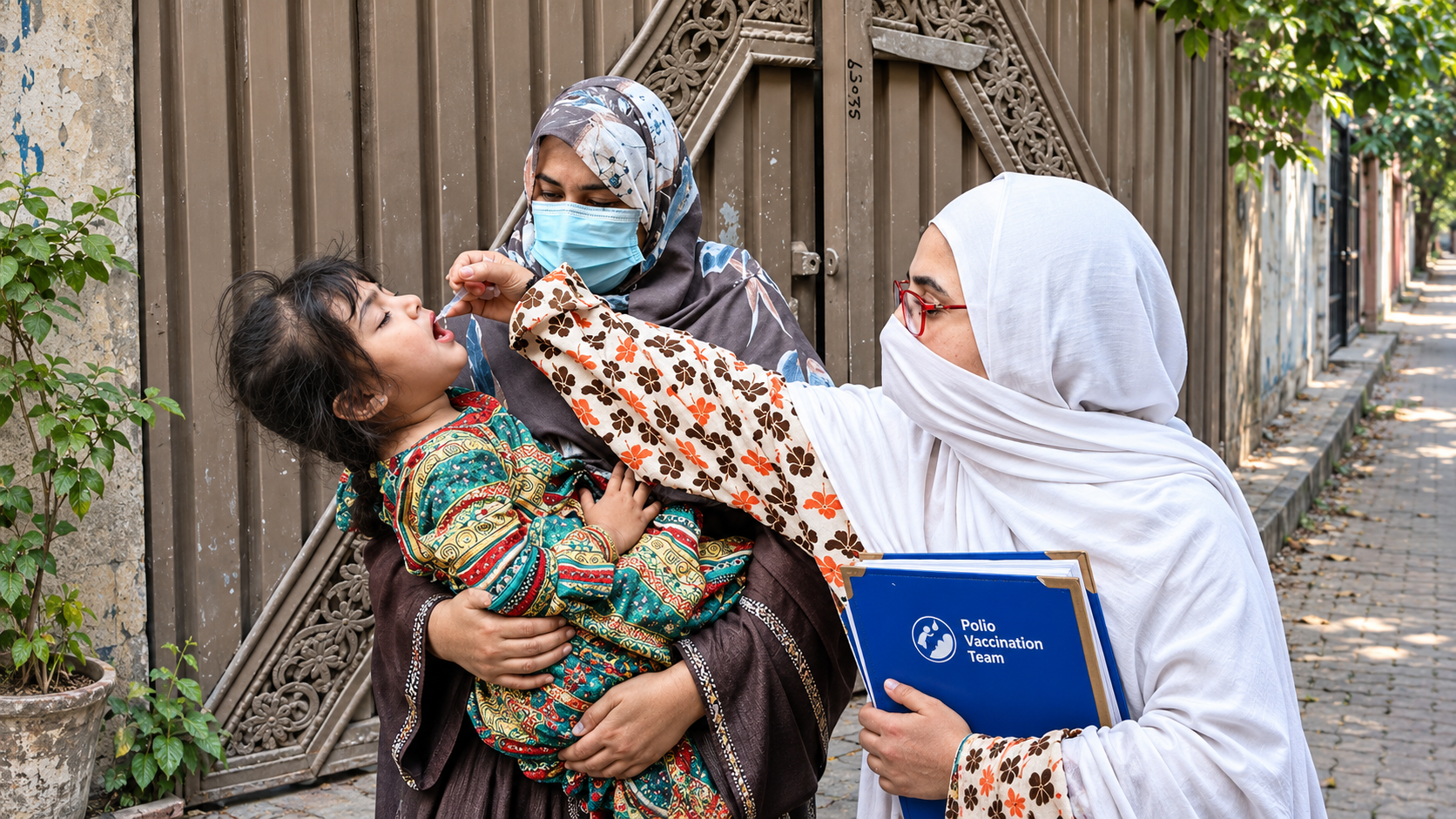
The latest case was confirmed during a vaccination campaign running from November 2 to 8 across 97 districts. More than 200,000 frontline workers have been mobilised to administer polio drops to approximately 24 million children under five.
The campaign is being conducted simultaneously in Pakistan and Afghanistan to limit transmission across the border. Health authorities also reported that a vaccination drive using injectable polio vaccines had reached approximately 829,000 children in 78 union councils of the Peshawar block between October 26 and 31.
The NEOC said investigations into the latest case were under way to determine further measures needed to interrupt transmission. Polio is a viral disease that can cause permanent paralysis. Although there is no cure, vaccination can prevent infection and protect children against the disease.
PM orders action plan within one week
Chairing a review meeting in Islamabad on Thursday, Prime Minister Shehbaz Sharif expressed concern over the reported infections and called for closer coordination between federal and provincial authorities.
He directed the federal health minister, minister of state for health, health secretary and members of the polio eradication team to visit all four provinces and consult their chief ministers and chief secretaries.
The officials were instructed to prepare a coordinated action plan within a week, focusing on vaccination coverage, surveillance and access to communities where campaigns face difficulties. The prime minister also stressed the need to protect vaccination workers and ensure that security concerns do not prevent teams from reaching children.
Cross border movement remains a challenge
During the meeting, officials identified movement across the Pakistan Afghanistan border as one factor contributing to the virus's continued circulation. The briefing also indicated that Punjab had recorded no new polio case since February 2025, while Balochistan reported none in 2025 or 2026. Azad Jammu and Kashmir and Gilgit Baltistan were also reported to have no cases.
Health authorities noted a decline in poliovirus detections in environmental samples from Sindh. Despite the reduction in cases, the persistence of infections in KP indicates that vaccination gaps and continued transmission remain obstacles.
The next phase of the eradication programme will depend on whether federal and provincial authorities can improve immunisation coverage, maintain access to affected communities and coordinate surveillance and vaccination across the Afghan border.