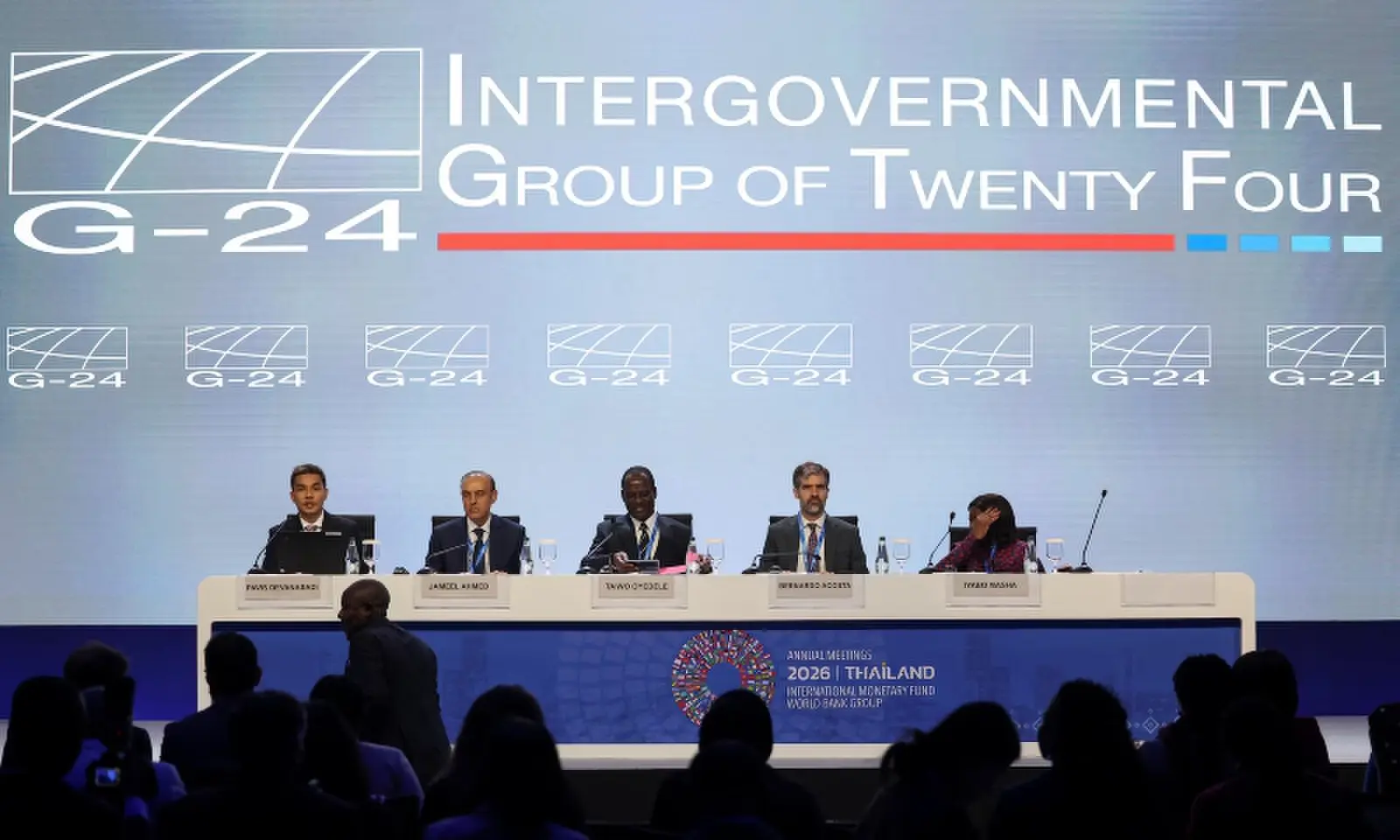
Islamabad: Pakistan assumed the chairmanship of the Group of 24 (G 24) on Sunday, November 1, with Finance Minister Muhammad Aurangzeb pledging to use the position to advocate reforms to international financial institutions and improve access to development financing for emerging economies.
The G 24, established in 1971, is an intergovernmental forum that coordinates the positions of developing countries on international monetary, financial and development issues, particularly in discussions involving the International Monetary Fund (IMF) and World Bank.
According to a statement issued by the Ministry of Finance, Aurangzeb described Pakistan's chairmanship as a responsibility to strengthen cooperation among developing economies and ensure their concerns receive greater attention in global economic policymaking.
“The future of developing economies is not peripheral to the future of the global economy. It is central to it,” the minister said.
Pakistan takes over the position from Nigeria, whose leadership Aurangzeb acknowledged while pledging to build on the group's existing work.
Pakistan outlines three priorities
The finance minister identified three areas that would guide Pakistan's tenure: placing development at the centre of economic policymaking, strengthening multilateral institutions and reforming the international financial system to better address the needs of developing countries. Under the first priority, Aurangzeb called for macroeconomic stability to support investment, productivity and employment.
He argued that developing and low income countries needed economic conditions that would allow them to move beyond managing financial crises towards longer term growth. The second priority concerns the governance of international financial institutions, particularly the IMF and World Bank, which were established under the Bretton Woods framework.
Pakistan intends to advocate greater representation for developing economies in decision making and more responsive policies from these institutions. The third priority focuses on improving access to financing, addressing debt burdens and strengthening financial protection against economic and climate related shocks.
Aurangzeb also called for greater mobilisation of public and private investment to support development programmes.
Why the chairmanship matters
The G 24 provides developing countries with a platform to coordinate their positions on international financial policies, including lending arrangements, debt restructuring and the distribution of resources within multilateral institutions.
Although the group does not directly control IMF or World Bank lending decisions, its collective positions can contribute to discussions about reforms, financing priorities and institutional governance.
For Pakistan, the chairmanship comes as the country continues to pursue economic stabilisation and reforms while facing development financing requirements and exposure to climate related disasters.
Pakistan has relied on IMF supported programmes to address balance of payments pressures and has repeatedly raised the need for international assistance to manage the economic effects of floods and other climate shocks. These experiences are relevant to the issues Aurangzeb has identified, particularly the availability of financing, debt sustainability and the policy flexibility available to countries undertaking economic reforms.
However, translating the G 24's proposals into policy changes will require engagement with the IMF, World Bank, their member governments and other international financial institutions. Decisions on voting arrangements, lending policies and financial resources remain subject to the governance structures of those institutions.
Cooperation with developing economies
Aurangzeb said Pakistan would work with G 24 members across Africa, Asia, Latin America and the Caribbean to develop common positions on economic and financial issues. He also called for international cooperation to address development financing gaps, climate shocks and fragmentation in the global economy.
The minister said Pakistan's approach would follow the group's principles of consultation and consensus, with an emphasis on securing outcomes rather than limiting discussions to policy statements.
“The true measure of our collective leadership will not simply be the strength of our voice, but the difference that voice makes,” he said.
Prime minister welcomes appointment
Prime Minister Shehbaz Sharif welcomed Pakistan's assumption of the chairmanship, describing it as a diplomatic achievement and an opportunity to contribute to discussions on international financial reform.
According to a statement issued by the Prime Minister's Office, Sharif expressed hope that Pakistan would use the position to advocate equitable access to climate financing and development opportunities for emerging economies.
He also praised Aurangzeb and his team for their diplomatic engagement during the recent annual meetings of the IMF and World Bank. The government has not announced specific reform proposals, financing commitments or a timetable for achieving the priorities outlined under Pakistan's chairmanship.
Pakistan's progress will therefore depend on its ability to build agreement among G 24 members and secure engagement from the institutions responsible for international financial policy.