Islamabad: The Oil and Gas Regulatory Authority (Ogra) has increased the official price of liquefied petroleum gas (LPG) for November, as supply shortages push open market rates to more than twice the regulated price and industry representatives warn of a possible shutdown over government policy.
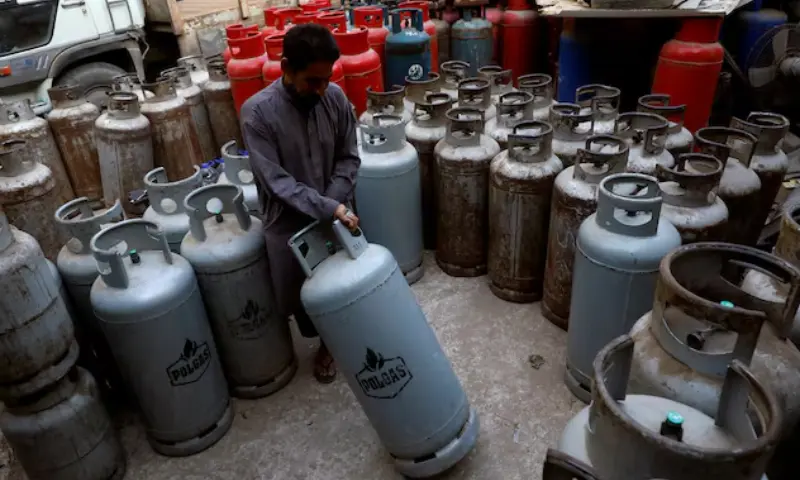
In a notification issued on Saturday, the regulator raised the LPG consumer price by Rs 14.73 per kilogramme, bringing the official rate to approximately Rs 294 per kg. The price of an 11.8kg domestic cylinder has increased by Rs 173 to Rs 3470, adding to household fuel expenses at a time when consumers are already paying substantially higher rates in the market.
Ogra set the November LPG price at Rs 294075 per tonne, compared with Rs 279341 in October.
The regulator attributed the increase to changes in the Saudi Aramco contract price, which serves as a benchmark for LPG pricing, and fluctuations in the US dollar exchange rate. According to Ogra, the Saudi Aramco benchmark increased by 6.47 percent over the previous month, while the average dollar exchange rate declined by 0.12 percent.
Despite the revised official rate, LPG is reportedly being sold for as much as Rs 630 per kg in the open market, while company operated franchises are charging up to Rs 400 per kg.
The difference between regulated and market prices has raised questions about supply availability and enforcement of notified rates.
Iran border closure disrupts supplies
LPG Distributors Association of Pakistan Chairman Irfan Khokhar attributed the shortage to the closure of the border with Iran amid the ongoing US Iran conflict. Khokhar said approximately 70 percent of the LPG supplied to Pakistan came from Iran, while domestic production accounted for the remaining 30 percent.
He called on the government to intervene against market manipulation and address disruptions in supply.
Pakistan relies on LPG for cooking and heating, particularly in areas where piped natural gas is unavailable or supplies are insufficient. Disruptions can therefore affect households and businesses that depend on cylinders for their daily energy needs. The gap between official and market prices also illustrates the limitations of price notifications when available supplies fall short of demand.
LPG companies threaten strike from 16 November
Meanwhile, the Pakistan LPG Marketers Association has warned that its members could suspend operations from 16 November if the government proceeds with a proposed LPG policy that excludes private-sector participation.
Association Chairman Ali Haider said the government should maintain deregulation in the sector rather than introduce measures that could restrict private companies' operations.
He argued that private importers were playing a role in maintaining supplies during the disruption.
According to Haider, of approximately 1.3 million tonnes of LPG, around 225000 tonnes was imported from Gulf countries, largely by private-sector companies. He did not specify the reporting period for these figures.
He also questioned the contribution of state owned import infrastructure, saying the ProGas terminal at Port Qasim, controlled by Sui Southern Gas Company, had last imported LPG approximately seven months earlier.
The association has written to Petroleum Minister Ali Pervaiz Malik, alleging that the draft policy submitted to the prime minister was prepared without consultation with private companies.
It has demanded complete deregulation of the LPG sector. The association also criticised the petroleum development levy imposed under the 2016 LPG policy, which it said amounted to Rs 4669 per tonne on locally produced LPG.
According to the association, the levy was intended to support imports by state owned companies, including Pakistan State Oil, Pak Arab Refinery Limited and Sui Southern Gas Company, during winter shortages and emergencies.
Haider alleged that despite the collection of substantial revenue through the levy, state owned companies had failed to arrange adequate imports during the current disruption. These allegations represent the association's position. The information available did not include a response from the companies concerned or the federal government.
Pricing and supply challenges
The dispute has brought attention to the relationship between government price regulation, private sector imports and Pakistan's dependence on cross border fuel supplies. While Ogra's monthly price determination reflects international benchmarks and exchange-rate movements, the prices paid by consumers also depend on domestic supply, distribution and enforcement.
The shortage has exposed the risk of relying on a limited number of supply routes, particularly when regional conflict affects cross-border trade. For the government, the immediate challenge is to restore LPG availability and address the difference between notified and market rates while resolving disagreements over the proposed policy.
No government decision on the marketers' demands or measures to prevent the threatened 16 November strike was established in the information available.