Bannu: The district administration in Bannu imposed a week long ban on pillion riding, the display of weapons and the use of tinted vehicle windows on Sunday, November 1, ahead of an anti polio vaccination campaign scheduled to run from November 2 to 5.
Deputy Commissioner Zia ur Rehman Khattak issued the order on Saturday under Section 144 of the Code of Criminal Procedure (CrPC), following a security assessment submitted by the district police officer (DPO).
The restrictions took effect on Sunday and will remain in place until November 7 across the district. According to the order, the police recommended precautionary measures because of previous attacks on polio vaccination teams and security personnel, as well as the prevailing security situation.
Section 144 allows district authorities to impose temporary restrictions on activities considered a risk to public safety. The order prohibits carrying a passenger on a motorcycle, publicly displaying weapons and using vehicles with tinted windows.
Land record officials, known as patwaris, and union council secretaries performing official duties during the vaccination campaign have been exempted from the restriction on displaying weapons. Anyone found violating the order may face legal action under Section 188 of the Pakistan Penal Code, which deals with disobedience of orders issued by public officials.
Vaccination target set at 228,000 children
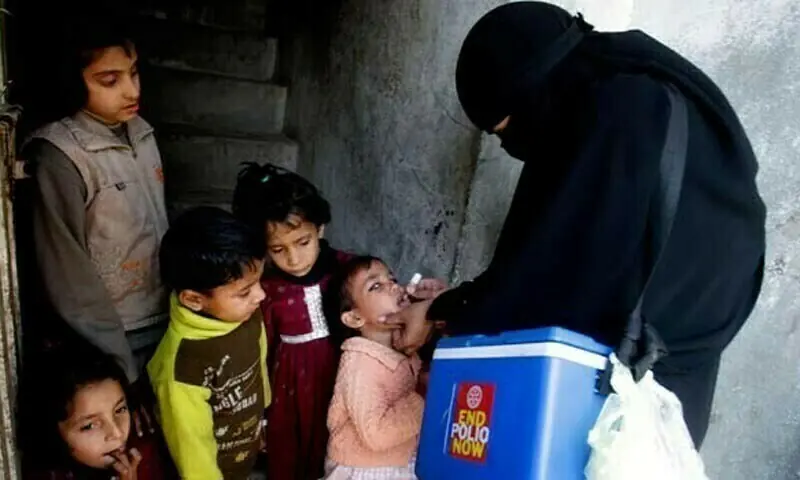
Deputy Commissioner Khattak and DPO Shafiullah Gandapur formally inaugurated the vaccination campaign on Sunday by administering polio drops to children. According to the district administration, health teams aim to vaccinate 228000 children under the age of five across 57 union councils in Bannu.
The campaign is scheduled to continue for four days, with security arrangements intended to protect vaccination workers and police personnel deployed alongside them.
Bannu remains a challenge for polio eradication
Pakistan has recorded seven polio cases so far in 2026, including four from Bannu Division, accounting for more than half of the country's reported cases. The figures underline the continued circulation of poliovirus in the region despite repeated immunisation campaigns.
Health officials have identified Bannu Division as an area where security conditions and operational difficulties have affected efforts to reach children consistently. A recent World Health Organisation report also identified security and operational constraints in the division as obstacles to conducting vaccination activities effectively.
Polio is a highly infectious viral disease that can cause irreversible paralysis, particularly among children. Vaccination remains the primary means of preventing infection and interrupting transmission. Pakistan and Afghanistan remain the only two countries where wild poliovirus continues to circulate endemically.
The restrictions in Bannu are intended to reduce security risks during the campaign, although their effectiveness will depend on enforcement and the ability of vaccination teams to reach their target population.
The district administration has not announced whether the restrictions will be extended beyond November 7.