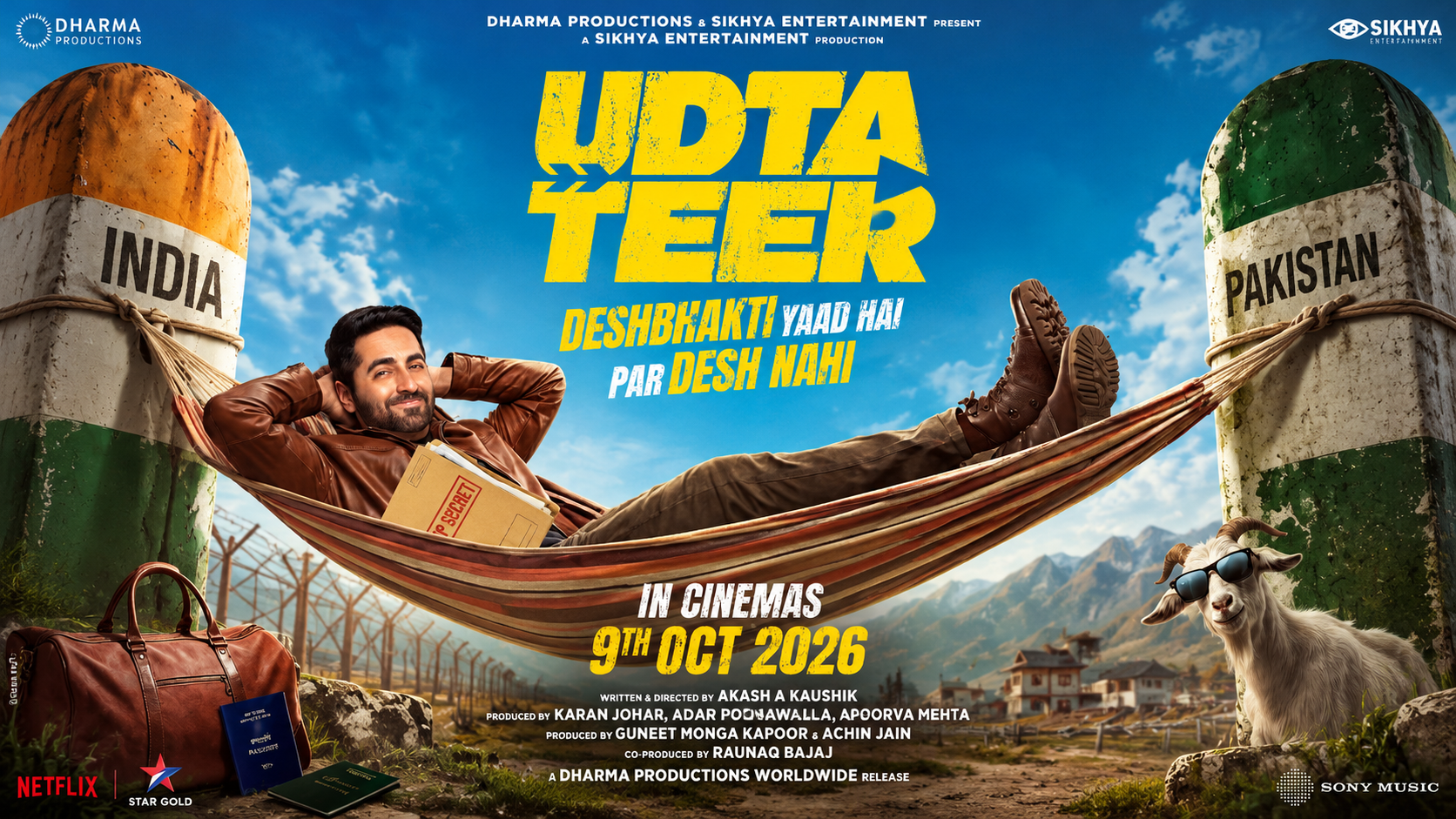
Kathmandu: Nepal has denied permission for the public screening of the upcoming Bollywood film Udta Teer, starring Ayushmann Khurrana and Sara Ali Khan, days before its scheduled theatrical release on 23 October.
According to a letter Nepal's Ministry of Communications and Information Technology issued to distributor National Cine Group Nepal, the Central Film Censor Board refused clearance under Section 8(3) of the National Cinema (Production, Exhibition and Distribution) Act, 2026.
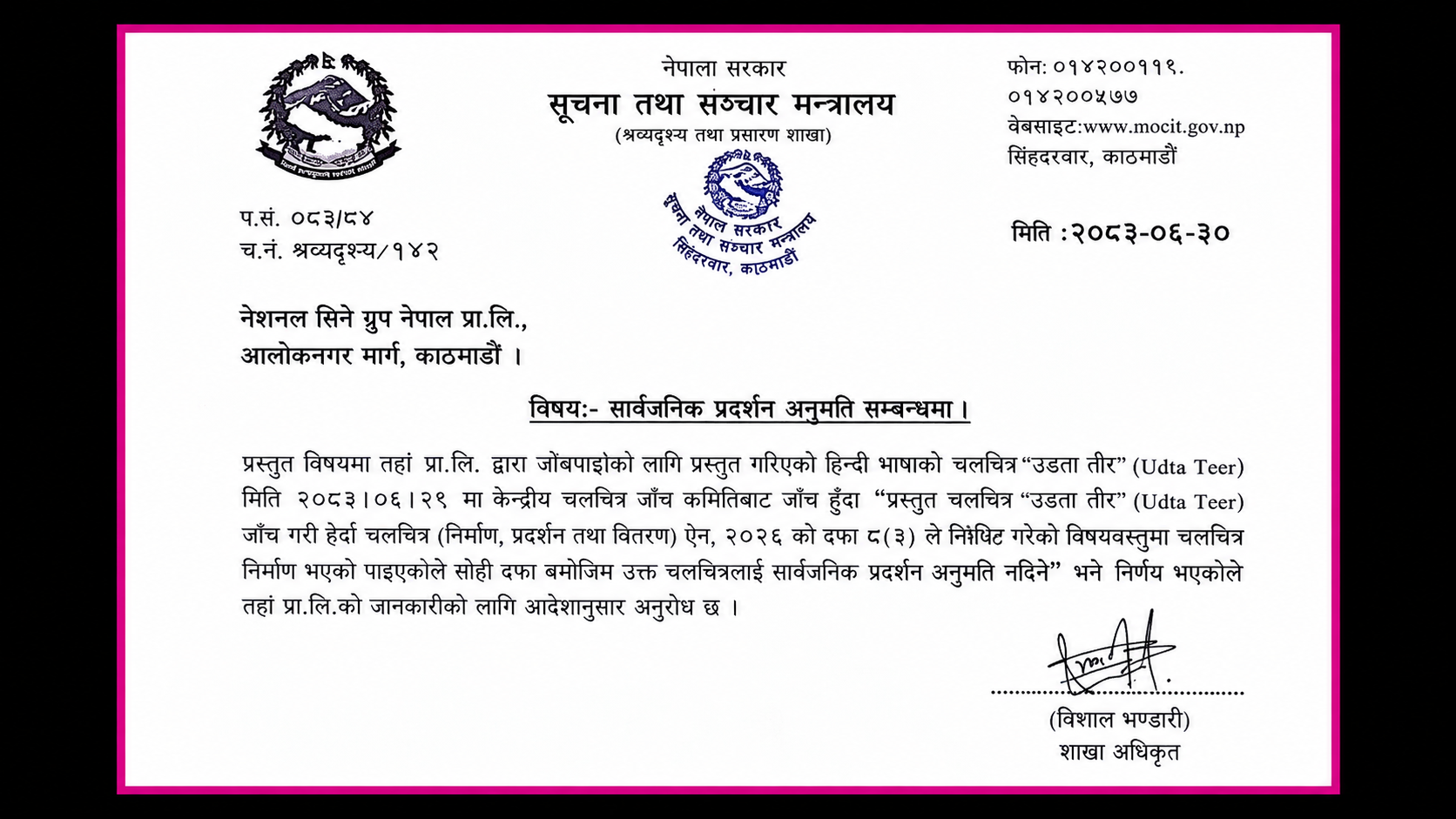
The provision allows authorities to withhold approval for films containing material considered a threat to national security, public order or Nepal's relations with other countries.
The board reportedly examined the submitted material before determining that the film fell within a category restricted under the law.
Indian media reports have linked the decision to the film's portrayal of Pakistan and tensions between Islamabad and New Delhi. However, the official letter does not explicitly identify Pakistan related content as the reason for refusing permission.
Directed by Aakash Kaushik, Udta Teer stars Khurrana, an actor whose filmography tackles social issues and falls outside conventional Bollywood action narratives.
His association with the film comes as Hindi cinema continues to produce stories centred on India Pakistan tensions, intelligence operations and cross-border conflict.
Films such as Dhurandhar reflect Bollywood's continuing interest in national security narratives. At the same time, actors including Akshay Kumar and Sidharth Malhotra have appeared in productions dealing with military operations, terrorism and India's relations with Pakistan.
Such films have also prompted debate over the distinction between political storytelling and the portrayal of neighbouring countries. Critics argue that some productions rely on Pakistan-related conflicts to generate interest, while supporters regard them as legitimate expressions of Indian national security concerns.
Bollywood's use of Pakistan as a subject is not new. Political tensions between the two countries have shaped film narratives for decades, with periods of confrontation often reflected on screen.
However, claims that Indian audiences have collectively grown tired of such films cannot be established without audience research or box-office evidence. Commercial performance and public reception vary by production.
The wider dispute has also affected entertainment distribution. In May 2025, Indian authorities directed streaming platforms operating in India to discontinue Pakistani content, extending restrictions beyond cinema to digital services.
Questions have separately surrounded Pakistani productions intended for international streaming platforms, including Jo Bachay Hain Sang Samait Lo. Allegations that Indian industry lobbying has prevented its release have circulated, but no verified evidence establishes that lobbying caused the reported delays.
Nepal's decision comes amid political tensions and restrictions affecting entertainment across South Asia.
Although reports have linked the refusal to Udta Teer's alleged portrayal of Pakistan, the official communication described does not specify the precise content that prompted Nepal's censorship decision.
According to currently available information, the Nepalese decision has not affected the film's planned release elsewhere.