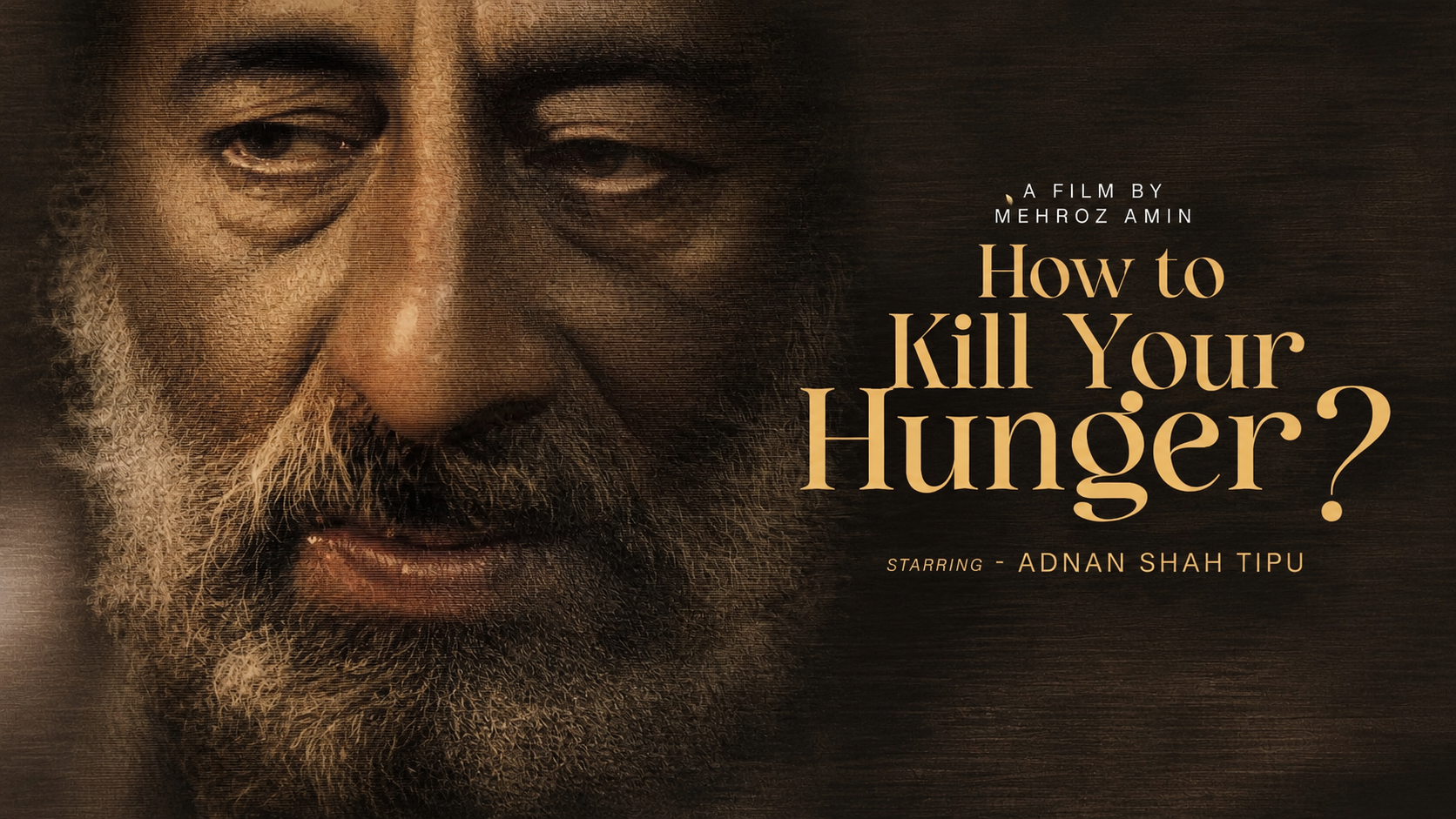
Lahore: Pakistani filmmaker Mehroz Ameen is working to bring independent Punjabi cinema to audiences beyond major cities through a crowdfunding initiative, while his latest short film, How to Kill Your Hunger, examines how economic hardship affects people's behaviour and decisions. In an interview, Amin discussed the film's production, his collaboration with actor Adnan Shah Tipu and plans to develop films with financial contributions from the public.
Co written with Zara Batool, How to Kill Your Hunger explores the psychological effects of poverty and the difficulties people face in meeting their basic needs. “The film is about us,” Amin said. “Because of our current political and economic scenario, so many people cannot afford three qualitative meals a day, even clean, simple home cooked daal roti.”
He said the film examines how the struggle to secure food and survive can influence a person's mental state and behaviour.

Adnan Shah Tipu's role and filming in Lahore
Amin said Adnan Shah Tipu was his only choice for the lead role because of his approach to acting and willingness to work without placing his seniority above the production team. “On set, he completely surrenders to the narrative. There is no ego, no 'I am the senior actor' dynamic. He worked with me as an equal peer,” the director said.
The film's opening sequence, which also features in its teaser, was filmed outside Lahore's Data Darbar. According to Amin, the production team, led by line producer Hamza Akram, had approximately 10 minutes to capture the scene before moving their equipment. The sequence was filmed without a permit.
During filming, Ameen asked Tipu to sit and eat a burger, an action that had not originally been included in the screenplay. He said the scene subsequently became important to establishing the character's emotional state and the film's overall direction.
The project also marks Amin's first collaboration with Kuwait based Darya Noor Productions, with Abdullah Al Kandari serving as co producer.
Awam Ki Film seeks public funding for Punjabi cinema
Alongside his filmmaking work, Ameen has launched Awam Ki Film, an initiative inviting members of the public to contribute as little as Rs 10 towards financing independent films. According to the filmmaker, the initiative has attracted 40 co producers over five months.
The funds are intended to support a feature film that can be screened in villages and smaller towns using portable projectors and speakers. Amin, who is originally from Sialkot and currently lives in Lahore, said access to cinema remains limited outside Pakistan's major urban centres.
He cited the response to a video in which he joked about being unable to find a cinema in Sukkur. According to Amin, viewers responded by expressing their desire for cinemas and film screenings in their own cities.
“Whether it is Attock, Sukkur, Khairpur, or villages across Punjab, KP, and Sindh, that is where the heart of Pakistan lies,” he said.

Expanding access to Pakistani films
Amin's initiative addresses two issues facing independent filmmakers: securing production funding and reaching audiences outside established cinema markets. Pakistan's commercial cinema infrastructure is concentrated largely in major cities, while independent filmmakers often depend on private investment, festivals and limited screening opportunities to reach viewers.
By seeking small contributions from the public, Awam Ki Film proposes an alternative financing model in which audiences can participate in supporting film production. Its proposed screenings would also allow films to reach communities without permanent cinema facilities.
However, Amin has not provided a confirmed release date, production budget or screening schedule for the planned feature film. The initiative's long term viability will depend on whether public contributions can sustain production costs and whether screenings can be organised across different locations.
Filmmaking and audience engagement
Amin has previously worked on short films including Class and Covid (2022), which was selected for Cannes. While international festivals remain part of his filmmaking experience, he said his current focus includes building a relationship with audiences who have limited opportunities to watch Pakistani films.
For Amin, screening a film is also an opportunity to understand how viewers interpret its themes. “Every time you show your film to people, it brings new questions and fresh thoughts into your mind. That is the sign of good art,” he said.
His approach combines the production of films dealing with social and economic issues with an attempt to change how those films are financed and distributed. Through How to Kill Your Hunger and Awam Ki Film, Amin is seeking to connect Punjabi language storytelling with audiences whose experiences are reflected in the subjects he chooses to explore.