Montreal: Canada and the European Union (EU) announced a new strategic partnership on Friday to strengthen economic security, defence cooperation and technological independence amid mounting uncertainty over their relations with the United States.
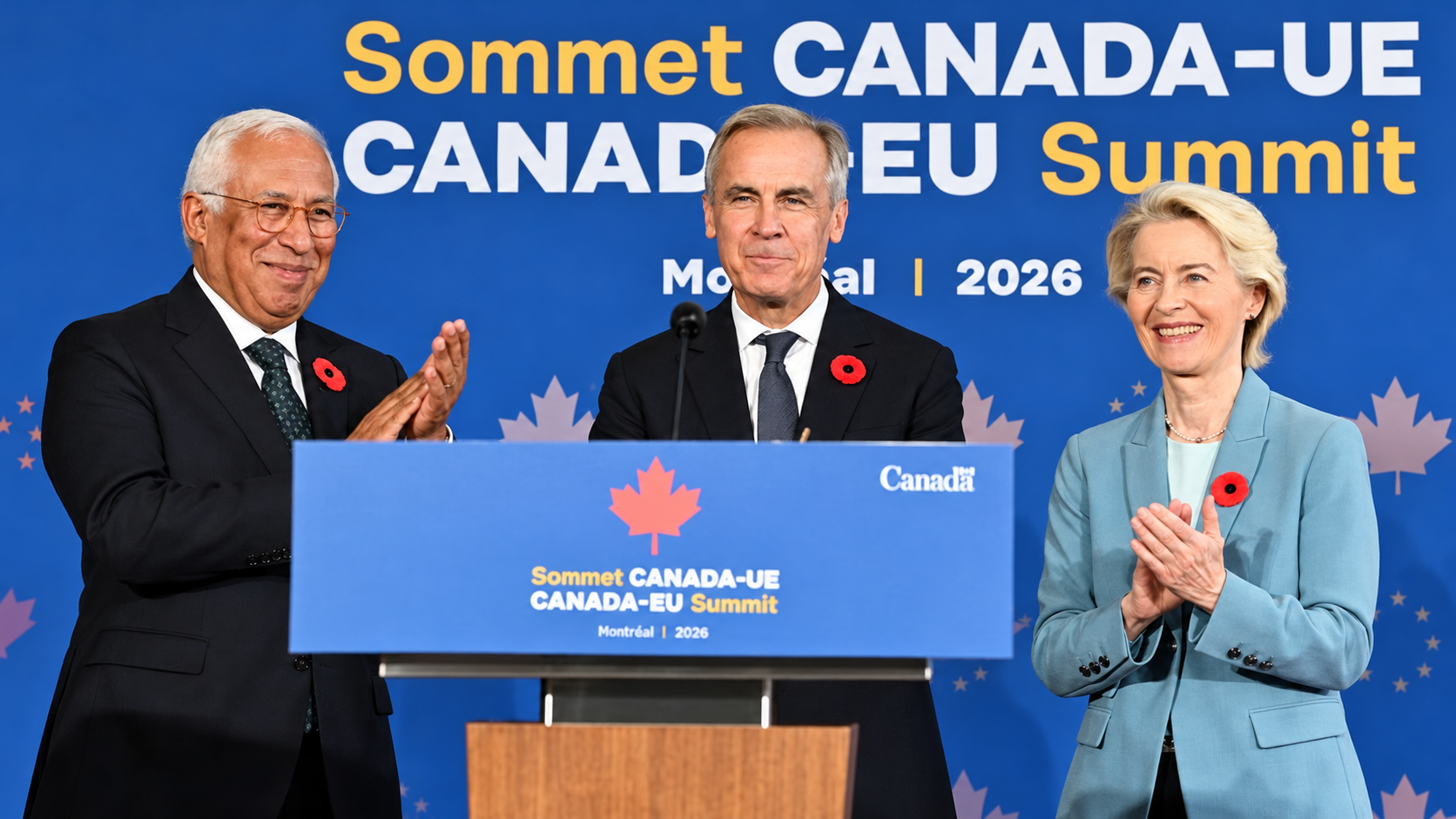
The agreement, named the Canada EU Alliance for the Future, was unveiled at the 21st EU Canada Summit in Montreal, attended by Canadian Prime Minister Mark Carney, European Commission President Ursula von der Leyen and European Council President Antonio Costa.
The alliance is intended to deepen cooperation between Canada and the EU's 27 member states and could eventually be extended to other like minded countries.
Canada commits EUR 500 million to Ukraine
One of the summit's major announcements was Canada's decision to join the EU's EUR 90 billion loan to support Ukraine.
Carney confirmed that Ottawa would initially contribute EUR 500 million to the arrangement, which is intended to help Ukraine meet its financial needs.
The commitment comes as European governments seek further international support for Kyiv amid the ongoing conflict with Russia.
Critical minerals and energy cooperation expanded
Canada and the EU agreed to strengthen supply chains for critical minerals used across advanced manufacturing, clean energy technologies and defence industries.
The partnership will encourage investment in mineral extraction, processing, refining, manufacturing and recycling activities.
Both sides will also explore strategic stockpiling arrangements to mitigate the risk of supply disruptions.
AI and digital trade form key priorities
The two partners announced substantial progress towards a digital trade agreement to reduce barriers and improve cross border data flows.
They also agreed to strengthen cooperation on artificial intelligence, cloud infrastructure and advanced computing.
The merged business is expected to maintain headquarters in Toronto and Berlin.
Partnership responds to changing US relations
The initiative follows growing trade and diplomatic tensions involving US President Donald Trump's administration.
Canada and European countries faced American tariffs, prompting both partners to seek more resilient economic relationships and reduce reliance on US technology and supply chains.
Although the possibility of associate membership was discussed, the summit's final joint statement did not formally include the designation.
Leaders are expected to revisit the scope of their future institutional relationship at a 2027 summit.
The new alliance reflects Canada and Europe's effort to strengthen their economic and strategic autonomy while maintaining cooperation with other international partners.