The May 2025 confrontation between India and Pakistan wasn't simply another military exchange between two nuclear armed neighbours. It was a test of deterrence as well as strategic restraint in a potentially volatile theatre.
Nevertheless, it did not end with the ceasefire of 10 May. In fact, its more consequential effects emerged afterwards, as the confrontation reshaped Pakistan’s relations with India, China, the United States (US) and the Gulf.
Furthermore, it also thrust water security and deterrence further to the centre of Islamabad’s foreign policy calculus. Therefore, for Pakistan, Bunyan al Marsoos was more of a turning point that changed its regional and international standing.
Moreover, even though the immediate military confrontation ended, India Pakistan ties entered a colder and more rigid phase. Diplomatic engagement remained largely frozen, trade stayed suspended and India’s unilateral suspension of the Indus Waters Treaty (IWT) introduced a new and potentially destabilising dimension to the confrontation.
However, it is noteworthy that military communication channels continued to function during the crisis and later as well, albeit as mechanisms to prevent another escalation instead of rebuilding political relations.
In terms of strategic change, the most emphatic one for Pakistan was the reassertion of deterrence as a political instrument. Furthermore, the May confrontation also demonstrated that India’s penchant to conduct purported punitive strikes did not translate into the ability to control the subsequent escalation.
Au contraire, Pakistan was able to retaliate, absorb international pressure for de escalation and return to a ceasefire without the confrontation developing into a wider war.
This did not erase India’s larger economic or conventional advantages, but it complicated the assumption that those advantages could be converted into relatively cost free military coercion.
The consequence has been a more cautious strategic calculation for the two countries, i.e. another such crisis would indubitably carry a demonstrated risk of rapid escalation.
However, despite its connotations, the confrontation simultaneously gave Pakistan a greater geopolitical relevance as compared to before. Washington’s direct engagement during the crisis was followed by a gradual improvement in Pakistan and US relations.
This was not a restoration of the Cold War era alliance, nor did it remove the fundamental divergence between Washington’s strategic partnership with India and Islamabad’s interests.
It was nonetheless significant that Pakistan once again became an important interlocutor for the US at a time when South Asian stability, Afghanistan and wider regional security were gaining renewed attention. The May crisis thus opened diplomatic space that Islamabad subsequently sought to consolidate.
At the same time, China and Pakistan relations came into sharper focus. Pakistan used Chinese origin military systems during the conflict, drawing international attention to their performance.
Beijing also maintained political support for Islamabad, while high level engagement between the two continued throughout the crisis. The conflict put the relationship in the spotlight and showed its continued importance to Pakistan.
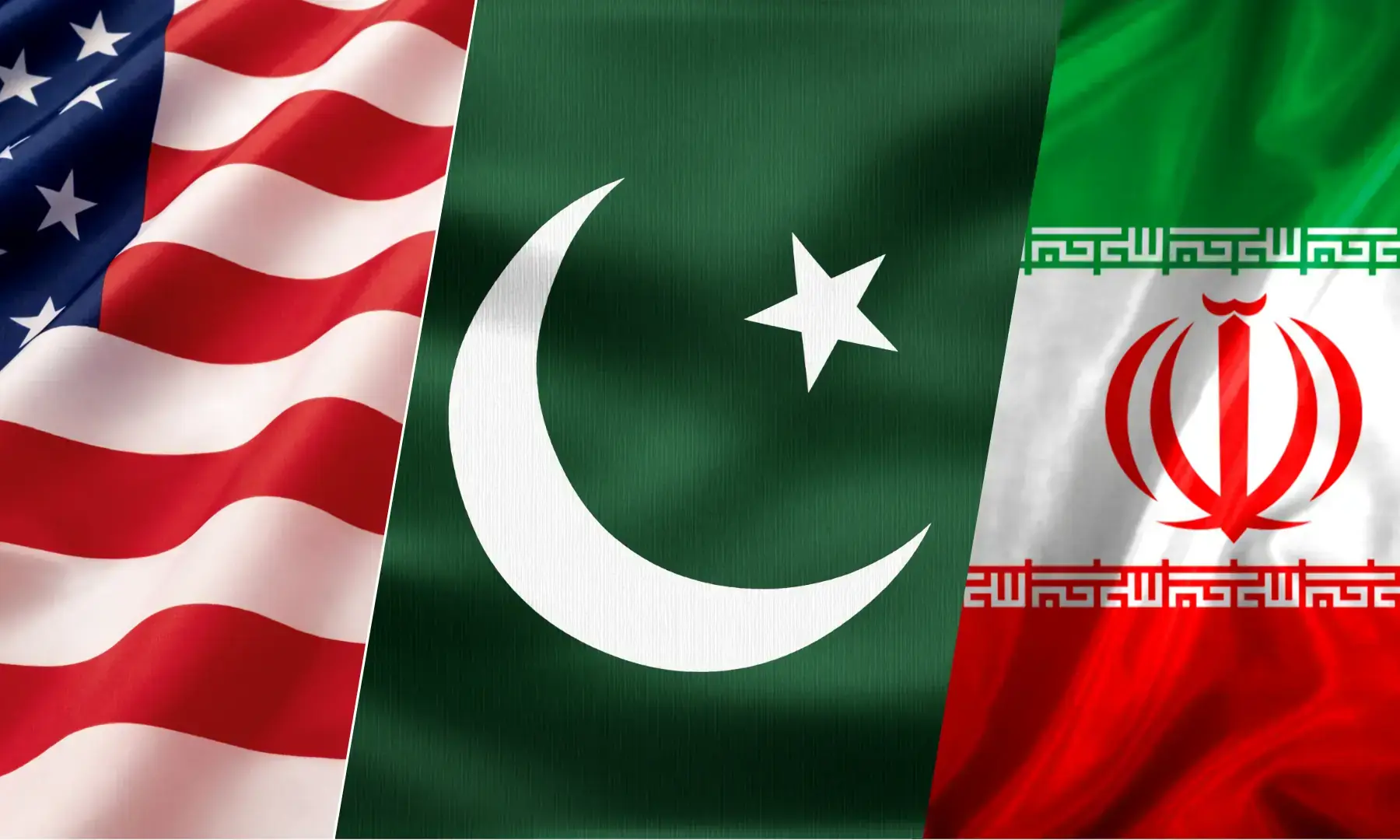
Pakistan’s diplomatic relevance also extended beyond the India, China, US triangle. In 2026, Islamabad facilitated direct engagement between the US and Iran, including hosting their first public face to face talks since 1979, and remained involved in subsequent negotiations alongside Qatar.
Pakistan’s role reflected its ability to maintain working relationships with Washington, Tehran and key Gulf states despite their competing interests.
While the mediation cannot be attributed directly to Bunyan al Marsoos, it formed part of a broader shift in how Pakistan was viewed after the 2025 confrontation: not only as a state central to South Asian security calculations, but also as a potential channel for communication in wider regional crises.
The post conflict period also strengthened Pakistan’s strategic relevance to the Gulf. Saudi Arabia, Türkiye and other regional actors had already played diplomatic roles during the 2025 crisis, but relations subsequently moved beyond political support towards a more structured security partnership.
The clearest expression came on 7 August 2026, when Pakistan, Saudi Arabia and Türkiye signed the Makkah Joint Defence Agreement, under which an armed attack against one signatory is to be treated as an attack against all.
While the agreement emerged from wider Middle Eastern security concerns and should not be portrayed simply as a consequence of Bunyan al Marsoos, its emergence undoubtedly reflects the increased regional value attached to Pakistan’s military and strategic capabilities.
Perhaps the most enduring consequence, however, has been the transformation of water into a strategic security issue. India’s decision to place the IWT in abeyance following the Pahalgam attack broke with one of the few bilateral arrangements that had survived previous wars. Pakistan responded by internationalising the legal dimension of the dispute.
On 31 August 2026, a Hague based arbitration panel ruled that the treaty remained legally binding and that India could not unilaterally suspend it; it also imposed restrictions relating to the Ratle hydroelectric project.
India rejected the tribunal’s jurisdiction and maintained that its decision to keep the treaty in abeyance remained valid. For Pakistan, the ruling nevertheless represented an important diplomatic and legal gain: Islamabad had succeeded in keeping the treaty within an international legal framework rather than allowing water to become an instrument of bilateral coercion solely.
Additionally, the conflict also changed the information dimension of Pakistan’s security environment. The competing narratives surrounding military losses, weapons performance and battlefield outcomes demonstrated that strategic communication now accompanies conventional military power.
Pakistan's ability to shape international perceptions of its response became almost as important as the response itself. This has encouraged greater attention to information warfare, technological capability and the credibility of official communication during crises.
Yet the post Bunyan landscape is not an uncomplicated strategic victory for Pakistan. The country emerged with greater military and diplomatic relevance, but the confrontation also exposed its economic vulnerabilities.
International attention and external partnerships cannot substitute for economic resilience; nor can military deterrence resolve the structural problems underlying the India Pakistan relationship.
The Kashmir dispute remains unresolved, bilateral diplomacy remains constrained, and the risk of another crisis has not disappeared.
Hence, the significance of Bunyan al Marsoos lies in what followed it. Pakistan did not emerge from May 2025 with the regional balance transformed in its favour; it emerged with greater strategic weight within that balance.
Its deterrence became more visible, its relationships with China and the Gulf acquired greater security significance, Washington reopened diplomatic space, and the IWT moved from the background of bilateral relations to the centre of Pakistan’s national security concerns.
The challenge now is whether Islamabad can convert that increased strategic relevance into lasting diplomatic and economic leverage. The post May period suggests that Pakistan has gained room to manoeuvre. Whether it can turn that room into durable strategic autonomy will depend on what it does beyond the battlefield.