

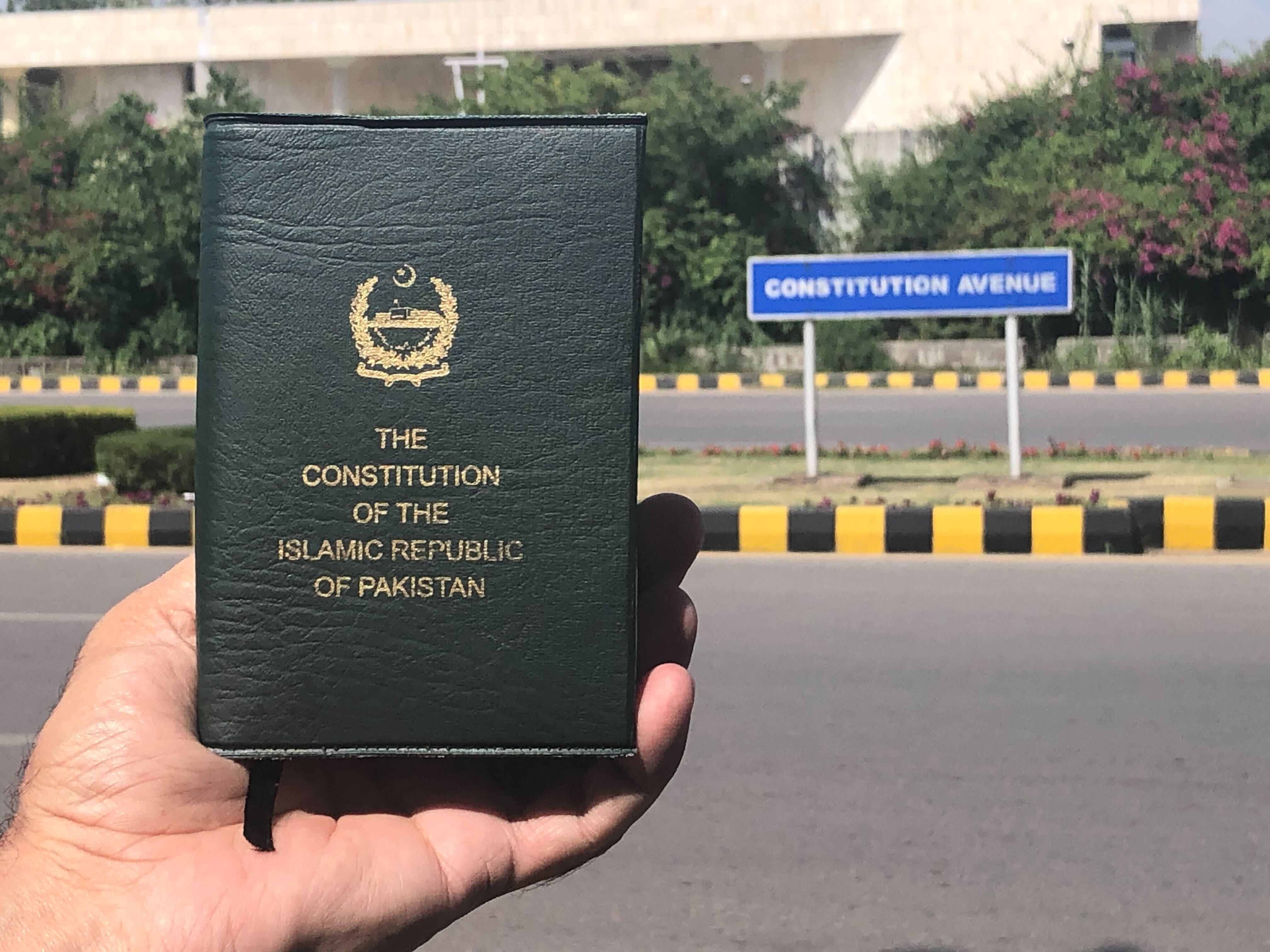
Ministers have named two constitutional options for Khyber Pakhtunkhwa: an emergency under Article 232 and governor's rule under Article 234. Neither has been invoked, and no proclamation has been issued.
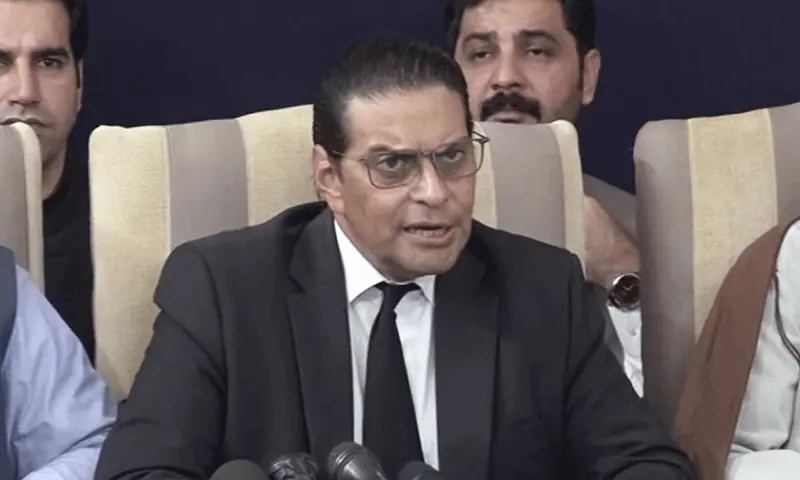
Parliamentary Affairs Minister Tariq Fazal Chaudhry said on 1 October that the government was considering an emergency. Two days later, Minister of State for Interior Tallal Chaudhry said the Constitution offers several options. PTI chairman Barrister Gohar Khan rejects both.
PPP chairman Bilawal Bhutto Zardari has said on television that his party wanted political talks before any such step. PPP general secretary Nayyar Hussain Bukhari says the party will respond according to the Constitution if it is consulted. The second round of talks between the government, the PPP and the opposition ended early on Sunday without an agreement.
How the two routes differ
Article 232, emergency | Article 234, governor's rule | |
|---|---|---|
Trigger | A grave emergency, including internal disturbance beyond the provincial government's control | A Governor's report, and the President's satisfaction that the provincial government cannot be carried on under the Constitution |
Provincial assembly | A resolution is required for internal disturbance | Not expressly required |
Parliament | If the President acts alone, both Houses must approve within 10 days; a joint sitting must meet within 30 days | The proclamation goes before a joint sitting; if each House passes a resolution, the President must act |
Duration | Two months unless a joint sitting approves | Two months unless approved; extendable by two months at a time, to a maximum of six |
Assembly's powers | Not taken over | Parliament exercises them |
High Court | Its powers cannot be taken over | Its powers cannot be taken over |
An emergency on the ground of internal disturbance needs a resolution of the provincial assembly concerned. That requirement came with the 18th Amendment in 2010. Once an emergency is in force, Parliament can legislate for the province on matters outside the federal and concurrent lists, and the federal government can direct the province and take over provincial functions, other than those of the assembly and the High Court.
Article 234 does not expressly require a provincial assembly resolution. Some commentators have argued that the assembly's approval would still be needed in practice; the text does not say so.
Article 236 says the validity of a proclamation or order under this part cannot be called in question in any court.
High court advocate Hassan Abdullah Niazi told The News that since the 18th Amendment, an emergency on the ground of internal disturbance needs a provincial assembly resolution as a condition precedent. Barrister Rida Hosain said the Constitution contemplates such a resolution in internal disturbance cases, and described the Article 234 trigger as a Governor's report followed by the President's satisfaction. Two other lawyers quoted in the same report said Article 234 needs a Governor's report and presidential action, and that parliamentary approval is needed to continue beyond two months, up to a maximum of six.
The National Assembly has 336 seats, and two thirds is 224. The Assembly's own party lists show 243 members on the government benches, including the PPP's 74. Without the PPP, that is 169, exactly a simple majority. In the 96 seat Senate, the coalition holds about 64 seats, 26 of them the PPP's. The text says only that a joint sitting approves a governor's rule proclamation by resolution; it does not give a number.
What is not known
- Whether a Governor's report under Article 234 exists. None has been publicly reported.
- Whether the federal government intends to use either route. Ministers have named the articles but have not committed to either.
Until the President issues a proclamation under either article, neither an emergency nor governor's rule is in effect.