


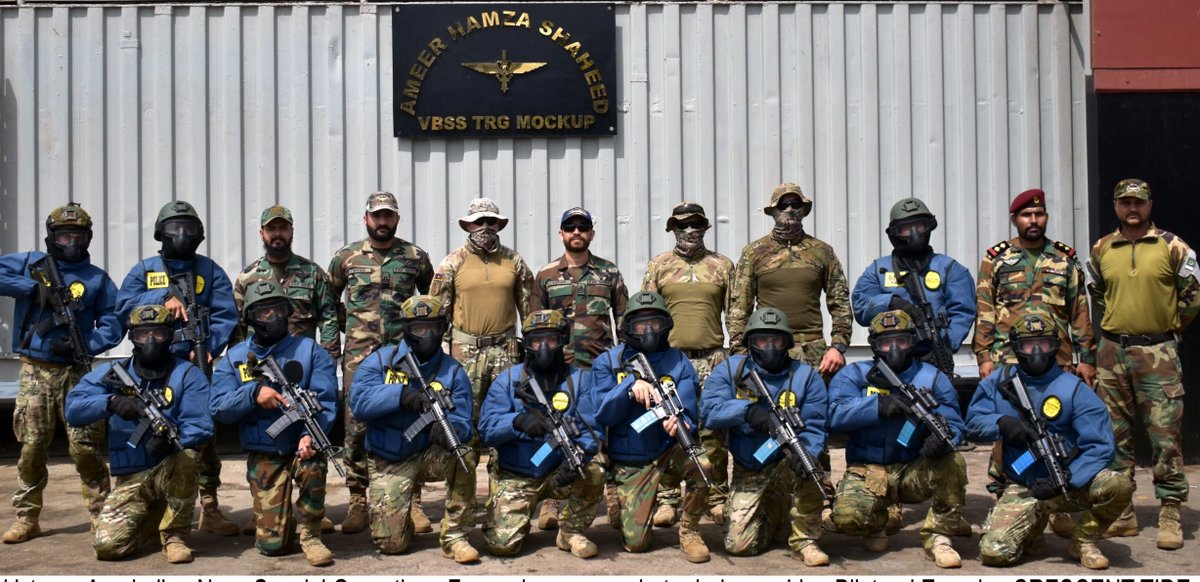
Islamabad: Pakistan and Azerbaijan have conducted their first bilateral naval special operations forces exercise, Crescent Tide I, aimed at strengthening operational cooperation between the two navies.
The exercise included operational exchanges, advanced combat drills and hostage rescue scenarios, giving participating personnel an opportunity to practise coordinated responses.
Naval special operations forces are specialist units trained for demanding missions in maritime and coastal environments, including rescue operations and action against armed threats.
The training focused on improving interoperability, meaning the ability of forces from different countries to communicate, coordinate and carry out missions together.
For joint operations, personnel need a shared understanding of how each force plans and responds. Crescent Tide I was designed to strengthen that understanding through common tactics, techniques and procedures, the methods and agreed steps used to conduct military tasks.
Hostage rescue scenarios formed part of the programme, allowing the forces to rehearse coordinated action in situations requiring rapid decisions and close teamwork.
The exercise also addressed evolving asymmetric threats. These involve opponents using unconventional methods, such as surprise attacks or small armed groups, rather than confronting a navy through conventional fleet operations.
Such scenarios require specialist personnel to adapt their responses while maintaining coordination with other participating units.
As the first bilateral exercise between the two countries’ naval special operations forces, Crescent Tide I provides a foundation for further training exchanges and operational cooperation.
Its stated focus was on preparing personnel to work together during joint maritime missions and improving their understanding of shared procedures through practical drills.