Peshawar: The prolonged closure of Pakistan’s border crossings with Afghanistan is squeezing businesses and livelihoods in Khyber Pakhtunkhwa (KP), with traders reporting shrinking export markets, stranded transport capacity and mounting financial losses.
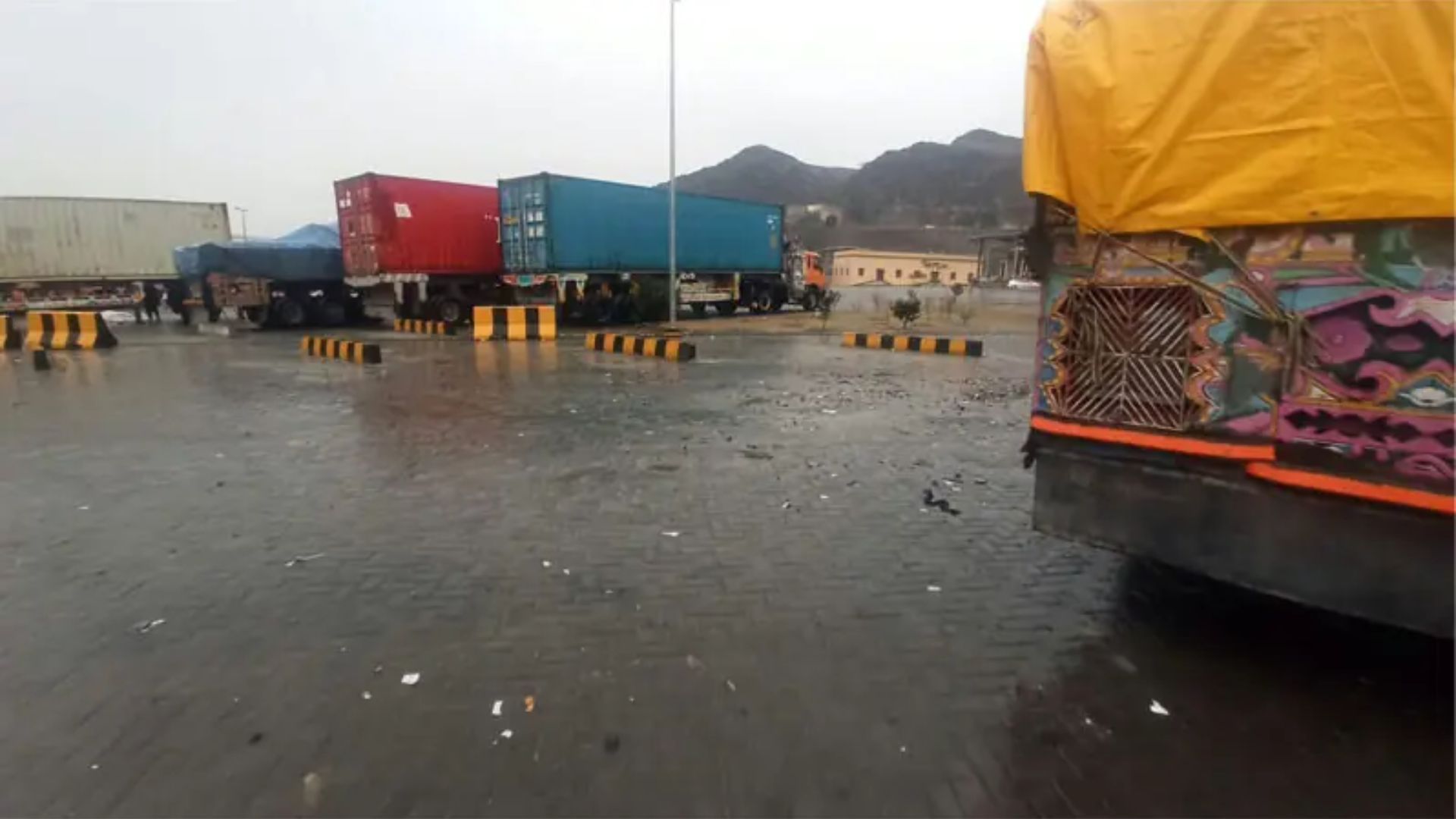
Trade has remained suspended through Torkham, Kharlachi, Ghulam Khan, Angoor Adda and Chaman since hostilities led to the border closure on October 12, 2025.
Pakistan maintains that engagement with Kabul requires tangible action against terrorist groups operating from Afghan territory.
Trade Development Authority of Pakistan (TDAP) figures cited by Dawn showed bilateral trade falling from USD 1.3 billion in 2024 to 2025 to USD 358 million in 2025 to 2026.
Separately, Afghan transit trade declined from nearly 89000 containers valued at USD 5 billion before the Taliban’s return to power to 11592 containers worth USD 367 million in the outgoing fiscal year, according to figures released in July.
Former Sarhad Chamber of Commerce and Industry (SCCI) president Junaid Altaf said the closure had compounded KP’s existing economic disadvantages.
Businesses already faced higher costs because of their distance from seaports and major shipping gateways, he said. Losing access to Afghanistan had further weakened opportunities for manufacturers, workers and border communities.
Altaf highlighted pharmaceuticals, which accounted for approximately USD 130 million in exports to Afghanistan in 2023 to 2024, according to Pakistan Bureau of Statistics figures.
He called for secure borders and regulated trade rather than either unrestricted commerce or indefinite economic isolation.
Agricultural trader Malik Sohni said up to 50 trucks carrying potatoes and another 25 carrying green vegetables previously crossed into Afghanistan daily.
He claimed that disruption to the potato market had nearly halved cultivation and caused him losses of PKR 180 million. He warned that reduced supply could push prices higher in coming months.
Transporter Azeemullah said he had sold three of his five trucks because of the closure. Moving them to other domestic routes was not financially viable, he said.
Another former chamber president, Fuad Ishaq, argued that security must take precedence. He said goods previously exported to Afghanistan could be redirected to other markets, maintaining that trade should continue only without compromising Pakistan’s security.