It was a Saturday morning. Children had gone to school, families were beginning their daily routines and life across the mountains of northern Pakistan appeared ordinary. Within moments, that ordinary morning became one of the darkest chapters in the country's history.
At approximately 8:50 am on October 8, 2005, a magnitude 7.6 earthquake struck near Muzaffarabad, sending violent tremors across Azad Jammu and Kashmir (AJK), the then North West Frontier Province, now Khyber Pakhtunkhwa (KP), and several other parts of Pakistan.
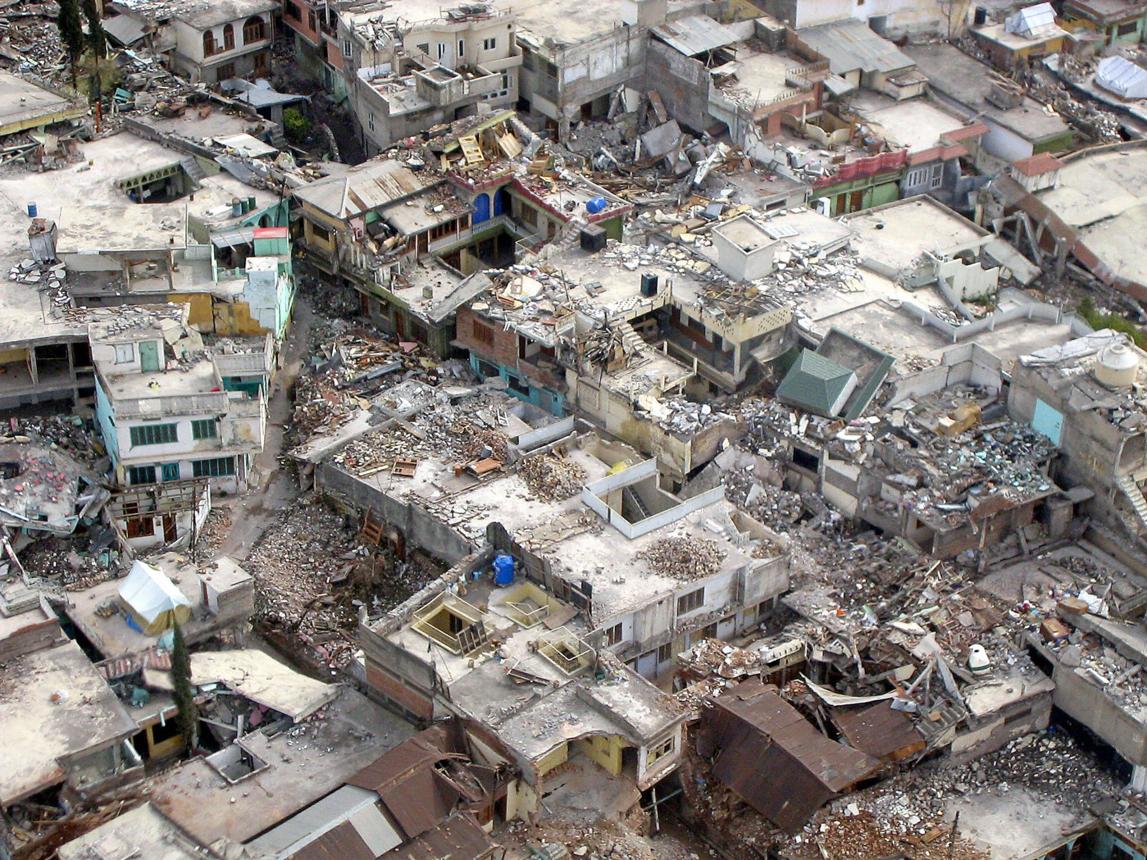
Buildings collapsed, mountainsides gave way, roads disappeared beneath landslides and entire communities were buried under rubble. Schools filled with children became scenes of unimaginable loss. Hospitals meant to save lives were themselves destroyed.
For thousands of families, the earthquake did not merely destroy homes. It erased entire worlds.
Twenty one years later, the disaster remains a defining moment in Pakistan's collective memory. It is remembered not only for the scale of destruction but also for the extraordinary courage of survivors, the generosity of ordinary citizens and the institutional weaknesses it exposed.
Yet the anniversary raises an uncomfortable question: how much has Pakistan truly learnt from the catastrophe?
The morning that changed everything
The earthquake originated approximately 21 kilometres north northeast of Muzaffarabad at a depth of about 26 kilometres, according to the United States Geological Survey (USGS).
Its epicentre lay within a geologically active region where the Indian tectonic plate continues to push against the Eurasian plate, generating the forces responsible for the formation of the Himalayas.
The violent ground movement devastated Muzaffarabad, Balakot, Bagh and surrounding mountainous settlements. Entire neighbourhoods were reduced to debris, while landslides cut off roads and isolated villages.
The tremors were felt across Islamabad, Rawalpindi, Peshawar, Lahore and other cities. In the federal capital, the collapse of the Margalla Towers apartment complex became one of the most visible symbols of the disaster beyond the northern mountains.
The earthquake also caused destruction and loss of life across the Line of Control (LoC)in Indian administered Kashmir.
The scale of devastation quickly overwhelmed local rescue and healthcare systems. Communications were disrupted, electricity supplies failed and access to remote settlements became exceptionally difficult.
For people trapped beneath collapsed buildings, survival often depended on whether help could reach them in time.
A catastrophe measured in lives
The human cost was staggering.
Official and international estimates vary according to their reporting periods and methodologies. The World Bank documented approximately 73000 deaths and more than 128000 injuries, while the USGS historical record puts the death toll at at least 86000.
Approximately 3.5 million people were left homeless.
Around 600000 houses were destroyed, while thousands of educational institutions and hundreds of healthcare facilities were damaged or rendered unusable.
The disaster struck particularly hard at children.
According to figures published by the British government, approximately 18000 students and 850 teachers lost their lives. Many school buildings collapsed while classes were in session, turning places associated with learning and safety into sites of tragedy.
The deaths also left profound social consequences. Children lost parents, parents lost children and entire communities faced the difficult task of rebuilding their lives without the people who had sustained them.
Behind every statistic was a family whose life had been permanently divided into before and after October 8.
The struggle to survive
The destruction was only the beginning of the emergency.
Landslides blocked access routes to mountain communities, delaying rescue operations and preventing medical supplies from reaching injured survivors. Many people were forced to spend nights outdoors, exposed to cold temperatures and the threat of further tremors.
With winter approaching, shelter became an urgent humanitarian priority.
Thousands of displaced families moved into temporary camps, while others sought refuge with relatives or remained close to the ruins of their homes.
The loss of water systems, sanitation facilities, roads and healthcare infrastructure complicated relief efforts. Injured survivors required emergency surgery, rehabilitation and long term medical care.
The earthquake also created a less visible burden: psychological trauma.
Survivors had witnessed the deaths of loved ones, the destruction of familiar surroundings and the sudden disappearance of their livelihoods. For children, the loss of parents, classmates and schools disrupted their sense of security at a formative age.
Reconstruction would eventually replace many buildings, but recovery from grief could not be measured in construction milestones.
When a nation came together
Amid the devastation, Pakistan witnessed an extraordinary mobilisation of humanitarian assistance.
The Pakistan Army, civil authorities, emergency responders, humanitarian organisations and volunteers participated in rescue and relief operations.
Helicopters became essential for reaching isolated mountain communities where roads had been destroyed or blocked. Medical teams established temporary facilities, while volunteers helped distribute food, blankets, medicines and shelter materials.
Citizens across the country donated money, clothing, food and essential supplies. Students, businesses, religious organisations and community groups organised collections and relief convoys.
International assistance also played an important role.
The UN, international relief agencies, foreign governments and humanitarian organisations provided emergency supplies, medical assistance, logistical support and reconstruction financing.
Countries including Türkiye, the US, the UK and China contributed to the relief and recovery effort.
The response demonstrated the importance of cooperation during humanitarian emergencies, even as difficult terrain, damaged infrastructure and the sheer scale of need exposed serious operational limitations.
It also revealed something enduring about Pakistani society: when confronted with immense suffering, ordinary people were capable of remarkable solidarity.
Rebuilding what was lost
The years following the earthquake brought one of Pakistan's largest reconstruction programmes.
The government established the Earthquake Reconstruction and Rehabilitation Authority (ERRA) to coordinate recovery and reconstruction, supported by international development partners and humanitarian organisations.
Rebuilding involved much more than replacing damaged houses. Schools, hospitals, bridges, roads, water systems, public buildings and livelihoods all required attention.
Reconstruction programmes increasingly incorporated earthquake resistant design principles, recognising that rebuilding unsafe structures would reproduce the vulnerabilities that had contributed to the disaster.
The Asian Development Bank and other development institutions supported the rehabilitation of infrastructure and communities. Some projects introduced safer construction techniques and community participation in reconstruction.
The recovery effort also created opportunities to improve access to public services and strengthen local infrastructure.
However, progress was uneven.
Difficult terrain, financing constraints, administrative challenges and delays affected reconstruction. For communities waiting for schools, hospitals and other public facilities, the passage of time became another measure of the disaster's continuing impact.
Twenty one years later, reconstruction remains unfinished
The anniversary in 2026 comes with a reminder that the consequences of the earthquake have not entirely disappeared.
According to an October 7 report on the State Earthquake Reconstruction and Rehabilitation Authority (SERRA), the federal government released Rs1 billion in June 2026 to help complete 67 educational projects in earthquake affected districts of AJK.
Of these, 14 had been completed and handed over to the relevant departments, while the remaining 53 were expected to be completed by December.
Separately, figures reported on October 8 indicate that 1620 of 2718 earthquake damaged educational institutions covered by the reported reconstruction programme had been completed, with work continuing on hundreds of others.
In the health sector, 119 of 160 reported reconstruction projects had been completed, with another 21 under construction.
These figures reflect substantial rebuilding, but they also underline the length of time required to restore essential public infrastructure.
For children who began their education after the earthquake, 21 years represent an entire generation.
The continuing reconstruction of educational facilities raises questions about institutional continuity, funding priorities and the responsibility to ensure that disaster recovery does not remain unfinished decades after an emergency.
The disaster that changed Pakistan's institutions
One of the earthquake's most significant legacies was the recognition that disaster management could no longer remain primarily reactive.
Before 2005, Pakistan lacked the comprehensive disaster management framework subsequently developed to coordinate preparedness, response and recovery across different levels of government.
The catastrophe helped accelerate the establishment of the National Disaster Management Authority (NDMA) and a broader institutional framework for disaster risk reduction.
Over the following years, Pakistan developed national and provincial disaster management structures, emergency response arrangements, risk assessment mechanisms and preparedness policies.
The emphasis gradually shifted from responding after destruction to identifying vulnerabilities before disasters occur.
By 2026, the NDMA had published updated national disaster management and response planning documents, alongside earthquake guidelines and infrastructure risk initiatives.
School safety has also received greater policy attention. The authority has highlighted hazard assessments, evacuation drills, safer educational infrastructure and the integration of disaster risk reduction into learning environments.
These developments represent meaningful institutional progress.
Yet policies and frameworks can only protect communities when they are consistently implemented, adequately funded and supported by trained personnel.
Why the earthquake still matters
Pakistan remains exposed to significant seismic hazards because of its position along active tectonic boundaries.
The forces that produced the 2005 earthquake have not disappeared. The continued collision of the Indian and Eurasian tectonic plates means that northern Pakistan and the wider Himalayan region remain vulnerable to future earthquakes.
While scientists can identify active faults and assess seismic risk, they cannot reliably predict the precise date, time and location of a major earthquake.
This makes preparedness essential.
The earthquake exposed the consequences of unsafe construction, inadequate enforcement of building standards and the concentration of vulnerable infrastructure in hazardous locations.
More than two decades later, questions surrounding construction quality, urban expansion, informal settlements and the safety of public buildings remain relevant.
The lessons extend beyond earthquake prone mountain communities. Rapid urbanisation, ageing infrastructure and uneven regulatory enforcement can increase disaster exposure in cities as well.
A strong disaster management system therefore requires more than emergency rescue capacity. It depends on safe buildings, informed communities, accessible healthcare, resilient communications and functioning local institutions.
The people behind the statistics
Anniversaries often reduce disasters to numbers: magnitude, casualties, damaged buildings and reconstruction costs.
But the legacy of October 8 is also carried by people.
It lives in the memories of parents who lost children, children who grew up without families, survivors who acquired permanent disabilities and communities that rebuilt themselves around absence.
It is present in the lives of people who survived because a neighbour, soldier, doctor, volunteer or stranger refused to abandon them.
The earthquake also changed the lives of those who participated in rescue operations, medical treatment and long term rehabilitation.
For many survivors, rebuilding meant learning to live with physical injuries, economic insecurity and memories that could not simply be left behind.
Their experiences offer an important reminder that disaster recovery is not complete when the final building is reconstructed. It also requires social protection, accessible healthcare, psychological support, education and sustainable livelihoods.
From remembrance to responsibility
Pakistan observes October 8 as National Disaster Awareness Day, connecting remembrance of the 2005 earthquake with the need for preparedness against future emergencies.
The anniversary is an opportunity to honour those who died and acknowledge the resilience of those who survived.
But remembrance also carries a responsibility.
The earthquake demonstrated how natural hazards become humanitarian catastrophes when vulnerable buildings, limited preparedness, weak infrastructure and difficult access combine with extreme physical forces.
It also demonstrated the capacity of communities and institutions to respond with courage and compassion.
Twenty one years later, Pakistan has stronger disaster management institutions, greater technical knowledge and extensive experience in responding to emergencies.
The challenge is ensuring that this progress reaches the communities most exposed to risk.
Completing reconstruction, enforcing seismic building standards, strengthening local emergency response, protecting schools and hospitals and investing in public awareness are not merely administrative priorities. They are obligations shaped by the losses of October 8, 2005.
The earthquake lasted only moments, but its consequences have endured for more than two decades.
For those who lost loved ones, the passage of time has not erased that morning.
And for Pakistan, the most meaningful tribute to those who died would be to ensure that when the earth shakes again, fewer lives are lost to vulnerabilities that could have been addressed.
The tragedy of October 8 cannot be undone. The lessons it left behind must not be forgotten.