
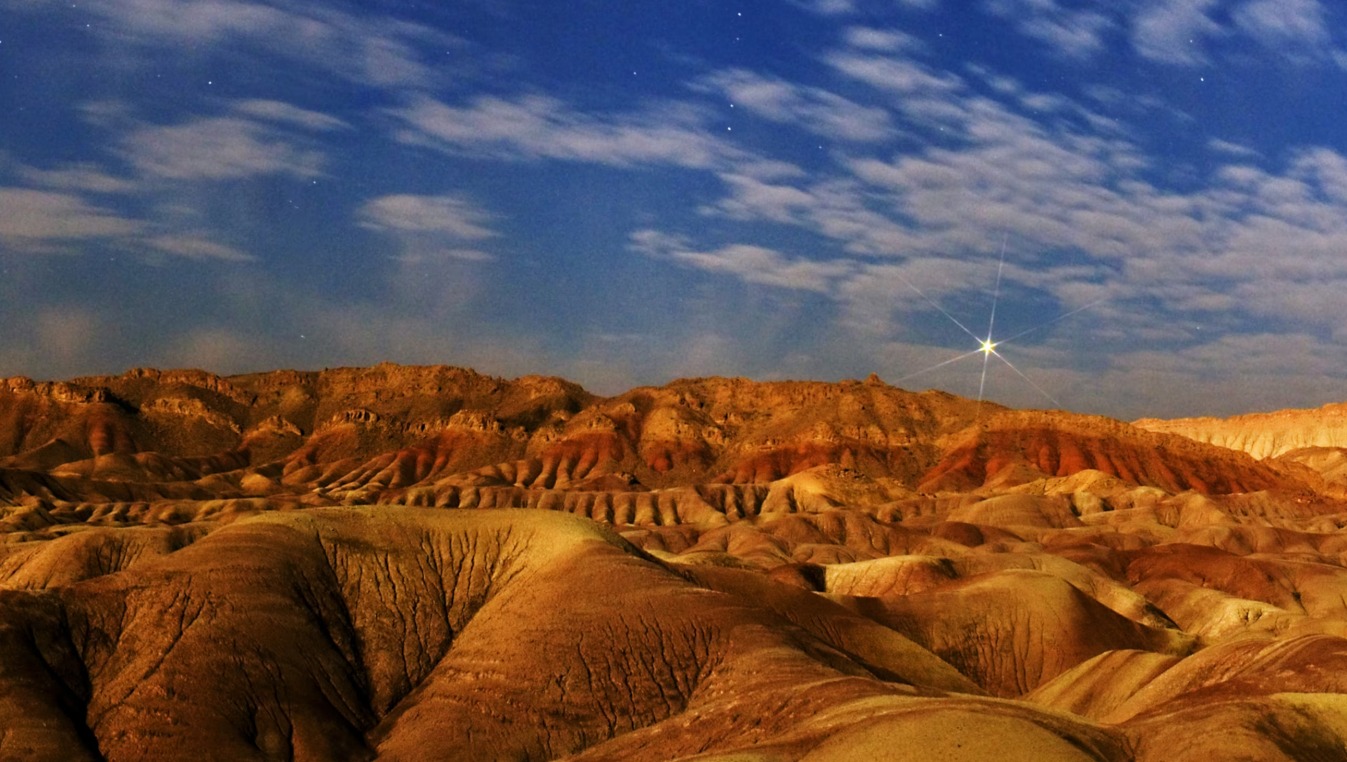
Venus put on one of its brightest displays of 2026 on September 18, appearing as a brilliant point of light low in the western sky after sunset.
The planet is normally the third brightest natural object visible from Earth after the Sun and Moon, but its brightness changes as its distance from Earth and its visible phase change.
What makes this appearance unusual is that Venus is not brightest when it looks nearly full.
Because Venus orbits closer to the Sun than Earth does, it goes through phases similar to the Moon. As it moves closer to Earth, the visible illuminated portion becomes smaller, but the planet's apparent size increases.
On September 18, those two effects reached a point where the amount of illuminated Venus visible from Earth was at its greatest. Astronomers call this the planet's greatest illuminated extent, also known as greatest brilliancy.
Through a telescope, Venus therefore appeared as a large crescent rather than a full disc. EarthSky reported that the planet reached a brightness of about magnitude minus 4.8, making it far brighter than any star.
The planet's brightness is also helped by its thick cloud cover, which reflects a large amount of sunlight back into space. Venus is covered by clouds rich in carbon dioxide and has a highly reflective atmosphere.
For skywatchers, the display was visible shortly after sunset by looking towards the western horizon. NASA advised choosing a location with a clear, unobstructed view because Venus was sitting relatively low in the sky and set not long after the Sun.
No telescope was needed to see the planet, although optical equipment could reveal its crescent shape.
The opportunity is also relatively short lived. Venus is continuing to sink closer to the evening horizon and will eventually disappear from the evening sky before returning as a morning object later in the year.