Pakistan has told the Afghan Taliban government that terrorism launched from Afghan territory is what stands between the two countries and normal relations, not any lack of willingness to talk.
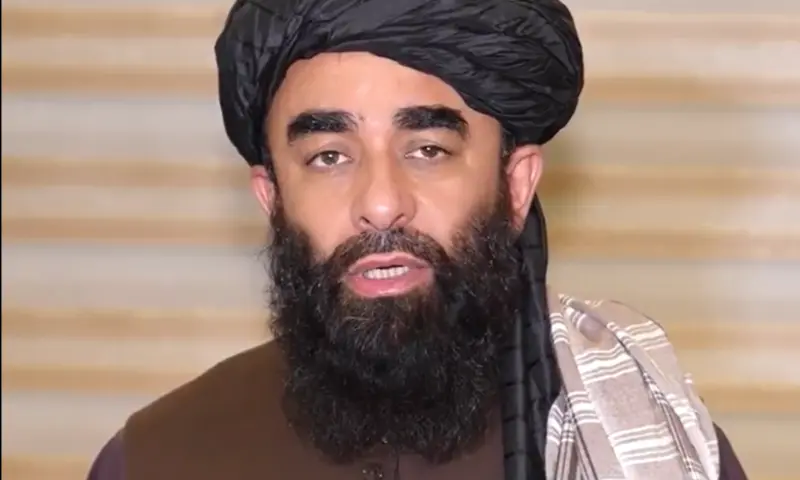
The Ministry of Information and Broadcasting issued the response on Saturday. It answered remarks by Zabihullah Mujahid, the chief spokesman of the Taliban administration in Kabul, who claimed that Pakistan was not ready to settle its differences with Afghanistan peacefully.
In a statement on X, the ministry said the remarks exposed “the regime’s deeply misguided approach and unwillingness to confront the root cause of deteriorating relations with Pakistan.”
“The Taliban leadership continues to blame Islamabad’s policies while conveniently ignoring the single most important issue poisoning bilateral relations: its persistent failure to address terrorism emanating from Afghan soil,” the ministry said.
The ministry said terrorism is a red line for Pakistan and the safety of its citizens is not open to negotiation. It also said Pakistan will not accept terrorist sanctuaries across its border. Islamabad reserves the right to take all necessary measures, in line with international law, against threats to its national security wherever they originate.
The ministry placed the responsibility for dealing with those threats on the Taliban administration alone. “Pakistan’s security will not be held hostage to Afghan Taliban’s inaction, evasions or misplaced priorities,” the statement said. “Pakistan’s resolve to protect its people must never be mistaken for weakness.”
Mujahid made his remarks to Hurriyat Radio, a station run by the Taliban administration. He claimed that Kabul had made its final efforts to ease tensions through dialogue and that those efforts had produced nothing. He said messages had passed between the two capitals and that mediating countries had also tried without success. He blamed what he called Pakistan’s wrong policies, and claimed Afghanistan was not responsible for the tensions.
The exchange follows the most sustained stretch of border hostility this year. After a deadly attack on a police compound in Kohat, Pakistan carried out calibrated airstrikes on 21 September against terrorist hideouts in the border region. Two days later, Pakistan’s air defences shot down eight drones launched from Afghanistan near Torkham and Kohat, according to security sources. On 24 September, Pakistan struck 10 locations in Afghanistan that the government said were being used to store and launch drones.
On the night of 27 October, firing from the Afghan side hit homes and the bazaar at Angoor Adda in South Waziristan Lower. A mortar round killed one civilian and injured five, according to the district’s deputy commissioner. Pakistani forces responded and destroyed Afghan Taliban posts.
Talks between the two governments in Doha and Istanbul in October last year, mediated by Qatar and Turkiye, ended without agreement on Pakistan’s central demand. Pakistan wants verifiable action against terrorist groups operating from Afghan territory.
Chief among those groups is the banned Tehreek e Taliban Pakistan (TTP), which the state designates Fitna al Khawarij. Islamabad has repeatedly called on Kabul to dismantle its sanctuaries. Saturday’s statement makes Pakistan’s position plain: until that happens, Pakistan does not see the problem as one more round of talks can fix.