
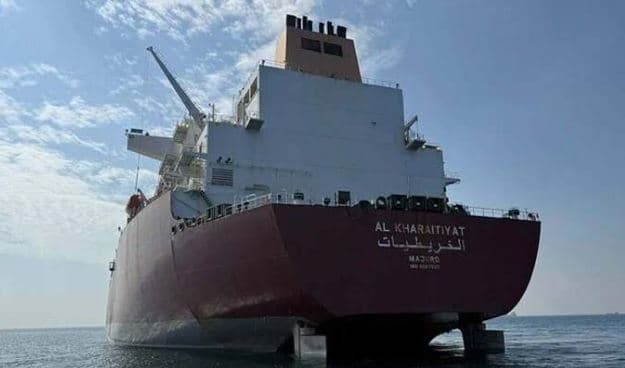
Karachi: Pakistan received a crucial addition to its energy supplies on Thursday as the Qatari liquefied natural gas (LNG) carrier Al Marrouna docked at Port Qasim carrying 81,936 metric tonnes of fuel. Procured under a long term government to government agreement at a contract price equivalent to 13.37 per cent of Brent, the shipment marks the first Qatari LNG cargo to successfully exit the Persian Gulf since regional geopolitical tensions escalated in July.
The vessel's transit through the strategically sensitive Strait of Hormuz on September 7, comes as parts of Pakistan endure severe electricity loadshedding lasting between six and 12 hours daily. Whilst bringing immediate relief to domestic power generators, the arrival has also calmed international energy markets, placing downward pressure on Asian benchmark Platts JKM and Northwest European LNG prices. However, state-owned Pakistan LNG Limited (PLL) has simultaneously cancelled its recent spot LNG tender, underlining ongoing market volatility.
The arrival of Al Marrouna provides critical operational support to Pakistan's struggling energy grid during a period of heightened domestic power deficit. Departing from Qatar’s Ras Laffan terminal, the shipment successfully navigated the Strait of Hormuz amid a backdrop of intensified military engagements between US forces, Iran, and regional armed groups. The safe passage of the cargo is being closely monitored by global commodity traders, as it mitigates immediate fears of prolonged export blockades out of the Persian Gulf and has helped ease inflated maritime insurance costs.
Despite the successful delivery, Pakistan's energy security remains highly vulnerable to external maritime chokepoints. Following the shipment's arrival, Pakistan LNG Limited (PLL) cancelled a spot market LNG tender that was floated on 5 September and due to open on 8 September. While the current Qatari cargo offers short term relief to local power plants, energy sector analysts caution that any renewed disruptions along the Hormuz shipping lane could quickly trigger supply shortfalls, drive up procurement expenses, and exacerbate national power outages.