
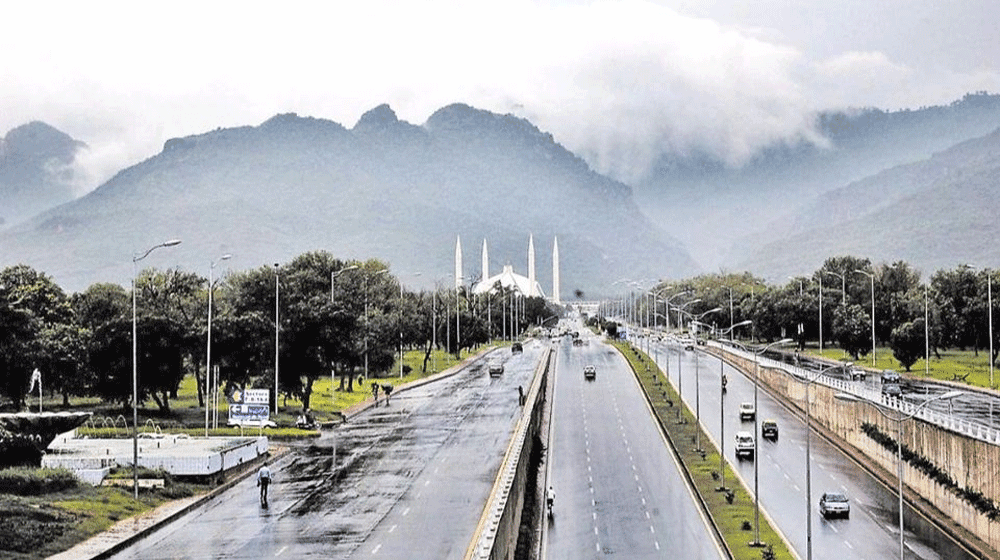
Islamabad: A proposed elected government for Islamabad has renewed debate over whether Pakistan needs new provinces or greater devolution of power.
A high-level government committee has reportedly recommended creating a 26-member elected assembly for Islamabad, headed by an elected leader, while replacing the office of chief commissioner with that of chief secretary. The proposed arrangement would also place sectors including health, education, environment and municipal services under the control of an elected administration.
The proposal comes as questions grow over whether Pakistan’s existing administrative structure can effectively govern a population of more than 250 million through four provincial governments. But the discussion is increasingly moving beyond the creation of new provinces towards a broader issue: how much political, administrative and financial authority remains concentrated at the centre.
Several federal ministers and political voices have also backed discussions around strengthening Pakistan’s existing administrative divisions as more effective units of governance. The idea would not necessarily require the creation of new constitutional provinces. Instead, divisions and districts could receive greater administrative authority and resources while remaining within their existing provincial structures.
That distinction is important because creating or altering a province involves a significantly higher constitutional threshold.
Article 239 of the Constitution requires a two thirds majority in the provincial assembly concerned when legislation seeks to alter the limits of a province. This makes the creation of a new province from an existing one dependent not only on federal political agreement but also on support within the affected provincial assembly.
Greater administrative devolution could therefore offer an alternative route. Parliament and provincial legislatures can, through ordinary legislation and changes to administrative arrangements, transfer responsibilities to local governments and other sub-provincial institutions without redrawing provincial boundaries.
The Islamabad proposal illustrates the difference. Rather than creating another province, it seeks to establish a more directly accountable elected structure for the federal capital and give it control over services that directly affect residents.
The larger question is consequently not simply how many provinces Pakistan should have, but where decisions should be made. If provincial and federal governments retain most authority over education, health, municipal management and development, increasing the number of provinces alone may not resolve the underlying problem.
For Pakistan, the decentralisation debate may ultimately be less about drawing new boundaries and more about moving power, money and accountability closer to the people.