
Webdesk: The orangutans did not simply wander into human territory. In some cases, the forest around them was burning.
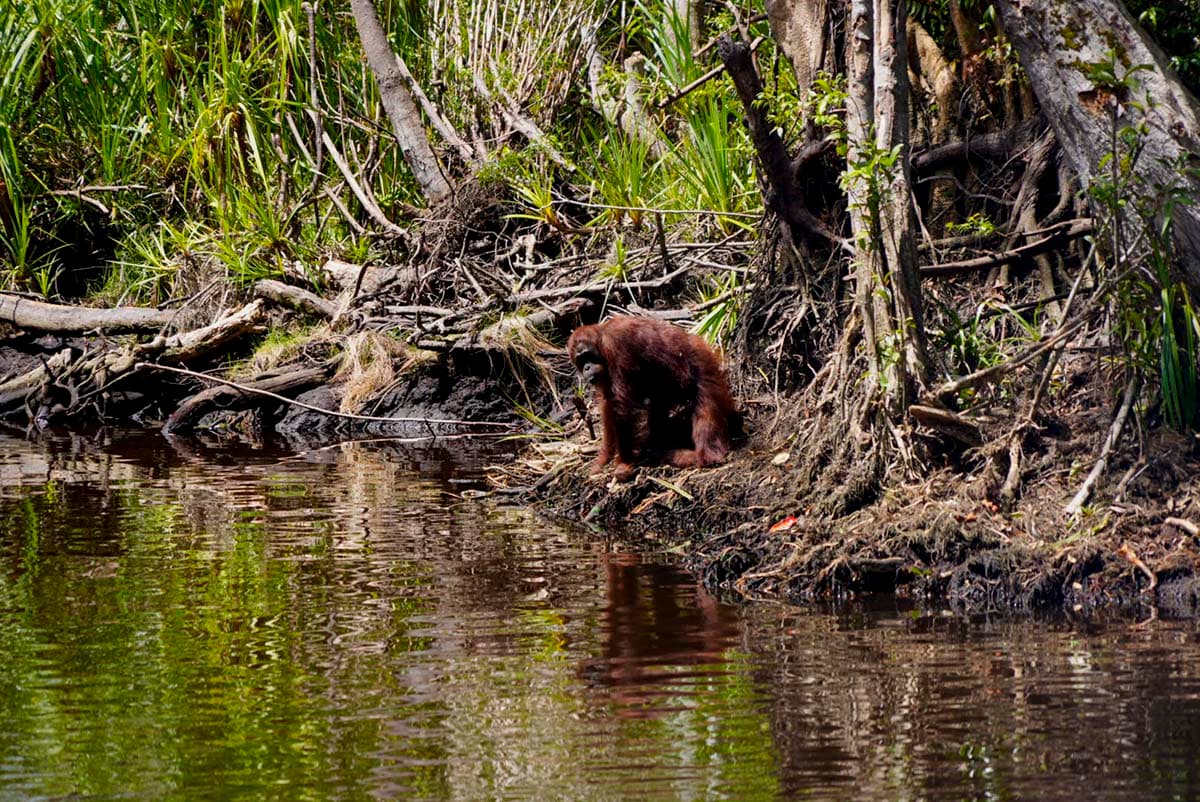
In Ketapang, West Kalimantan, Indonesia, a mother orangutan named Mama Yuni and her two offspring, Yuni and Pura, were evacuated on 21 August after fires threatened their habitat and cut off their movement routes. The three had already been seen in a community plantation area earlier this year.
Days later, another orangutan showed just how deadly the consequences could be.
A roughly 20 year old male named Sempurna was found severely weakened in a dry ditch inside a community palm oil plantation. Rescue workers gave him oxygen and intravenous fluids before taking him to a rehabilitation centre. He died later that day.
Indonesian conservation authorities said Sempurna had severe respiratory problems. A post mortem found lung abnormalities suspected to be associated with prolonged smoke exposure and acute oxygen deprivation.
He had no severe burn injuries.
The smoke was enough.
That distinction matters because the disaster facing orangutans is not only about flames. It is also about what happens when their forest disappears.
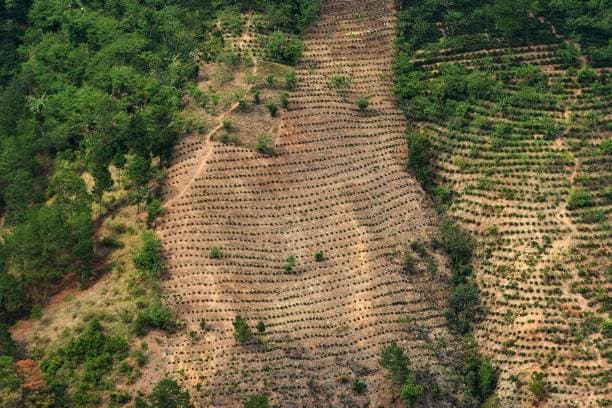
Orangutans are native to the forests of Borneo and Sumatra, where they depend on trees for food, movement and shelter. But their habitat has been fragmented by human land use, including agriculture, plantations and other development.
Repeated fires can further damage what remains and push animals towards plantations and settlements in search of food and safety. Indonesian conservation officials have described exactly that pattern in Ketapang.
The current fire crisis is also being fuelled by exceptionally hot and dry conditions. Reuters reports that Indonesia has been experiencing a severe fire season intensified by a strong El Niño, with nearly 95000 hectares burned in July alone. Authorities are also investigating fires inside company concessions, including whether they were accidental or deliberately started.
That is where the story becomes uncomfortable.
When an orangutan leaves a forest and appears in a plantation, it can look as though the animal has crossed into human space.
But what if the human space was built where the forest used to be?
And what happens when the remaining forest burns?
The answer has been playing out in West Kalimantan. Animals are being rescued, treated and relocated because their original habitat is becoming increasingly dangerous. Sempurna did not survive that journey. Mama Yuni and her young did.
But rescue cannot become a substitute for habitat.
The tragedy is not simply that orangutans are caught in a wildfire. It is that an animal already losing its home can be pushed even further out of it, until the places it reaches are plantations, roads and settlements.
The orangutans did not choose to leave the forest.
The harder question is whether we are leaving them enough forest to return to.