

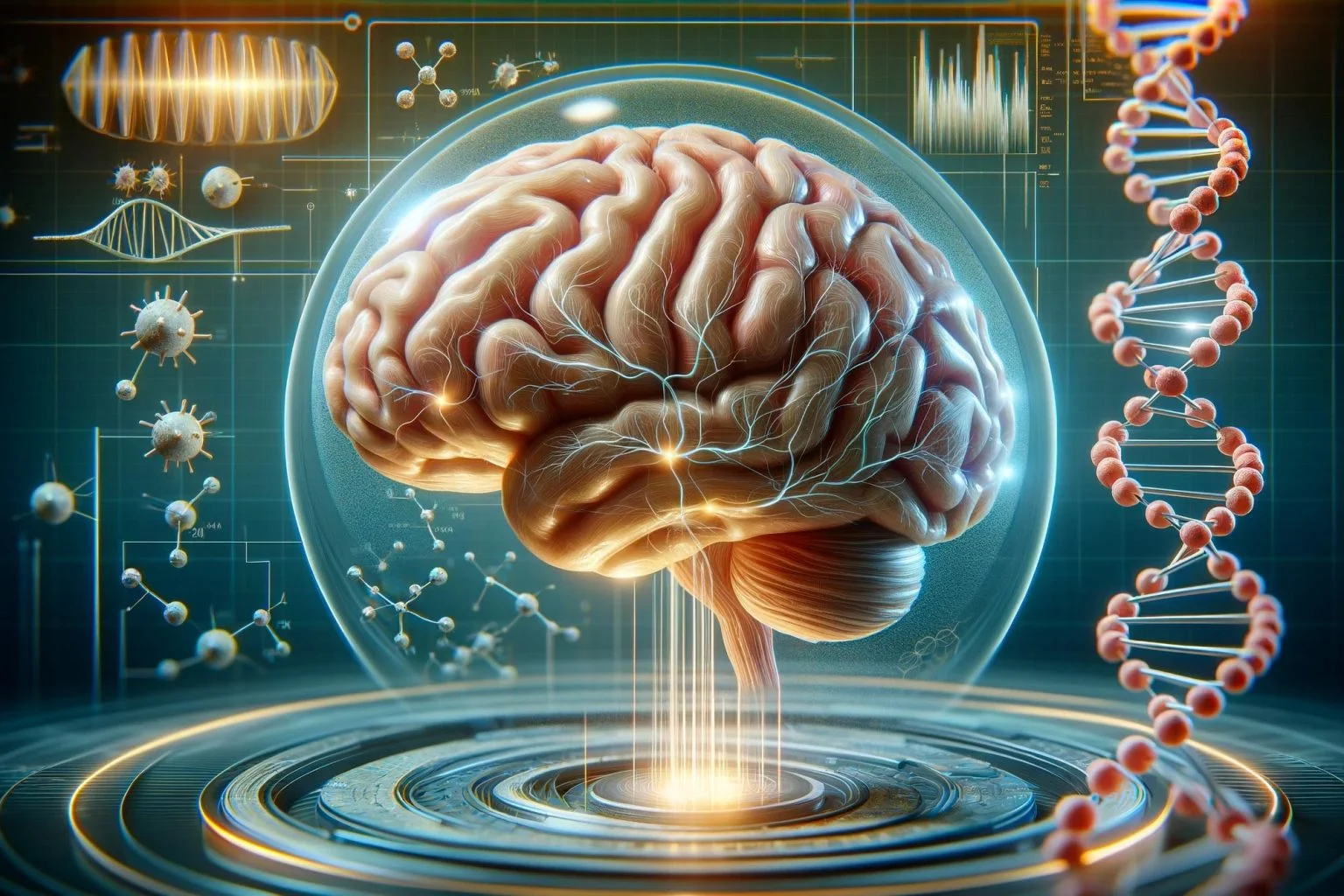
Stanford: The human brain functions as one integrated organ, but new research suggests that it begins developing from two distinct cellular origins.
Researchers at Stanford Medicine found that the forebrain and midbrain emerge from one group of early progenitor cells, while the hindbrain develops from another. The findings challenge the long held theory that every region of the brain originates from a single common population of neural cells.
The study, published in Nature Neuroscience, examined the earliest stages of brain development in mouse embryos. Through lineage tracing, researchers identified two populations of cells that appeared simultaneously during embryonic development.
Cells forming the anterior neural ectoderm produced the forebrain and midbrain. A separate population forming the posterior neural ectoderm produced the hindbrain.
The forebrain supports functions including thought, memory, emotion and voluntary behaviour. The hindbrain contains structures involved in movement and essential processes such as breathing, swallowing, sleep and heart regulation.
The researchers described the brain as a composite organ arising from two restricted cellular lineages. This does not mean that an adult human possesses two physically separate brains. Instead, it suggests that the brain’s connected regions follow different developmental paths before joining into a single functional system.
Evidence from other species led the researchers to propose that this division may have been preserved through more than 550 million years of evolution.
The discovery also helped the team address a practical problem. Scientists have often struggled to produce specific hindbrain cells from human stem cells because laboratory methods were largely based on signals used to create forebrain cells.
Using the newly identified developmental pathway, the researchers guided human pluripotent stem cells into motor neurons associated with particular regions of the hindbrain.
These cells could support research into amyotrophic lateral sclerosis, known as ALS, and spinal muscular atrophy, known as SMA. Both diseases can damage motor neurons and progressively impair movement, breathing and swallowing.
The achievement does not constitute a treatment. However, it offers scientists a more accurate laboratory platform for investigating how such diseases develop and for evaluating possible therapies.