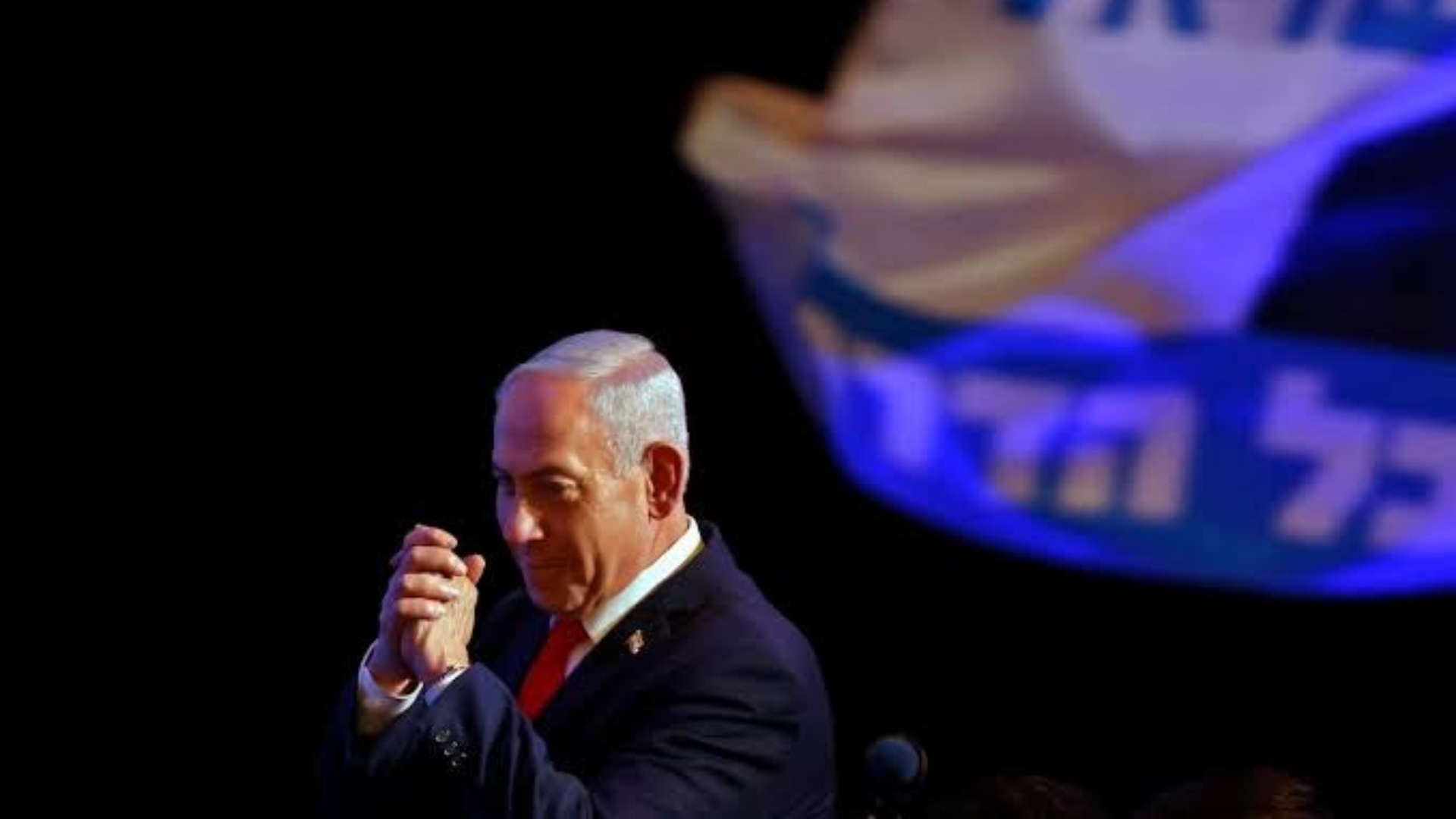
Tel Aviv: Benjamin Netanyahu appeared likely to remain Israel’s caretaker prime minister after an inconclusive election left his political opponents struggling to assemble a governing coalition, despite his own bloc losing its parliamentary majority.
According to Reuters, Israeli broadcasters projected 53 seats for Netanyahu’s right wing, far right and ultra Orthodox allies, compared with 48 for the opposition grouping led by former military chief Gadi Eisenkot. Nearly 86 percent of votes had been counted on Wednesday.
Neither camp reached the 61 seats needed for a majority in the 120 member Knesset. Parties representing Arab citizens of Israel were projected to win an unprecedented 19 seats. The figures remained provisional.
The outcome leaves Eisenkot dependent on broad Arab party support, an arrangement many Jewish political leaders oppose. His opposition grouping includes parties ranging from the centre left to the hard right, further complicating negotiations.
Netanyahu would remain caretaker during coalition talks and could retain that role until another election if efforts to form a government fail.
Guy Lurie, a research fellow at the Israel Democracy Institute, told Reuters that caretaker governments formally retain the powers of regular administrations but face a duty of restraint and reduced discretion in some areas.
Security policy has already become a point of contention. Netanyahu called for a strong government of the right and raised the prospect of further joint action with the US against Iran.
Eisenkot warned against using national security for political purposes. Netanyahu’s office has previously rejected such accusations and did not immediately respond to Reuters’ request for comment on Wednesday.
Financial markets also weakened. Reuters reported that the shekel fell around 1.6 percent against the dollar, while leading Tel Aviv stock indexes dropped more than three percent.
Turnout reached 77.7 percent, the highest in more than two decades. The final count will establish the parliamentary arithmetic, but government formation will depend on negotiations between parties.