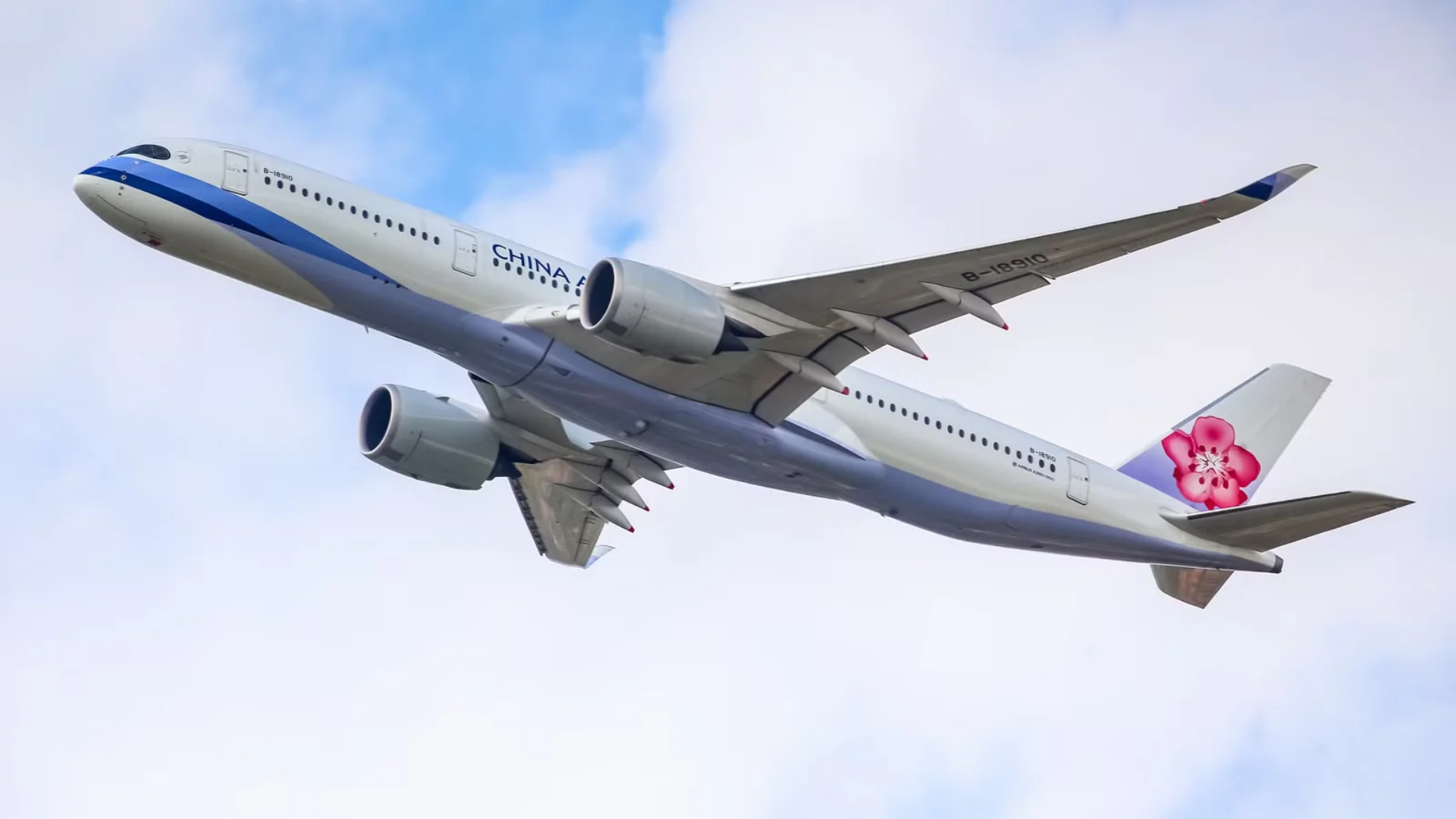
Islamabad: On 28 October, Pakistan reportedly refused Taiwanese airlines permission to operate in the country, citing its commitment to the One China policy.
The restriction reflects Islamabad's longstanding diplomatic position that Taiwan is part of the People's Republic of China, not a sovereign state.
Pakistan maintains formal diplomatic relations with Beijing and does not recognise Taiwan as an independent country.
The decision places international air services within the wider framework of Pakistan's relations with China.
Pakistan's longstanding position on Taiwan
Pakistan repeatedly reaffirmed its support for the One China principle in official diplomatic statements.
In a joint statement issued during Prime Minister Shehbaz Sharif's May 2026 visit to China, Islamabad reiterated that Taiwan is part of China and expressed support for Beijing's efforts towards reunification.
The statement also reaffirmed the importance of Pakistan's strategic partnership with China, including cooperation in infrastructure, trade, and regional connectivity.
Taiwan, however, maintains its own elected government and administers its territory separately from mainland China. Beijing claims sovereignty over the island, while Taiwan's political status remains a source of international dispute.
Implications for aviation
International airline operations depend on regulatory approvals and, in many cases, on bilateral air services agreements.
Pakistan's National Aviation Policy provides a framework for granting international operating rights, including agreements on flight frequencies, destinations and commercial arrangements.
The reported decision regarding Taiwanese airlines illustrates how diplomatic recognition and aviation regulation can intersect.
However, it is not established which airlines were affected, whether the applications concerned passenger or cargo services, or whether the restriction extends to transit and overflight permissions.
The development comes as Pakistan continues to emphasise its strategic relationship with China, with both governments repeatedly describing their partnership as central to their diplomatic and economic ties.