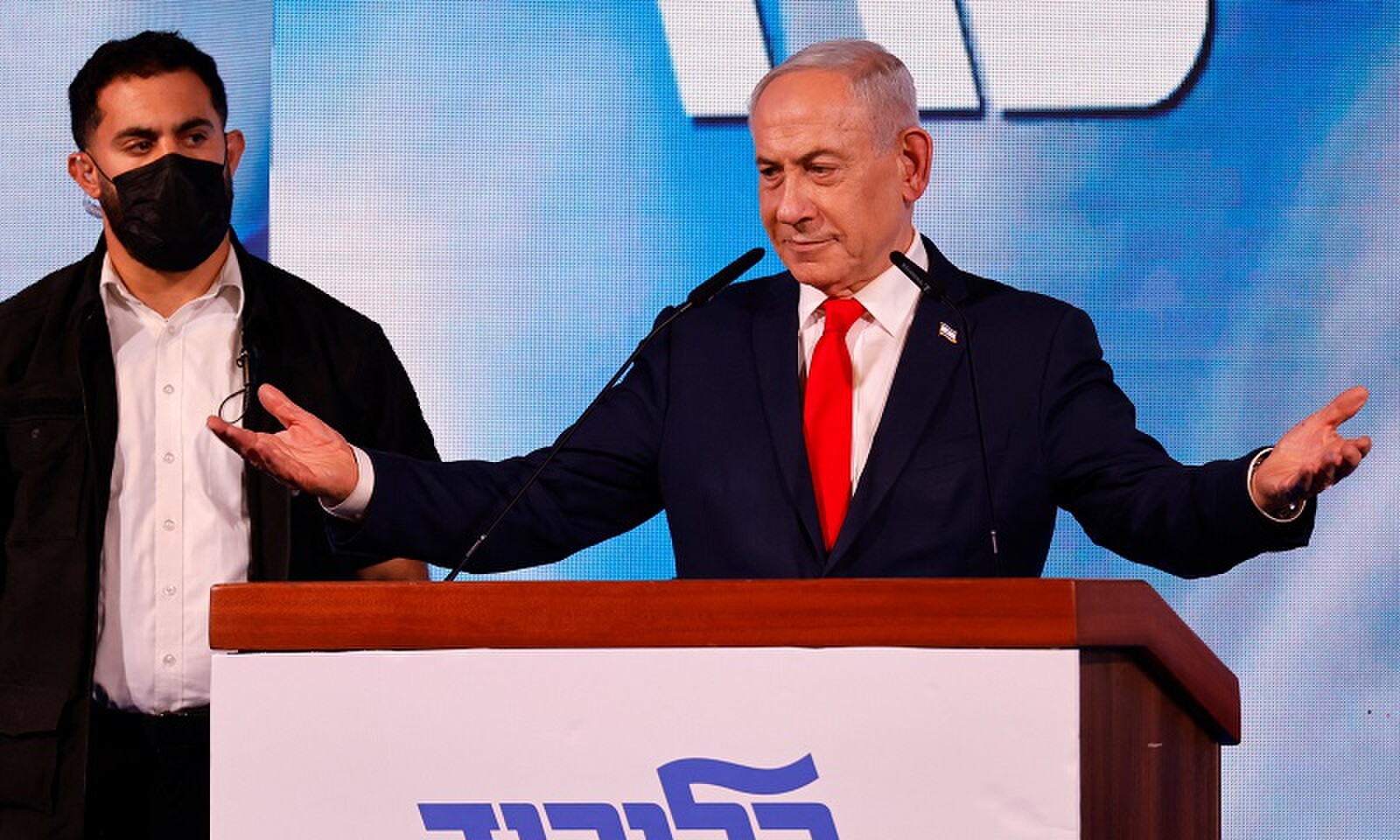
Tel Aviv: Benjamin Netanyahu’s political bloc remained ahead as counting progressed in Israel’s parliamentary election on Wednesday, but the prime minister had yet to establish a clear route to another government.
With approximately half the votes counted, The Jerusalem Post’s latest projection placed Netanyahu’s allies on 55 seats and the opposition grouping led by former military chief Gadi Eisenkot on 50. Neither reached the 61 seats required for a majority in the 120 member Knesset. These were provisional projections, rather than confirmed allocations.
The Associated Press, citing the Central Elections Committee, reported that Netanyahu’s Likud had received 20.6 percent of counted votes, compared with 16.8 percent for Eisenkot’s Yashar party. Those percentages represent individual parties, rather than their wider political blocs.
The developing count has moved beyond the overnight exit polls, which initially suggested a near tie. Netanyahu has called for a government of the right, while Eisenkot has argued that voters want a change of leadership. Neither position settles the coalition arithmetic.
Arab parties remain potentially important to government formation. However, Netanyahu opposes a government dependent on their support, while Eisenkot also ruled out governing with Arab lawmakers during his campaign. Their backing for a minority administration, without formally joining it, remains one possible arrangement.
The outstanding count includes military ballots. The Associated Press reported that hundreds of thousands of votes cast by military personnel had yet to be counted, leaving scope for further changes.
Once results are established, President Isaac Herzog will choose the politician he considers best placed to assemble a government. Leading the largest party does not automatically secure that opportunity.
Israel’s system awards parliamentary seats proportionally to qualifying party lists. The outcome therefore depends both on the final vote distribution and on which parties agree to work together, rather than simply on which leader finishes first.