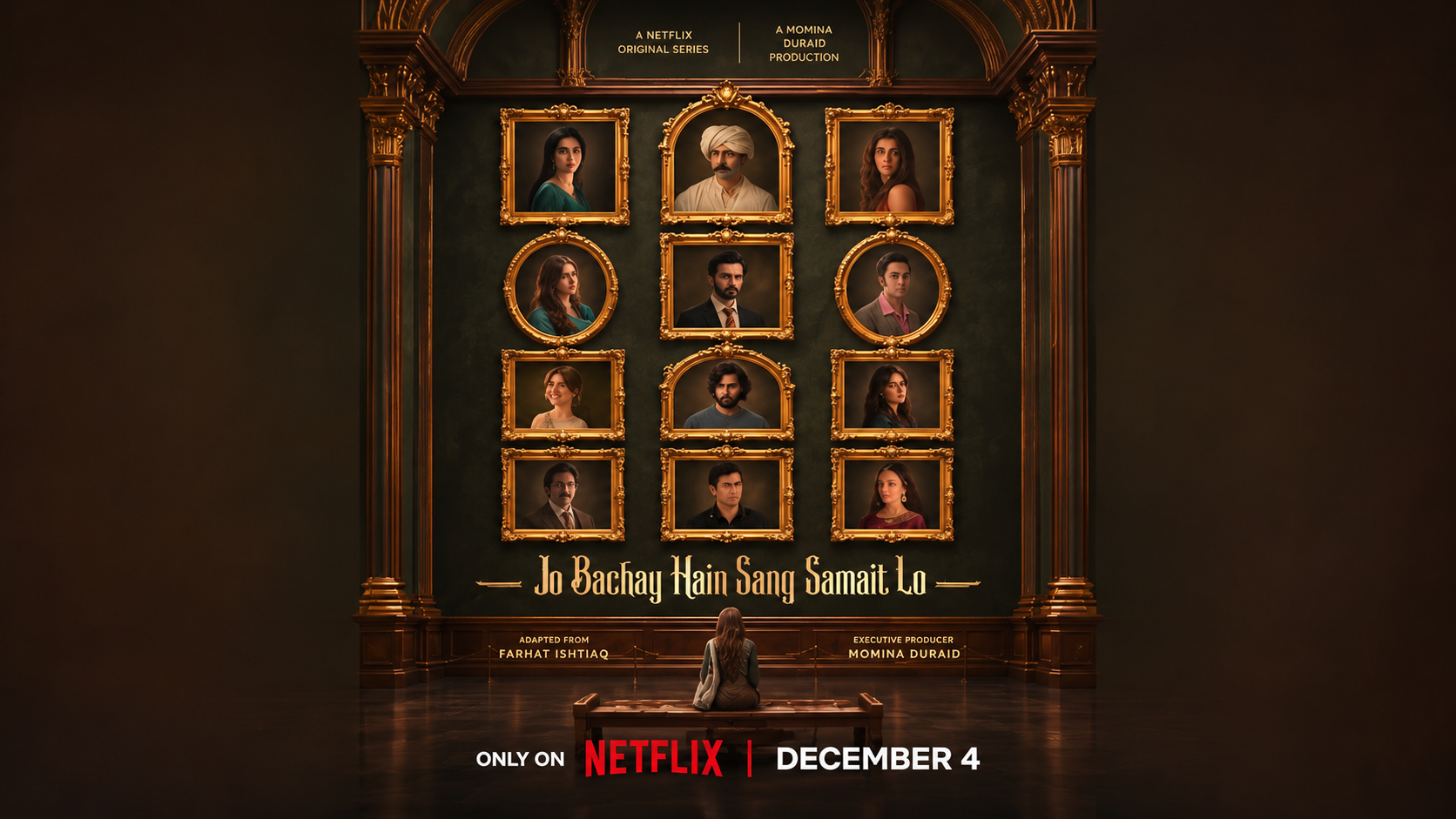
Pakistan's first Netflix original series, Jo Bachay Hain Sang Samait Lo, has become the centre of a controversy in India, where film industry organisations are demanding that the government prevent its release, raising questions about the use of political tensions to restrict cultural exchanges between the two countries.
The All Indian Cine Workers Association (AICWA) and Federation of Western India Cine Employees (FWICE) have called on Indian Prime Minister Narendra Modi to block the series from streaming in India when it premieres globally on December 4, 2026.
The opposition comes just days after Netflix unveiled the trailer of the production, which marks Pakistan's entry into original programming commissioned by the streaming platform.
Filmmaker Ashoke Pandit, a representative of FWICE, warned that the organisation could launch a non cooperation campaign against Netflix if the series was made available to Indian viewers.

Speaking to Indian media, Pandit described Pakistan as an enemy country and objected to the presence of Pakistani actors on a platform operating in India.
He also accused Pakistani performers of making remarks against India and its armed forces during Operation Sindoor, the Indian military operation carried out during the May 2025 confrontation between the two countries.
The allegations were made by Pandit and were not substantiated with specific statements in the reports of his remarks.
Indian film bodies threaten action against Netflix
The controversy began when AICWA wrote to Modi on November 24, seeking intervention to prevent the release of the series. The organisation also demanded restrictions on Pakistani films, television dramas, songs and digital productions on Indian platforms.
FWICE subsequently supported the demand, with Pandit warning that its members could refuse to cooperate with Netflix productions in India. Reports indicated that the federation was considering disrupting work on Netflix projects if the streaming service proceeded with the release.
Actor Gajendra Chauhan, former chairman of the Film and Television Institute of India, also questioned why Pakistani content had been approved for distribution when Pakistani artists faced restrictions on working in India.
Actor Poonam Pandey joined the criticism, arguing that Pakistani productions should be shown in Pakistan rather than distributed to Indian audiences. The opposition reflects a pattern in which Pakistani artists and entertainment productions become targets of boycott campaigns during periods of political tension.
However, demands from film associations do not themselves constitute a government ban, and Netflix has not confirmed that the series will be withdrawn from its Indian catalogue.
Ahsan Iqbal questions India's opposition to Pakistani entertainment
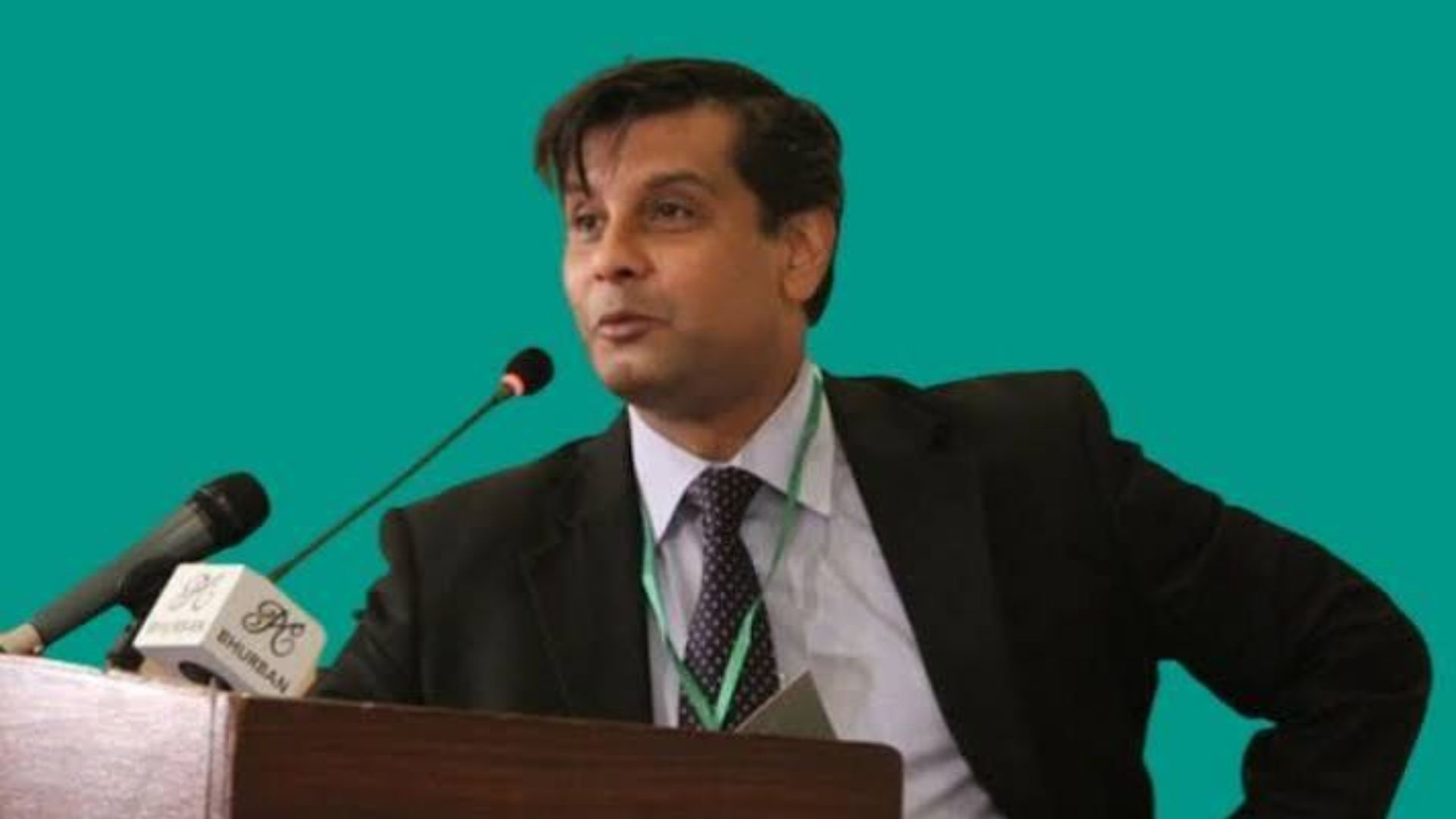
Pakistan's Planning Minister Ahsan Iqbal responded to the controversy by criticising attempts to restrict cultural exchanges. In a post on X, Iqbal accused India of extending political confrontation into sport, water disputes and now entertainment.
He questioned why a cricket match or television drama should be regarded as a threat to national security and argued that audiences should be allowed to decide which programmes they wanted to watch.
His response, accompanied by the hashtag #GrowUpIndia, challenged the idea that preventing access to Pakistani entertainment could serve a national interest.
Iqbal called for artists to be allowed to create and audiences to choose, rather than allowing political differences to determine which cultural productions could be viewed. His remarks have added a Pakistani government response to a dispute that began within India's entertainment industry.
The controversy raises a question about the distinction between national security concerns and restrictions on entertainment.
Indian film associations have linked their opposition to the deterioration in relations between Islamabad and New Delhi, particularly following the April 2025 Pahalgam attack and the military confrontation that followed.
In May 2025, India's Ministry of Information and Broadcasting advised streaming platforms to discontinue Pakistan origin content, citing national security concerns.
The latest demands seek to reinforce those restrictions by preventing a Pakistani production from reaching Indian subscribers through Netflix. The criticism of the ban calls rests on a different argument: a fictional television series does not automatically constitute a security threat because of the nationality of its cast or production team.
That distinction matters for a drama based on romantic relationships and family histories rather than military or political events. Blocking such content solely because it originates in Pakistan risks treating artistic work as an extension of state policy, irrespective of what the production contains.
The dispute also highlights a contradiction between the demand to restrict Pakistani entertainment and the continuing interest in Pakistani television programmes among Indian viewers.
Indian audiences have followed Pakistani dramas through digital platforms and social media, including productions that have attracted attention despite restrictions on formal cultural exchanges.
A recent example is Dar e Nijaat, which has generated discussion and fan screenings in India even as organisations have called for restrictions on Pakistani programming.
Pakistan's history of welcoming Bollywood offers a contrast
For decades, Bollywood films, songs and actors have attracted audiences in Pakistan. Indian films were screened in Pakistani cinemas under arrangements that allowed foreign productions to enter the local market, while Bollywood music and performances developed an audience across the country.
In 2017, Pakistan's federal government maintained a policy permitting Indian films to be screened in cinemas, subject to censorship requirements. That history demonstrates how cultural products have crossed political boundaries despite disagreements between the two governments.
However, the relationship has not been entirely one sided. Pakistan has also imposed restrictions on Indian entertainment. In February 2019, Pakistani cinema exhibitors announced a boycott of Indian films following tensions between the countries. In August that year, Pakistan again barred Indian films from cinemas after India revoked Jammu and Kashmir's special constitutional status.
The difference is therefore not that Pakistan has always permitted Indian content while India has always rejected Pakistani productions. Both countries have restricted cultural exchanges during political disputes.
Nevertheless, the continuing audience for Bollywood in Pakistan and Pakistani dramas in India demonstrates that public interest in entertainment does not necessarily follow government policy.
This makes the calls for a permanent ban on Pakistani productions particularly significant: they seek to institutionalise restrictions that would extend beyond individual films or performances.
Netflix series marks a milestone for Pakistan
Produced by Momina Duraid and adapted from Farhat Ishtiaq's novel, Jo Bachay Hain Sang Samait Lo follows relationships across three generations. The cast includes Fawad Khan, Mahira Khan, Ahad Raza Mir, Iqra Aziz, Hania Aamir, Sanam Saeed, Hamza Ali Abbasi, Maya Ali and Ahmed Ali Akbar.
First announced in 2023, the series has been in development for more than three years and was recently presented at a trailer and soundtrack launch at Mohatta Palace in Karachi.
Filmed across Pakistan and international locations, the production marks a change for an industry whose television dramas have reached audiences abroad but which has had limited representation in original programming commissioned by international streaming services.
Netflix's involvement gives the series a distribution opportunity beyond South Asia, allowing the work of Pakistani actors, writers and production teams to reach subscribers across multiple markets.
The controversy in India has therefore emerged at a moment when Pakistan's entertainment industry is seeking to expand its international presence.
Should political tensions determine what audiences watch?
The demands from Indian film bodies illustrate how entertainment continues to be drawn into diplomatic disputes between Pakistan and India. Those supporting restrictions argue that commercial cooperation should not continue while relations remain strained and security concerns persist.
Critics, however, question whether preventing audiences from watching a television drama contributes to resolving those concerns.
A ban would restrict access to Pakistani storytelling without addressing the political and security disagreements cited by its supporters. It would also affect Indian viewers who follow Pakistani dramas and artists, even when they have no involvement in the disputes between the two governments.
The decision now rests with Indian authorities and Netflix, which has yet to announce whether the series will be available in India. Regardless of the outcome, the production's international release remains a development for Pakistan's television industry.
The larger question is whether artistic work should continue to face political barriers simply because it crosses a national border. With Pakistani productions finding audiences beyond their home market, demands to exclude them from individual countries may restrict viewers' choices, but they do not erase the international interest in those stories.