Karachi: Pakistan's entertainment industry came together at Mohatta Palace on Tuesday, November 24, for the trailer and soundtrack launch of Jo Bachay Hain Sang Samait Lo, marking the countdown to the country's first Netflix original series, which premieres on December 4.
Actors, directors, producers, musicians and other figures from the entertainment industry attended the event, turning the historic venue into a celebration of Pakistani talent and its entry into original programming for a global streaming platform.
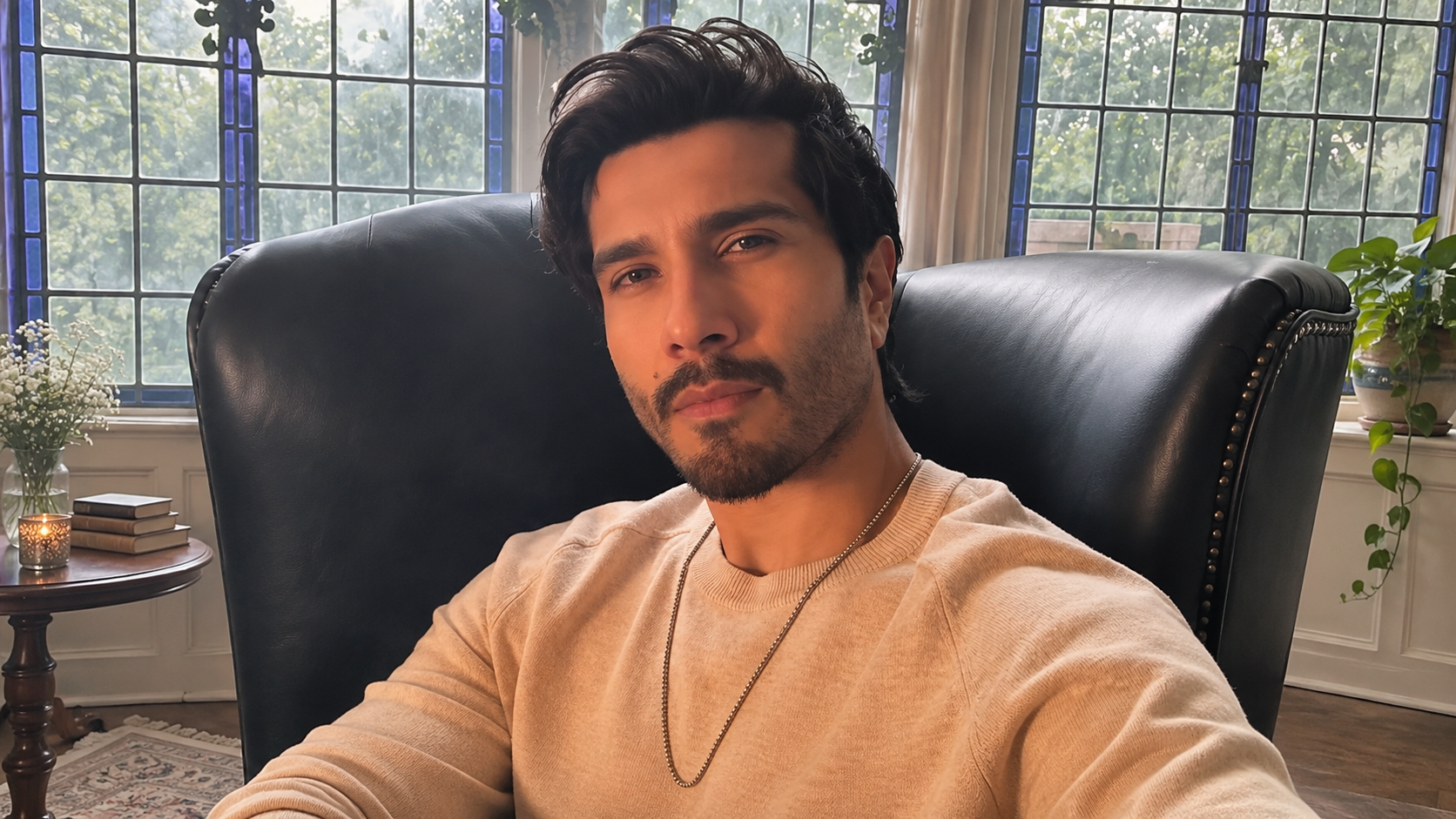
The evening brought together members of the cast, including Fawad Khan, Ahad Raza Mir, Sanam Saeed, Hamza Ali Abbasi, Hania Aamir, Iqra Aziz and Ahmed Ali Akbar, alongside producer and director Momina Duraid, writer Farhat Ishtiaq and HUM Network founder Sultana Siddiqui.

The importance of the occasion extended beyond the show's premiere. Unlike Pakistani television dramas that have previously reached international audiences through licensing arrangements, this series was commissioned as a Netflix original, opening a new avenue for the country's actors, writers and production teams.
A trailer that reveals enough, but not everything
The trailer was undoubtedly the highlight of the evening, offering an impressive first look at a production that appears to have paid attention to its cinematography, dialogue, settings and character development.
From the streets and architecture of Italy to the mountains of Hunza and other locations across Pakistan, the visuals give the series a cinematic scale. The production was also filmed in the United Kingdom, bringing together locations that reflect the story's movement between cultures and countries.
What particularly works in the trailer is its editing. Rather than explaining every relationship or revealing the conflicts that drive the story, it moves between characters, moments of affection, emotional confrontations and hints of betrayal.

The dialogue carries much of the emotional weight, with exchanges that suggest questions of love, family, regret and difficult choices. The expressions and pauses between the characters add to the tension without requiring lengthy explanations.
Most importantly, the trailer does not give away the entire plot. It introduces enough conflict to generate interest while leaving viewers to discover how the individual stories connect.
For an industry accustomed to lengthy drama teasers that sometimes reveal too much, this approach is a welcome change.
Who plays whom in the Netflix series?
Adapted from Farhat Ishtiaq's Urdu novel, the series explores six love stories across three generations, with characters whose relationships are shaped by family expectations, loss and decisions made in the past.
At the centre are Ahad Raza Mir as Sikandar, a Harvard-educated Pakistani lawyer living in Rome who struggles with the consequences of a traumatic experience, and Iqra Aziz as Liza, an artist dealing with her own family history.
Fawad Khan plays Mahmood, while Sanam Saeed portrays Vittoria, a character shaped by two cultural worlds. Mahira Khan takes on the role of Rahat, whose relationships appear to involve Ahmed Ali Akbar's character and Bilal Ashraf's Waqar.
Hamza Ali Abbasi appears as Shehryar opposite Maya Ali's Amna, with the trailer hinting at tensions within their marriage.
Hania Aamir plays Kulsoom, while Khushhal Khan portrays Zain and Aamina Sheikh takes on the role of Sadia. Other performers in the ensemble include Nadia Jamil, Omair Rana and Samina Ahmed.
The casting also brings back several screen pairings familiar to Pakistani audiences, although their relationships in the series appear different from those viewers may expect.
Fawad Khan and Shae Gill bring music to the launch
The evening was not limited to speeches and trailer screenings. Fawad Khan and Shae Gill performed together, singing Deewana, a track from the series' soundtrack.
Their performance added a musical dimension to the celebration, particularly because Fawad, who is known for his acting career and his earlier work as a musician, has also contributed vocals to the project.

Singer Zeb Bangash was also part of the occasion, alongside Asim Azhar. The two have collaborated on Kashish, another track from the soundtrack, which features music by Rohail Hyatt.
The soundtrack comprises six songs and was released alongside the trailer, giving audiences an introduction to the music accompanying the series' interconnected stories.
Mahira Khan misses the event but joins through video
One of the noticeable absences at Mohatta Palace was Mahira Khan, whose presence would have added to the reunion of some of Pakistan's most recognised television stars.
Although she could not attend in person, the actor addressed the gathering through a video message, describing the launch as a milestone for Pakistan.
She acknowledged the work behind the production and praised Momina Duraid, expressing hope that international audiences would recognise her contribution as a director.

Mahira's message reflected the significance of the occasion for an industry whose dramas have reached audiences abroad for years, but which is now entering a different phase through an original production commissioned by Netflix.
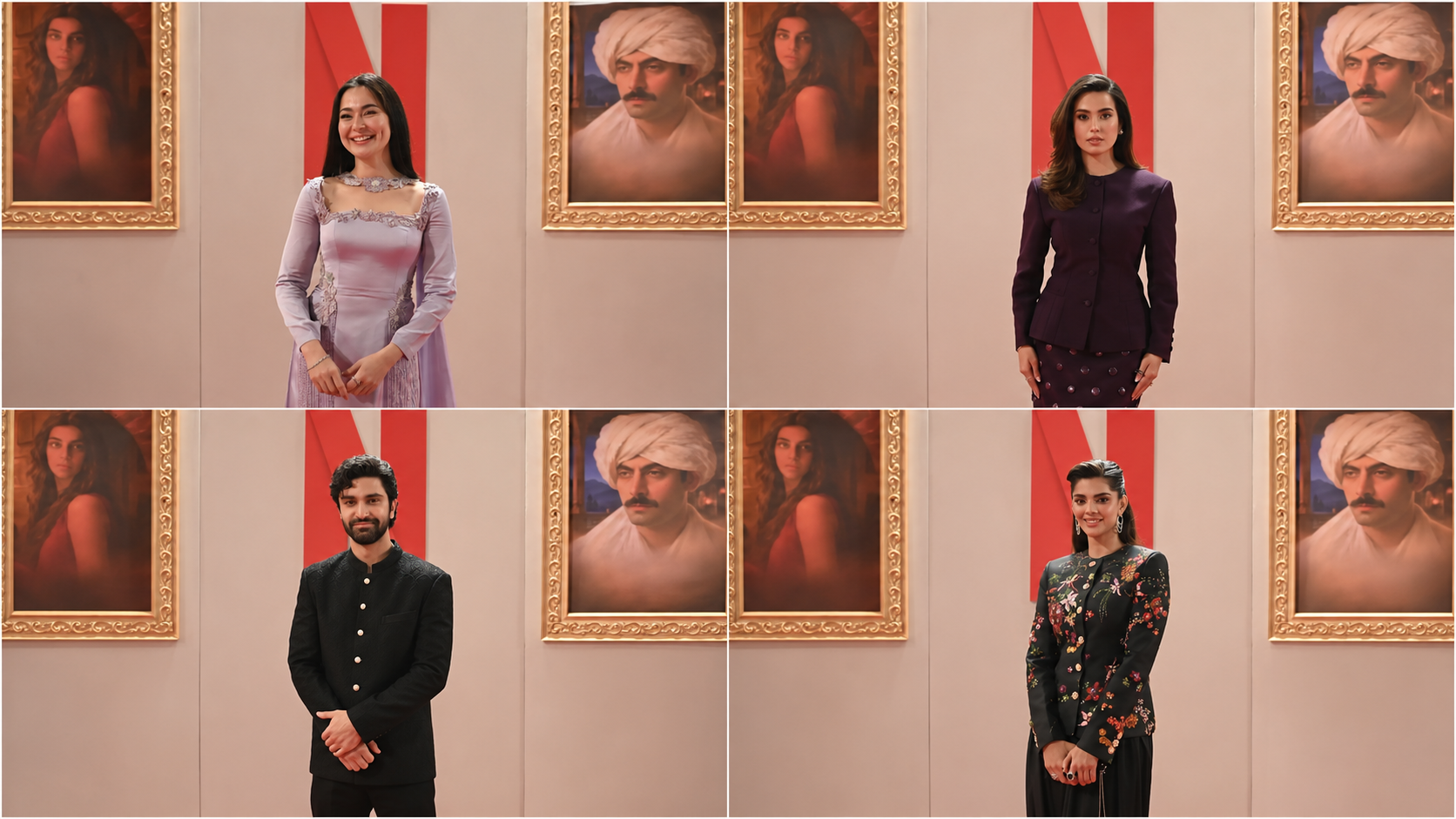
A grand venue, but did everyone get the fashion memo?
Mohatta Palace provided a setting suited to the scale of the event, with its architecture and surroundings adding to the sense of occasion.
However, while the venue, production and gathering suggested a celebration of considerable scale, the fashion choices of some attendees appeared surprisingly understated.
At moments, it almost looked as though a few of the stars had put together their wardrobes at the last minute, perhaps not anticipating just how grand the evening would be.
The contrast between the setting and some of the outfits was difficult to ignore. For an occasion celebrating Pakistan's arrival on a global streaming platform, the red carpet could arguably have reflected more of the glamour associated with such a milestone.
Nevertheless, the evening was less about individual fashion statements and more about an industry coming together to celebrate a shared achievement.
The gathering included performers from different generations, producers, directors, designers and musicians, demonstrating that the occasion was not simply a promotional event for one television series.
A milestone for Pakistani entertainment
HUM Network founder Sultana Siddiqui told attendees that Pakistani dramas had already established audiences beyond the country's borders and that the Netflix project would allow more viewers to experience Pakistan's culture and storytelling.
She noted that the series would reach audiences across 190 countries, underlining the distribution opportunities offered by the streaming platform. The adaptation also represents an opportunity for Urdu fiction to reach audiences unfamiliar with Pakistani literature.
Farhat Ishtiaq's novel, first serialised in 2009 and published as a book in 2013, has an established readership. Its transition to the screen introduces the challenge of balancing readers' expectations with a storytelling format designed for international audiences.
The series is scheduled to arrive in two parts, with the first premiering on Netflix on December 4 and the second to follow at a later date.
For now, the trailer has made a convincing first impression. Its visual presentation, performances, music and restrained approach to revealing the story suggest that considerable attention has gone into adapting the novel for television.
Whether the complete series can sustain that promise remains to be seen.
But the evening at Mohatta Palace offered something beyond a television launch: an opportunity for Pakistan's entertainment industry to gather under one roof and celebrate a production that could open doors for more Pakistani stories on international streaming platforms.