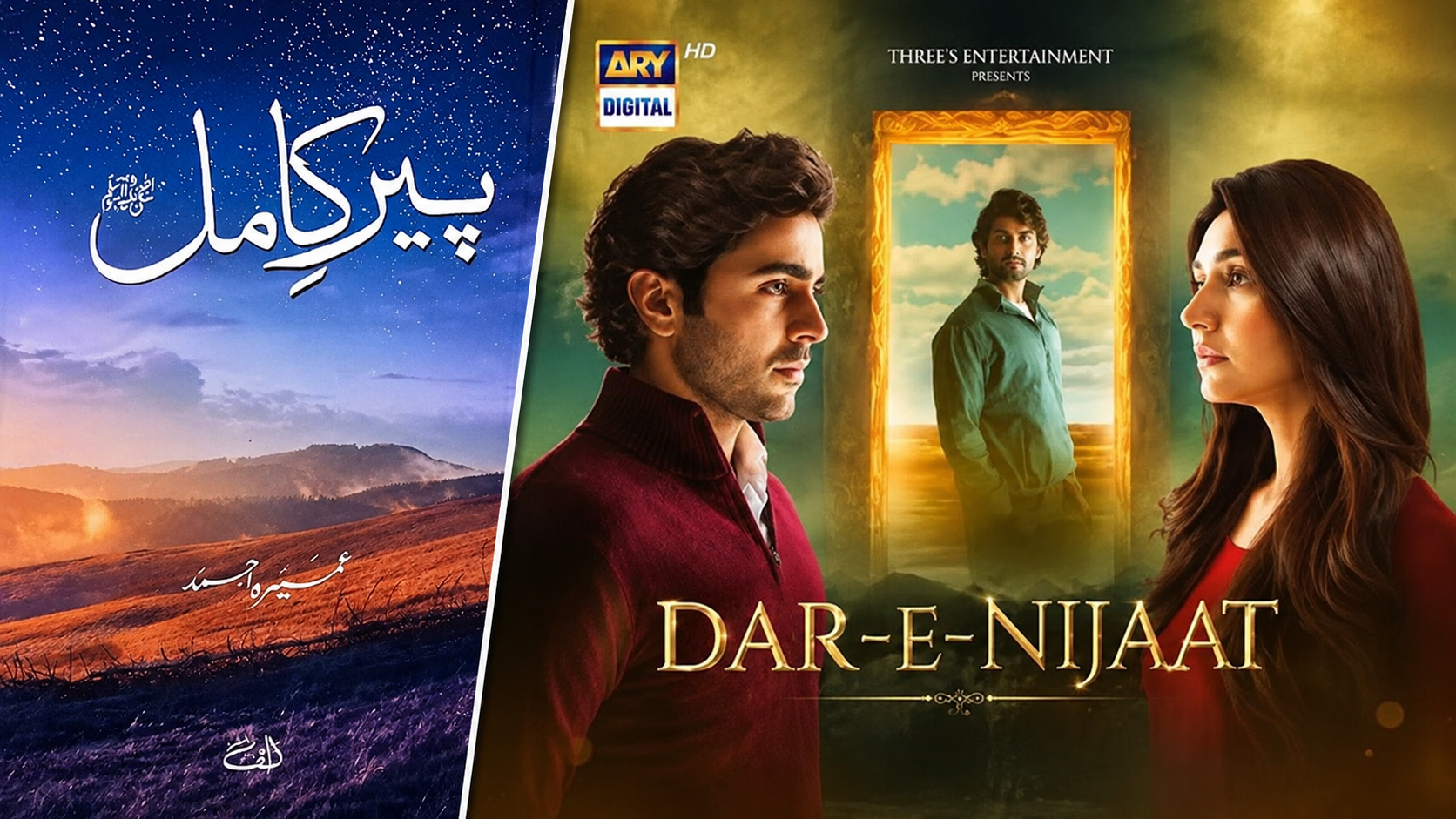
Karachi: Pakistani novelist and screenwriter Umera Ahmed has rejected comparisons between Salar Sikandar, the central character of her novel Peer e Kamil, and Abu Bakar from Dar e Nijat, saying the two characters should not be measured against each other.
In a statement shared on her official social media account, Ahmed said that even 100 characters like Abu Bakar could not match Salar Sikandar. "100 Abu Bakars can't match one Salar Sikandar. He is and has been one of his kind so kindly don't draw any comparisons between the two," she wrote.
The statement was subsequently shared by Diva Magazine Pakistan, drawing attention to the author's views on two characters from her literary works.

The comparison centres on Abu Bakar from Dar e Nijat and Salar Sikandar from Peer-e-Kamil, both created by Ahmed. Salar Sikandar is among the author's most recognised fictional characters, having gained a readership through Peer-e-Kamil, a novel that explores faith, identity, personal transformation and the search for purpose.
The character's development throughout the story has contributed to the novel's continued presence in discussions among readers of contemporary Urdu fiction. Abu Bakar, meanwhile, has attracted attention through Dar e Nijat, prompting comparisons between the two characters. Ahmed's statement makes clear that she does not consider them equivalent, despite having created both.
Author's remarks draw attention online
Diva Magazine Pakistan highlighted Ahmed's statement in an Instagram post, noting that the writer had expressed a preference for Salar Sikandar over Abu Bakar. The publication also invited readers to share whether they agreed with her assessment.
The remarks have brought attention to the relationship between authors and their fictional characters, particularly when readers compare personalities from different works by the same writer. Such comparisons often reflect readers' interpretations of a character's personality, development and role within a story. However, Ahmed's response provides her own perspective on the distinction between the two.
Peer e Kamil remains one of Umera Ahmed's most widely recognised novels. Its narrative follows the personal and spiritual journeys of its principal characters, Salar Sikandar and Imama Hashim.
The novel has maintained a readership beyond its original publication, with its themes continuing to feature in discussions about Urdu literature. Ahmed has written novels and television dramas dealing with social relationships, morality, faith and personal choices.
Her latest statement does not suggest any change to either character or their respective stories. Instead, it addresses comparisons being made by readers and establishes her position on the two fictional personalities.
For readers familiar with both works, the remarks offer insight into how the author views the characters she created, while leaving room for audiences to form their own interpretations.