
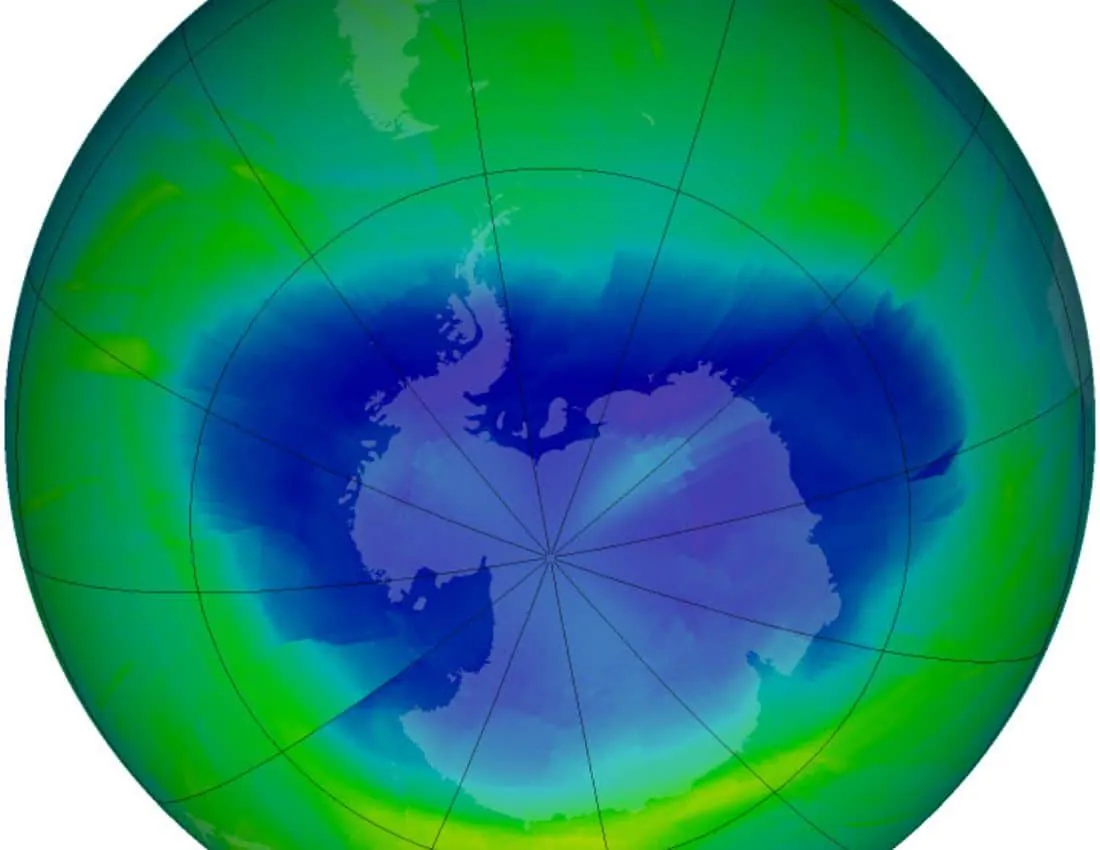
Islamabad: For decades, the hole in the ozone layer was a warning of how quickly human activity could alter the atmosphere. Today, it is also becoming a rare environmental success story.
World Ozone Day, observed on September 16, marks the 1987 signing of the Montreal Protocol, the international agreement created to phase out chemicals that destroy stratospheric ozone. The treaty has since led to the phase out of more than 99 per cent of controlled ozone depleting substances.
The results are beginning to show.
The latest scientific assessments say the ozone layer remains on track to return to 1980 levels by around 2040 for the global average, 2045 over the Arctic and 2066 over Antarctica, assuming current policies remain in place. The Antarctic ozone hole has also shown a long term improvement in both its area and depth since around 2000.
That recovery matters because stratospheric ozone absorbs much of the Sun’s harmful ultraviolet radiation. A weakened ozone layer increases exposure to UV radiation, raising risks including skin cancer and cataracts and creating additional pressure on ecosystems.
But the recovery does not mean the problem has disappeared.
In 2026, scientists continue to monitor ozone depleting substances and other chemicals in the atmosphere. A recent study published through the UN ozone programme found that continuing industrial emissions of certain ozone depleting substances could delay recovery of the mid latitude ozone layer by several years without additional measures.
The next chapter is also closely linked to cooling.
Air conditioning and refrigeration are essential for food storage, medicines, vaccines and human safety during extreme heat. But some refrigerants are powerful greenhouse gases.