Gilgit: Heavy rains and cloudbursts triggered flash floods across Gilgit-Baltistan on Saturday, damaging homes, farmland, and key infrastructure while disrupting major transport routes, including the Karakoram Highway (KKH).
The early morning floods caused widespread destruction in Ghizer district, particularly in Naubahar village, where the Gushgush Jamaat Khana was damaged along with crops, orchards, and agricultural land. The floods also damaged power transmission lines and blocked the main road between Immit and Barjangle, leaving several communities isolated. Local residents called on the regional administration to launch emergency relief operations and expedite road restoration efforts.
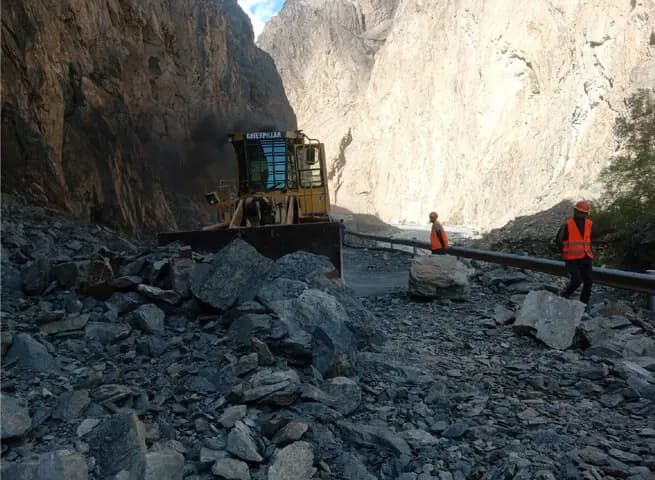
Travel across the region was severely disrupted. According to a Gilgit-Baltistan police spokesperson, the section of the Karakoram Highway between Sost and Khunjerab Top was completely closed due to landslides, prompting authorities to advise tourists against unnecessary travel. However, the Gilgit-Baltistan tourism police confirmed that another blocked stretch of the highway between Murtazaabad and Hassanabad in Hunza was cleared and reopened to traffic.
The continuous rainfall, accompanied by thunderstorms and lightning since August 1, led to a sharp drop in regional temperatures. The Diamer district administration reported the season’s first snowfall at Babusar Top on Saturday morning, though vehicular traffic along Babusar Road remained operational.
The latest disruption follows an intense summer weather pattern in the region. Data from the Gilgit-Baltistan Disaster Management Authority indicates that between June and August this year, the area experienced 120 flood events caused by cloudbursts and glacial melt. These disasters destroyed homes, farmlands, irrigation channels, and power systems, leaving residents in multiple areas stranded for extended periods.
Local environmental experts noted that Gilgit-Baltistan is experiencing a distinct shift in climate trends, marked by frequent cloudbursts, accelerated glacial melting, glacial lake outburst floods, and rising temperatures. The fragile high-altitude ecosystem home to more than 8,000 glaciers, 300 glacial lakes, and steep mountain terrain faces growing risks from climate change, leaving local communities increasingly exposed to frequent natural hazards.