

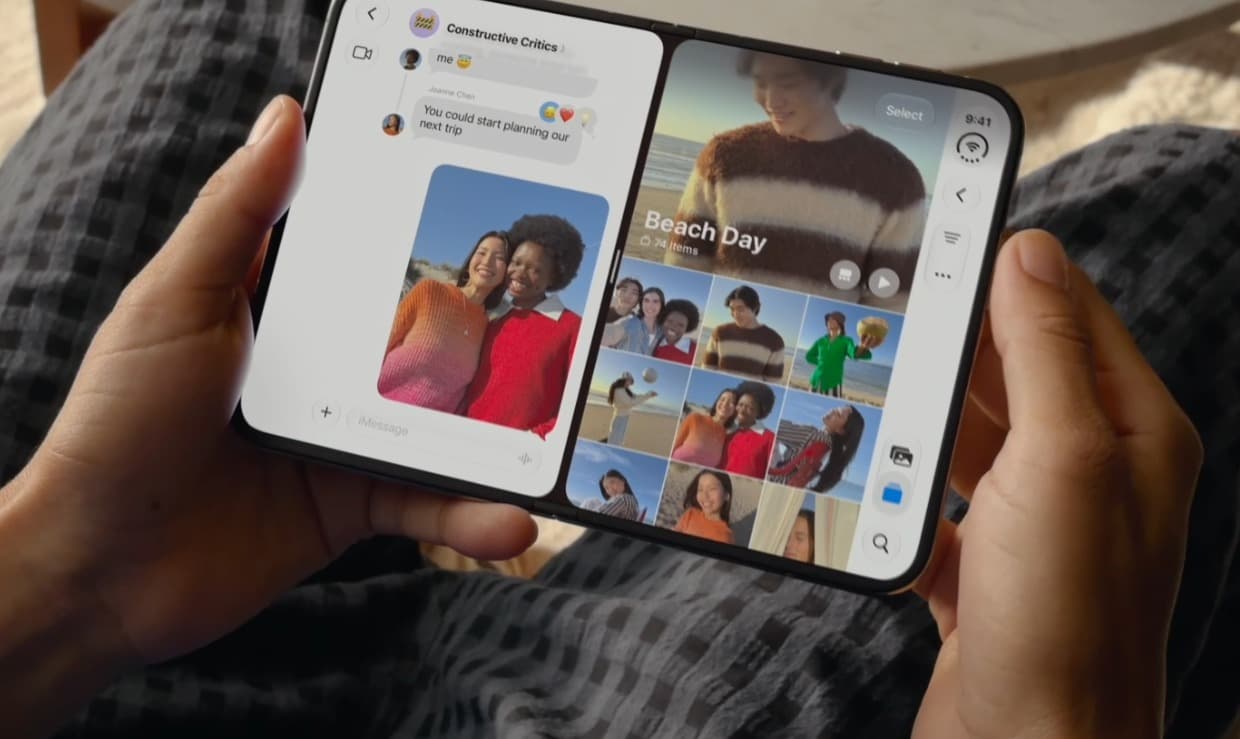
California: The company has unveiled the iPhone Duo, its first foldable iPhone, introducing a design that transforms the device from a pocket sized phone into what Apple describes as its largest iPhone display yet.
When opened, the iPhone Duo features a 7.6 inch Super Retina XDR display, while its 5.4 inch outer screen allows it to be used as a conventional smartphone when closed. Both displays use the same aspect ratio, allowing content to scale between them without a major change in appearance.
Apple says the device is its thinnest iPhone when opened and has been designed around a precision hinge containing more than 100 components. The phone uses grade five titanium, Ceramic Shield protection and an IP68 rating for resistance to water and dust.
The foldable design also changes how the phone can be used. Apple has introduced side by side multitasking, allowing two apps to run simultaneously on the larger inner display. The company says the design also enables new camera functions, including the ability to preview photographs on the outer screen while using the main camera.
Photography is handled by a 48 megapixel Fusion Main camera, supported by a 48 megapixel Ultra Wide camera and a two times optical quality Telephoto option. A new Centre Stage front camera can automatically adjust the framing of photographs and videos.
The iPhone Duo is powered by Apple's new A20 Pro chip and includes a custom thermal management system and dual battery architecture. It will run iOS 27, which Apple says has been redesigned to work with the device's different display configurations.
Artificial intelligence is also built into the experience. Apple says Apple Intelligence and Siri AI will work with personal context, while a new Siri Camera mode can use what the camera sees to answer questions and perform actions.
The iPhone Duo will be available in star white and night sky. Pre orders begin on October 16, with sales starting on October 23.
Apple's move brings one of the world's biggest smartphone brands directly into the foldable market, turning a category once dominated by specialist devices into another battleground for mainstream smartphones.
The bigger change, however, may be less about making the iPhone fold and more about changing what users expect an iPhone to be.