
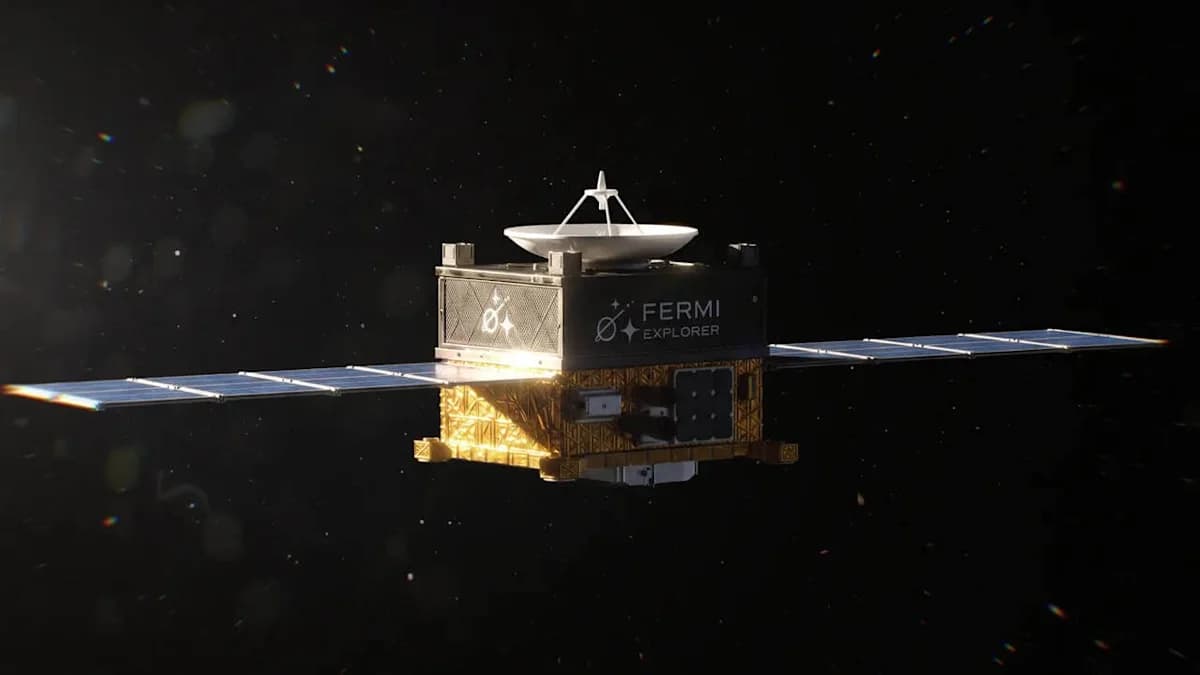
Webdesk: Humanity could take its first deliberate step towards another star as early as 2029, if a newly announced mission by the nonprofit Fermi Explorer Mission goes ahead.
The group plans to launch a small spacecraft towards Alpha Centauri, the nearest star system containing stars similar to our Sun. The system is about 4.4 light years from Earth, meaning even light takes more than four years to cross the distance.
The proposed journey, however, would take tens of thousands of years. Fermi Explorer says the spacecraft should travel at least 99 per cent of the way to Alpha Centauri within about 80000 years. Its detailed mission analysis puts the most efficient arrival at roughly 77500 years.
That extraordinary timeline is central to the purpose of the project. Rather than waiting for a revolutionary propulsion system capable of carrying humans between stars within a lifetime, the team wants to demonstrate that an interstellar mission can begin using technology that already exists.
The spacecraft is expected to weigh between 100 and 200 kilograms and carry at least one kilogram of payload. The organisation aims to keep the entire mission below USD 15 million, including design, construction, launch and operation.
The proposed spacecraft would use electric propulsion and a complex trajectory involving repeated manoeuvres near the Sun before beginning its long journey outward. The approach is intended to keep the mission within realistic technological and financial limits rather than depend on propulsion systems that have not yet been demonstrated.
There is an important distinction between this proposal and the Voyager missions. Voyager 1 and Voyager 2 have entered interstellar space, but neither was launched with another star as its destination. Fermi Explorer would be specifically aimed at another star system from the beginning.
And the target itself will not remain where it is today.
Because Alpha Centauri is moving through space, the spacecraft cannot simply aim at its current position. The mission team plans to calculate where the system will be thousands of years from now and target that future location instead.
That makes the project more than a question of engineering. It raises a question about time itself.
Nobody involved in the launch would see the spacecraft reach its destination. The people who eventually witness its arrival would belong to a civilisation thousands of generations removed from the one that launched it.
The mission's real milestone, then, would not be arrival. It would be humanity deciding that some journeys are worth beginning even when their destination belongs to the distant future.