

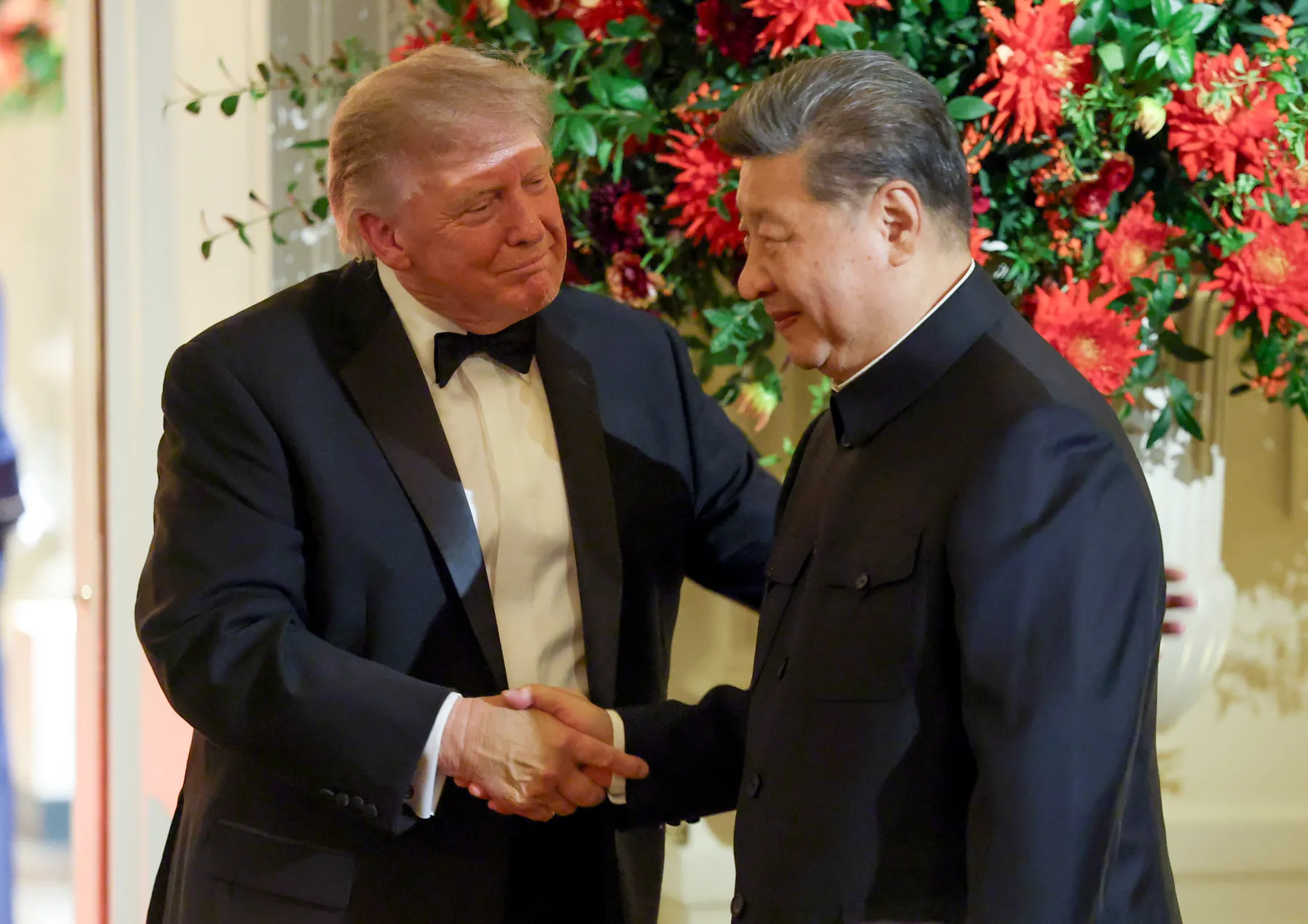
Washington: US President Donald Trump will take Chinese President Xi Jinping to the National Archives in Washington on Friday as Xi’s state visit enters its second day following talks at the White House on trade, artificial intelligence, Taiwan and security risks. This is the Chinese president's first state visit to the US in more than a decade. Trump personally received him at Joint Base Andrews before hosting official ceremonies and talks at the White House.
The two leaders are expected to view the Declaration of Independence, the US Constitution and the Bill of Rights, today. The tour follows Thursday’s White House summit, where Trump and Xi discussed managing relations between the world’s two largest economies while addressing areas of strategic competition. The two leaders previously met in Beijing in May, when their governments agreed to maintain direct contact and manage disputes through continued negotiations.
Artificial intelligence has as emerged as one of the principal subjects of this summit. Washington has proposed a notification mechanism which the two governments could use to exchange information about serious artificial intelligence incidents affecting national security and would function as an emergency communication channel if an advanced artificial intelligence system caused or contributed to a cyberattack, infrastructure disruption or another major security incident.
Both governments have expressed support for continuing dialogue on the technology, but they have not announced a formal agreement on any proposed system and recent discussions at the UN on the role of artificial intelligence places them on different sides of the argument, with China calling for greater access to the technology, while the US says the industry must remain outside the control of international regulators.
Taiwan also featured in discussions as many observers expected. Chinese state media said Xi urged Washington to handle the issue cautiously and to continue to restrain Taiwanese independence. China considers Taiwan part of its territory and has not ruled out using force to establish control there. Taiwan claims it governs itself and rejects Beijing’s sovereignty.
The US maintains no formal diplomatic relations with Taiwan in what is known as a policy of strategic ambiguity, but is required under American law to provide the island with the means to defend itself. Washington did not announce any change in that policy following Thursday’s meeting.