

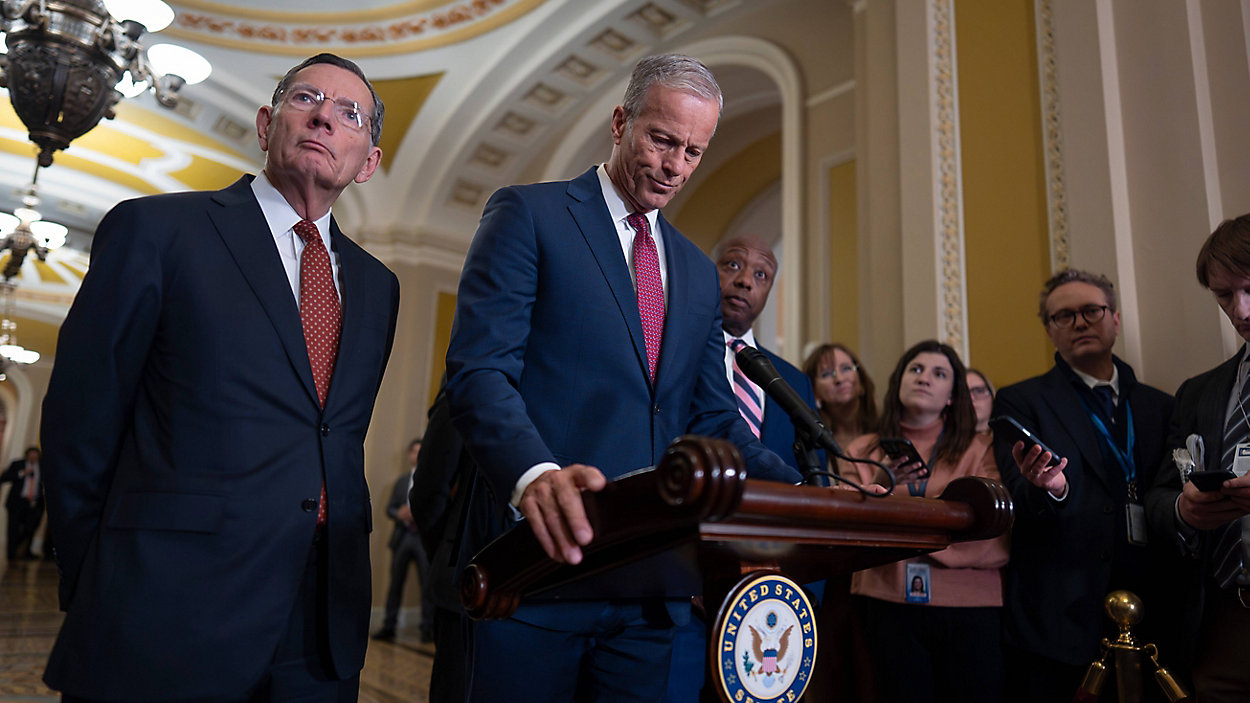
Washington: The US Senate rejected a House approved resolution on Thursday that would direct President Donald Trump to withdraw American forces from unauthorised hostilities with Iran, voting 50 to 49 as the conflict continued despite public statements about a possible negotiated settlement.
The resolution had passed the House of Representatives with support from members of both parties. Senate Democrats brought it to a vote under the War Powers Resolution, a 1973 law intended to limit a president’s ability to keep US forces in armed conflict without congressional approval.
Republican senators Thom Tillis, Lisa Murkowski, Rand Paul and Susan Collins supported the measure. Republican Bill Cassidy opposed it, while Democratic Senator John Fetterman also voted against the resolution.
The outcome means the measure will not advance and current US military operations against Iran will remain unaffected.
The vote came as President Trump said the US and Iran were communicating and that he expected the two countries to reach a settlement. Iranian officials have also indicated a willingness to pursue diplomacy, although no ceasefire, negotiating timetable or final agreement has been announced.
Military operations and regional attacks have continued alongside those diplomatic messages. The conflict began after the US launched attacks against Iran at the end of February, and subsequent efforts to contain the fighting have failed to produce a lasting end to hostilities.
Democratic Senator Andy Kim said the war had killed at least 19 US service members and injured more than 750. Citing a Congressional Budget Office assessment, he said the conflict cost nearly USD 40 billion during its first four months.
Republicans opposing the resolution argued that withdrawing forces while American troops remained under threat could create additional security risks.
The Senate has considered several similar measures during the conflict. One war powers resolution passed in June, but another attempt failed in July after an earlier ceasefire collapsed.
The latest vote keeps the constitutional dispute over military authority unresolved. The US Constitution gives Congress the power to declare war, while the president serves as commander in chief.
The War Powers Resolution provides Congress with a mechanism to seek the withdrawal of forces from hostilities it has not authorised.
Democratic senators said they would continue bringing such measures to a vote, while the administration maintains that military pressure and diplomacy can proceed at the same time.