

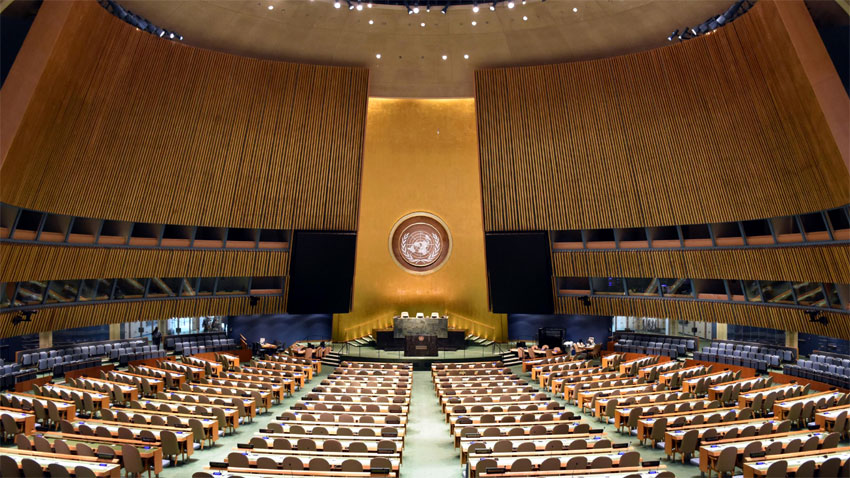
New York: The General Debate of the 81st session of the United Nations General Assembly (UNGA) begins on Tuesday with world leaders gathering to address mounting international challenges.
This year’s debate carries the theme “Restoring trust, managing transformation: a United Nations that delivers for all.”
The theme reflects growing concern over the ability of international institutions to respond effectively to wars, humanitarian emergencies, climate change, economic disruption and widening political divisions.
United Nations (UN) Secretary General António Guterres, US President Donald Trump, and Türkiye’s President Recep Tayyip Erdoğan are among the prominent leaders expected to address the opening session, according to Radio Pakistan.
The General Debate provides heads of state and government with a platform to outline their foreign policy priorities and present their positions on major international issues.
Although speeches delivered during the debate do not create legally binding decisions, they can shape diplomatic agendas, signal policy changes, and open the way for negotiations on the sidelines.
This year’s gathering takes place amid pressure on the international system from armed conflicts, disrupted energy supplies, strained trade routes, and growing demands for reform of the UN.
Developing countries are also expected to raise concerns about debt, climate finance, food security, and unequal access to technology and development resources.
The debate will place particular attention on whether member states can move beyond competing national positions and identify areas of practical cooperation. Restoring trust will remain difficult as major powers disagree over security, economic policy, and the application of international law.
For smaller and developing states, the General Assembly remains an important forum because every member has one vote regardless of its military or economic strength. It allows countries that hold limited influence elsewhere to present their concerns directly before the international community.
The significance of the session will ultimately depend not only on the speeches delivered in New York but also on whether governments translate their commitments into diplomacy funding and coordinated action after the debate ends.