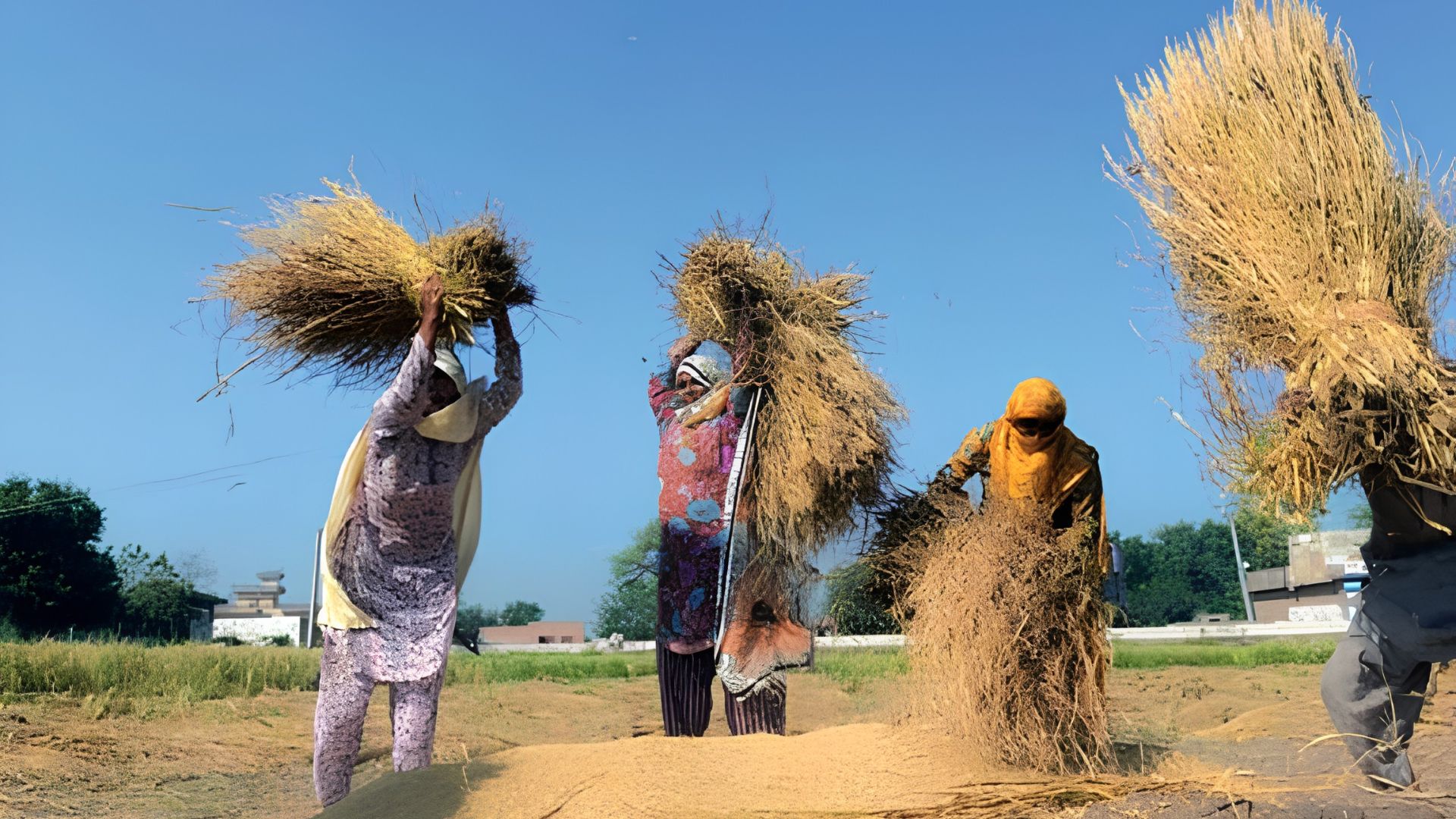
The women sorting seed, tending livestock, picking cotton or carrying water are part of Pakistan’s food system. But the work they do can disappear from the records that determine who is recognised as a farmer, who receives support and who has a say in agricultural decisions.
That gap is at the centre of this year’s International Day of Rural Women. Its theme, “Rural Women Farmers Caring for Mother Nature,” highlights women’s roles in conserving seeds, managing water and protecting biodiversity. The theme also falls in the UN’s International Year of the Woman Farmer.
There is a risk, however, in celebrating this work only as care. Rural women’s connection to land and natural resources is not simply a matter of tradition or an instinctive closeness to nature.
Much of it is skilled labour, performed under economic pressure and often without secure rights or reliable pay. Praise for women’s resilience can obscure the question of why they are expected to absorb so much risk with so little control.
A 2024 FAO assessment of Pakistan’s agriculture and rural sectors found that women farmers are often unrecognised because the term “farmer” is associated with land ownership.
Women may do the work on family farms without being recorded as farmers or being able to access services tied to that status. Women interviewed for a separate FAO study reported working 12 to 18 hours a day, alongside limited access to land, credit, water, technology and agricultural training.
Recent findings reported by Dawn underline the disparity. A 2026 SDPI study found that 67 percent of employed women in Pakistan worked in agriculture, while only 1.5 percent of agricultural households were formally recorded as female headed.
It also reported that about two percent of ever married women aged 15 to 49 owned land alone or jointly. That figure refers to women in that surveyed age group; it should not be read as the share of Pakistan’s land owned by women.
The same study points to the growing pressure of climate shocks. More than nine in 10 women farmers surveyed reported experiencing an extreme climate related event in the previous five years, and more than 80 percent said they had faced crop losses or another negative effect on farming.
Many reported borrowing money or selling livestock to cope. When a shock hits, women can lose not only a harvest but also the assets and options they rely on to recover.
The data must also be read carefully. Pakistan’s 2024 to 25 Labour Force Survey adopted a revised international definition of employment that excludes subsistence production from the employed population.
The government says 2.5 million subsistence farmers were consequently no longer counted as employed under the new standard.
That change makes comparisons with earlier surveys difficult and shows why the way work is measured matters: unpaid or own use production can be economically vital even when it does not appear as employment in the headline figures.
Nor are rural women a single group with identical needs. A woman who owns a small plot, a landless farm worker, a tenant farmer, a pastoralist and a fisher may face different constraints.
Policies designed around registered landowners can leave many of them out, even when their labour is indispensable to household and national food security.
Recognition, then, has to mean more than a day of tributes.
It means recording women’s agricultural work accurately, enforcing inheritance and land rights, ensuring fair wages and safe working conditions, and making credit, training, technology and climate support accessible to women in their own names.
It also means involving them in decisions about water, crops and disaster recovery.
Rural women already help sustain Pakistan’s farms and communities through changing seasons and repeated shocks. The test is whether institutions will treat them as workers, producers and decision makers, with rights and resources to match their contribution.