
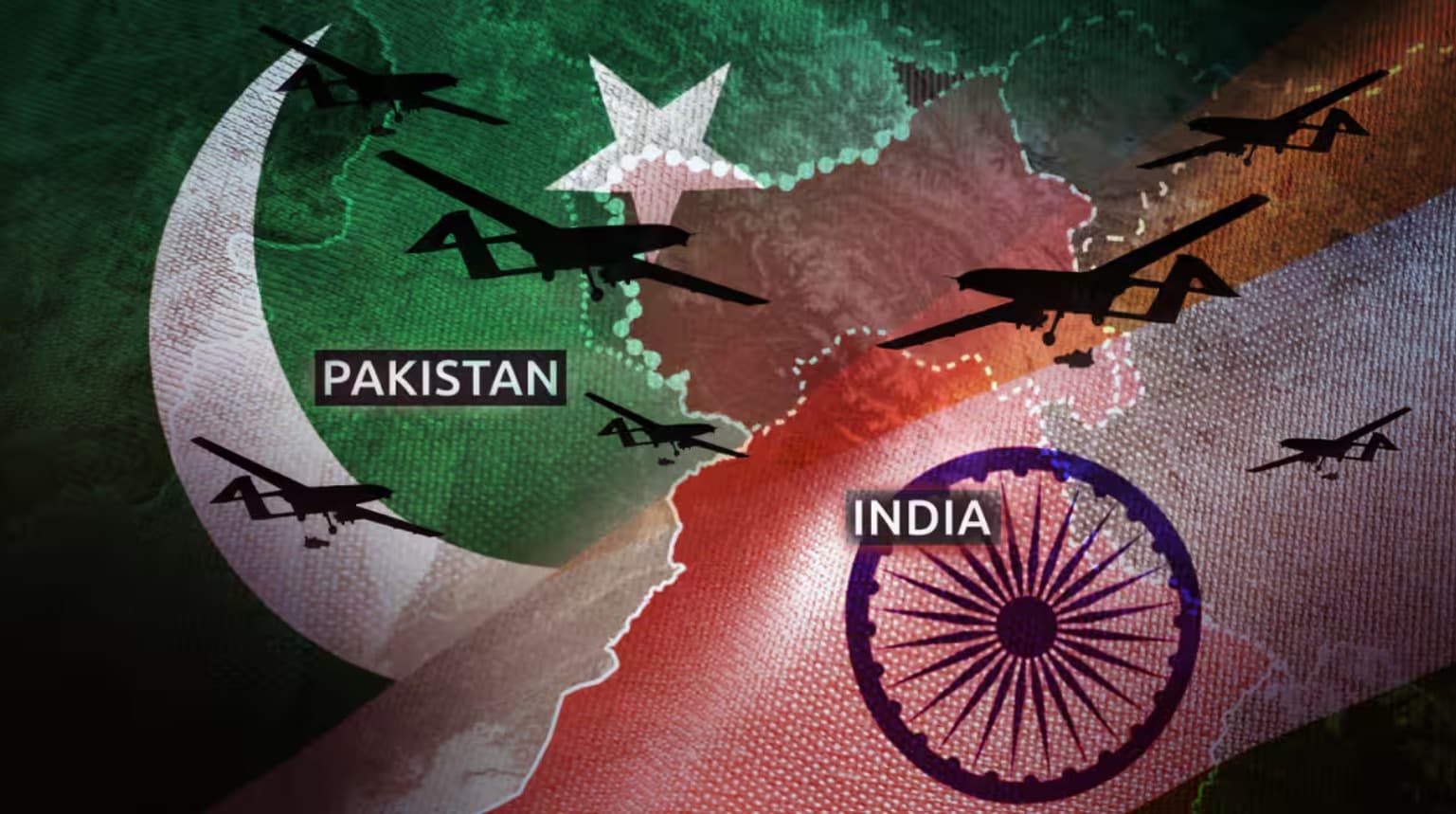
The geopolitical tectonics of South Asia once again shifted violently when India seized the Pahalgam attack as a casus belli, pushing both Pakistan and India to the brink of open conflict.
India swiftly accused Pakistan of orchestrating the incident, an allegation Islamabad categorically denied, calling instead for an impartial international investigation. But the nature of the standoff far exceeded the scope of previous crises. 'Twas a hybrid confrontation underpinned by a recalibrated military posture, disinformation warfare, and a struggle for escalation dominance.
From surgical retaliation to strategic realignment
The pattern of Indian brinkmanship appeared consistent: attribute any cross border violence to Islamabad, inflame domestic jingoism, and then manoeuvre militarily to corner Pakistan diplomatically. However, in May 2025, India’s approach mutated from the purported “surgical strikes” of 2016 and the Balakot episode of 2019 into something more dangerous.
The decision to place the Indus Waters Treaty (IWT) “in abeyance” and mobilise the aircraft carrier INS Vikrant were steps toward demonstrating escalation dominance. Though Vikrant returned to dock, the initial deployment served its signalling purpose.
India sought to rewrite the rules of engagement, pushing the threshold while avoiding all out war. Yet in doing so, it ran the risk of igniting the very conflict it aimed to control. The hybrid war that India was waging, spanning economic pressure, disinformation campaigns, sub-conventional incursions, and open military threats, eroded traditional red lines.
Pakistan’s strategic posture and the nuclear paradox
Pakistan’s response, while traditionally restrained, was framed by a rapidly evolving threat matrix. During the May 2025 India Pakistan crisis, Information Minister Attaullah Tarar said Islamabad had credible intelligence suggesting that India could launch a strike within 24 to 36 hours. Defence Minister Khawaja Asif, meanwhile, reiterated that Pakistan’s nuclear arsenal was intended for deterrence but could be employed if the country’s existence was threatened, underscoring the centrality of full spectrum deterrence to Pakistan’s strategic posture.
The absence of a No First Use (NFU) policy stems from geographical vulnerability. Pakistan’s population centres and political military nerve centres lie perilously close to the border. In the event of a rapid Indian ground advance, Pakistan cannot afford to wait. Tactical nuclear weapons (TNWs) thus remain integral to any rollback strategy.
The regional chessboard: Tactical partnerships and symbolic gestures
While New Delhi attempted to isolate Pakistan internationally, Islamabad quietly strengthened strategic alignments. The arrival of Turkish military cargo aircraft at Pakistani bases, though described by Ankara as routine logistics, was appositely interpreted as a powerful message of solidarity. Similarly, China’s timely supply of PL 15 Beyond Visual Range (BVR) missiles for the JF 17 Thunder aircraft underscored Beijing’s enduring strategic interest in regional stability through parity.
And China’s involvement is not merely transactional. With the China Pakistan Economic Corridor (CPEC) running through Gilgit Baltistan, any Indian adventure in the region risks entangling Beijing. This trilateral strategic geometry, Pakistan, India, and China, defines the limits and possibilities of escalation in South Asia.
Hybrid war and escalation dominance: A two edged sword
India’s decision to weaponise the IWT and expand ceasefire violations marked a deliberate shift to hybrid escalation. Yet this strategy wasn't without limitations. By expanding the conflict’s scope without proportionate tactical advantage, India risked overextending. The psychological warfare campaign, fueled by a hyper nationalist media, was effective domestically but fell short of altering the regional balance of power.
Pakistan’s National Security Committee issued clear warnings: any military provocation will be met with a full spectrum response. The armed forces were on high alert across all services. Submarine deployment and aerial patrols intensified, particularly in the Arabian Sea and along the Line of Control (LoC). The game of nerves was at its zenith. Whoever blinked first may lose more than just face; credibility and deterrence were on the line.
Strategic objectives: From coercion to realignment
India’s overarching goal was not merely retaliation; 'twas to redefine deterrence in its favour. The freezing of the IWT, mobilisation of forces, and the international narrative building against Pakistan were all geared toward achieving coercive credibility. Some analysts argued that India may be eyeing strategic footholds in Gilgit Baltistan or aiming to alter the demographic and administrative contours of Kashmir, mirroring Israel’s Gaza strategy.
Pakistan, by contrast, was in a defining moment. Unlike in 2019, where tactical success (e.g., the downing of the Indian MiG 21 and capture of Wing Commander Abhinandan) was not translated into strategic messaging, however, in May 2025, Islamabad recognised the need to leverage deterrence both on the battlefield and in the diplomatic arena.
Key takeaway: Lessons from May 2025
A year and a half after the May 2025 crisis, its central lesson remains that credible deterrence is essential to meaningful restraint. Pakistan must maintain calibrated military readiness, strategic partnerships and resilience across information, cyber and economic domains while keeping dialogue open.
The objective should not simply be to prevent the next crisis, but to shape a more stable strategic balance in South Asia. Resolve strengthens restraint; dialogue makes it sustainable.