
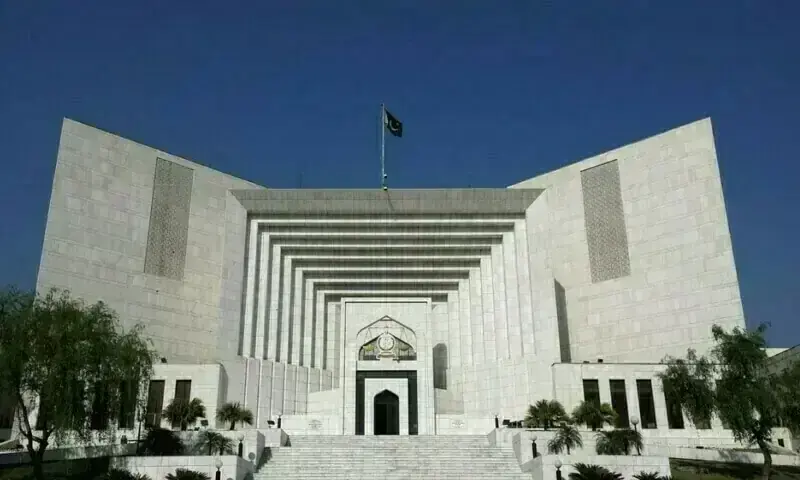
Islamabad: The Supreme Court has rejected Pakistan Bait ul Mal’s challenge to a Sindh High Court (SHC) order requiring financial assistance for two Hindu sisters living in severe financial hardship.
A three member bench headed by Chief Justice Yahya Afridi upheld the order directing Pakistan Bait ul Mal to register the girls as beneficiaries and provide Rs 10000 per month to each, with a 10 per cent annual increase until their marriage.
The case concerned sisters Jasika and Sanika, whose father died in 2017. Their mother, Shrimati Reeta, had no independent source of income to support the family, while their paternal grandfather, Ram Raj, was elderly, infirm and also living without a stable source of income or residence.
A family court had initially ordered the grandfather to pay Rs 3000 per month to each child. The SHC later held that he was not personally responsible for their maintenance under the applicable family law, but directed Pakistan Bait ul Mal to provide assistance to the children.
The Supreme Court said that while courts must decide the legal questions before them, they may also consider the wider circumstances creating hardship for the people involved. Chief Justice Afridi observed that a legal ruling does not always resolve the underlying predicament faced by a family.
The judgement also established guidance for similar cases. Where circumstances presented before a court appear to warrant welfare assistance, the matter can be referred to Pakistan Bait ul Mal. The institution can then assess the applicant according to its policies and eligibility criteria and determine the level of assistance.
The court said this approach allows deserving cases to reach the welfare system without replacing the administrative process through which Pakistan Bait ul Mal operates.
The judgement also noted that the girls belonged to a religious minority and said poverty and loss of family support can have a particularly severe impact on vulnerable communities.
The broader significance of the ruling lies in this balance: courts can identify circumstances requiring state support, while welfare institutions retain responsibility for assessing eligibility and providing assistance.